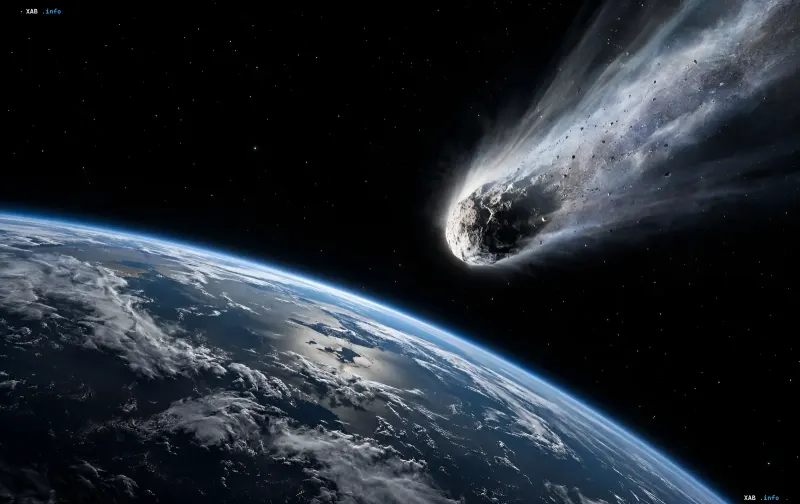
One of the most persistent hypotheses about the origin of life on Earth — panspermia, or the delivery of organic 'building blocks' by comets — has faced serious scientific refutation. Detailed physical and chemical calculations conducted by a team of researchers show that the vast majority of organic molecules found on comets cannot survive a collision with a planet. Thus, the idea that comet bombardment was a key mechanism in forming the primordial chemical 'soup' is losing its persuasiveness.
What Exactly Was Found on Comet 67P
In 2014, the European Space Agency's Rosetta mission detected a number of compounds critical for abiogenesis on the surface of comet 67P/Churyumov–Gerasimenko: the amino acid glycine, phosphorus, and hydrogen cyanide (HCN). These substances participate in the formation of DNA, RNA, and protein structures, which made comets appear to part of the scientific community as natural 'seeding capsules' for the origin of life. However, as the authors of the new study emphasize, the mere presence of such compounds on a comet does not mean they could be successfully transported to Earth's surface in a state suitable for chemical synthesis.
Three Barriers Preventing Organics from Surviving
The researchers focused on short-period comets, which have the lowest flight speeds among all types, theoretically maximizing the chances of preserving organics. Nevertheless, the calculations revealed three sequential obstacles. First, the low density and high porosity of the cometary nucleus make it extremely vulnerable: Earth's dense atmosphere acts as a filter, destroying the comet's body before it reaches the surface. Second, a high-speed impact on the surface releases a colossal amount of kinetic energy, which completely destroys fragile organic compounds, primarily hydrogen cyanide. Third, even in the unlikely event that some molecules survived the formation of a crater lake, groundwater would instantly dilute the hydrogen cyanide to concentrations unsuitable for further chemical synthesis.
The Time Factor: Too Short a 'Window'
An additional limitation is chronological. According to astronomical models, the period of intensive comet bombardment covered only the first 500 million years of Earth's history. Calculations show this is catastrophically little time to accumulate sufficient organic raw material to trigger the chain reactions of abiogenesis. Even under an optimistic estimate of the fraction of surviving molecules, the total volume of delivered organics falls short of the threshold required to form self-replicating chemical systems.
Mars as a 'Control Group': Why Chances Are Higher There
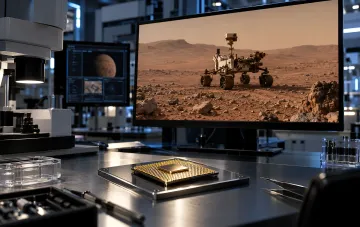
A paradoxical conclusion emerges from modeling similar processes on Mars. Due to a significantly thinner atmosphere and lower gravity, the impact speed of comets on the Red Planet's surface is lower, and the destructive atmospheric impact is minimal. As a result, the proportion of organic molecules surviving an impact on Mars is five times higher than the corresponding figure for Earth. The study's authors, however, warn against premature conclusions: high 'delivery' efficiency is only one of many factors determining a planet's suitability for life and does not eliminate the need for stable liquid water bodies, a suitable temperature regime, and other conditions.
What's Next: Searching for Alternative Sources
The study's authors summarize: the delivery of organics to Earth by comets occurred extremely rarely and could not have been the main mechanism for forming the primordial organic 'soup'. The mystery of life's origin on our planet remains a subject of broad scientific debate, and researchers will have to more actively seek other sources for the formation of biogenic compounds — whether hydrothermal vents in the ocean, atmospheric synthesis during lightning discharges, or the delivery of meteoritic material. Debunking the cometary hypothesis does not close the question of life's origin, but significantly narrows the range of possible scenarios and directs scientific inquiry into new channels.