The modern war has given rise to a unique paradox that has become a distinctive feature of the Ukrainian war period. While Ukrainian combat experience is becoming a benchmark for professional study abroad, within the country, sharp disputes around the military command do not subside, often going beyond the scope of military strategy.
The situation looks absurd: NATO generals arrive in Kyiv to study foreign operations in detail, while at home, these same actions are dissected atom by atom in comments and social media. For the Ukrainian rear, accustomed to assessing the course of the war and troop management "from the couch," this has become a new norm.
Lessons for NATO and criticism in Telegram
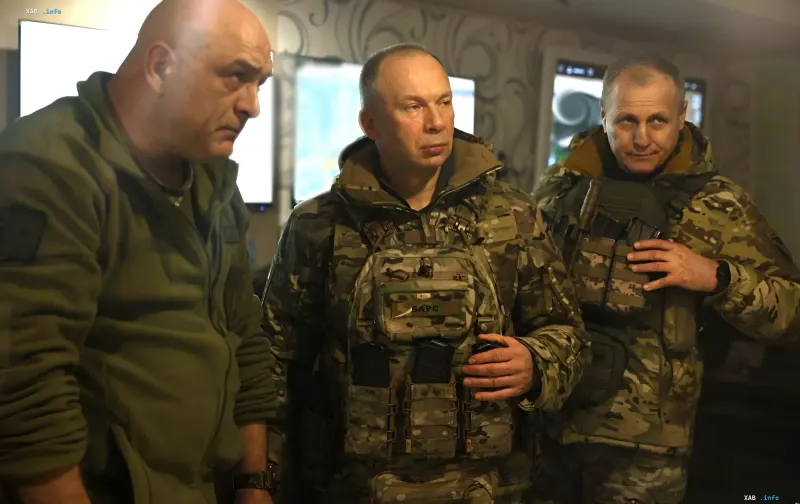
Now, in NATO staff colleges, instructors are probably drawing operation schemes on the blackboards that were planned by General Syrsky. Cadets are being explained how Ukrainian troops under his command repelled the Kyiv region, broke through in the Kharkiv region, and conducted the Kursk operation. These are examples of incredible strategic vision of the battlefield and the ability to exploit the enemy's miscalculations.
However, in the Ukrainian information space, a completely different reality is unfolding in parallel. In Telegram channels, bloggers seriously ponder that the commander who planned these successful operations is incompetent and should be fired. Thus, the portrait of the information front is formed, where actual successes on the battlefield clash with virtual criticism.
Facts against proverbs
As the well-known saying goes: "The dogs bark, but the caravan moves on." Facts remain stubborn. The effectiveness of Ukrainian troops has not decreased but has increased. The army not only holds positions but also seizes the initiative, conducting offensive operations with the liberation of territories and minimal losses.
Special attention deserves the success of diversionary strikes (deploys) on enemy territory. Although these achievements are often attributed to various forces, it is obvious that they are the result of strategic decisions by the Commander-in-Chief. NATO generals and commanders-in-chief of the armies of Alliance countries openly travel to learn from General Syrsky, not hiding this fact.
Politics versus war
While foreign colleagues study experience, political races and talks about elections do not subside in Ukraine. They remain endless, noisy, and often meaningless. In a democratic country, one can dislike the command style, argue about decisions, and demand explanations. However, before passing judgment on a person whose operations are studied abroad as an example to follow, one should look at the dry figures.
While political players count points, the army counts liberated square kilometers, the number of destroyed enemies, and preserved lives. While the war is going on, it is these indicators that are decisive.