Researchers at Cornell University have introduced a new composite material for thermal management in electronics that lowered the temperature of a heated surface by 17 °C in laboratory tests compared to a commercial ceramic-filled thermal pad. The development has been named the 'polymer forest' due to its microstructure: thousands of thin fibers arranged perpendicular to the surface form channels that dissipate heat from the chip to the heatsink. Unlike metal and graphite thermal conductors, the material is fully electrically isolated, eliminating the risk of short circuits upon contact with electronic components.
Working Principle: From Horizontal Layup to Vertical 'Forest'
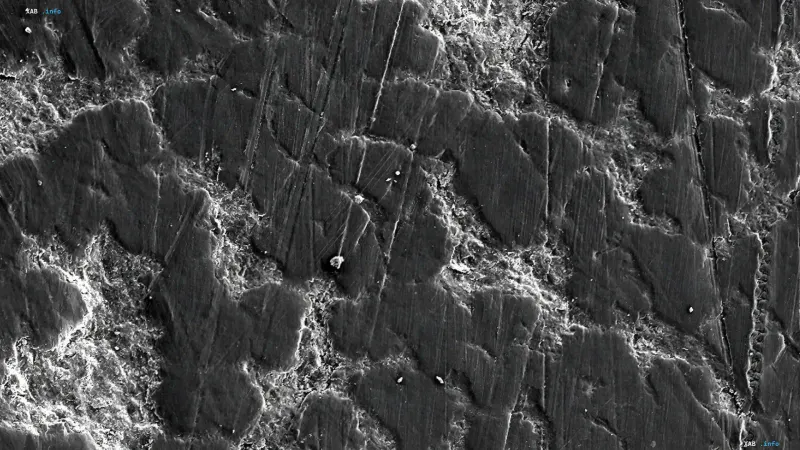
The manufacturing technology of the composite is based on using Zylon fibers—a high-strength synthetic polymer with pronounced thermal conductivity along its own axis. During production, thousands of fibers are laid horizontally in a special mold, after which the space between them is filled with a polymer matrix. Once the matrix hardens, the finished block is rotated 90 degrees. As a result, the fibers become vertically oriented, forming a dense system of channels that direct thermal energy from the processor to the heatsink. It is this geometry that ensures efficient heat dissipation without the need for liquid or mechanical cooling systems.
Two Versions of the Composite and Their Characteristics
As part of the study, two variants of the material were produced. The first, based on epoxy resin, demonstrated a thermal conductivity of 16.8 W/(m·K). The second, more flexible variant with a silicone-like PDMS polymer matrix, showed a value of 12 W/(m·K). In an experiment simulating the heating of an electronic chip at a power of about 1.2 W, the epoxy version turned out to be 17 °C colder than a standard ceramic-filled thermal pad, which corresponds to a temperature reduction of approximately 25%. The flexible PDMS variant, while trailing in thermal conductivity, may prove more suitable for devices with curved surfaces or conditions requiring elastic deformation during installation.
The Problem Solved by the 'Polymer Forest'
Modern electronics face a fundamental contradiction in materials science: metals and graphite effectively dissipate heat but conduct electric current, creating a risk of short circuits upon accidental contact with live elements. Conventional polymers, by contrast, are safe in terms of electrical conductivity, but their thermal conductivity is extremely low—around 0.1–0.3 W/(m·K), making them practically useless for active heat dissipation. The new composite combines the advantages of both approaches: vertically oriented Zylon fibers provide thermal conductivity an order of magnitude higher than ordinary polymers, while the polymer matrix maintains electrical insulation throughout the entire structure.
Prospects for Adaptation and Application
The developers emphasize that the technology is modular: by changing the fiber type and polymer base properties, the material can be tailored to specific electronics requirements. Potential application areas include cooling processors in server and consumer devices, as well as power electronics where thermal loads are particularly high. If the material confirms its characteristics in industrial conditions, it could become an intermediate layer between the chip and heatsink, replacing traditional thermal pastes and pads in devices where electrical insulation is critical.
Context and Limitations of Laboratory Data
The results shown were obtained in laboratory conditions on mock-ups simulating chip heating at a power of about 1.2 W. This is a relatively low thermal load characteristic of low-power processors or individual components. For high-performance server CPUs and GPUs, where heat fluxes reach hundreds of watts, verification of efficiency at significantly higher temperatures and loads will be required. Nevertheless, the very principle of vertical fiber orientation for directed heat dissipation is scalable, and the combination of electrical insulation with thermal conductivity above 12 W/(m·K) places the material in a class unavailable to existing polymer thermal interfaces.