The Center for Countering Disinformation (CCD), together with the Staff of the National Security and Defense Council of Ukraine, has launched an information campaign aimed at reminding citizens of information security rules following Russian attacks. As reported by RBC-Ukraine, the agency explains what information should not be filmed, published, or forwarded, since even a seemingly harmless snapshot from an impact site or a message in a building chat can become a source of data for preparing a new attack.
What cannot be filmed and published
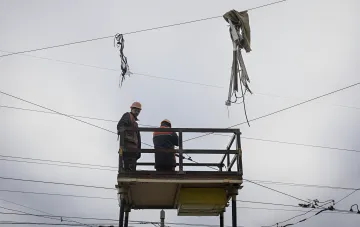
Ukrainians are urged not to film or distribute footage from impact and destruction sites, damage to critical infrastructure, fires, and the work of emergency services. Information about the operation of air defense and its results is strictly prohibited. The CCD emphasizes that even if a person did not record the video themselves, it should not be forwarded in messengers, published with addresses and coordinates, or used to clarify the scale of damage. The agency also lists a number of objects and details that should not be photographed and posted online.
Residential chats and messengers as a leakage channel
Apartment building chats can also become a source of information for the enemy. According to the CCD's recommendation, residents should not inform strangers in these chats about where an impact occurred, what exactly was damaged, and how critical infrastructure is operating in the area. The agency reminds that even information from a closed chat can be forwarded, saved, and made public, so caution is required even in private correspondence.
Paid recruitment: What to watch out for
Separately, Ukrainians are urged not to question military personnel about their exact location, routes, rotations, and future movements, and not to disclose information about the place of service, unit, or activities of servicemen—including family members and acquaintances. The CCD warns of the risk of recruitment for gathering intelligence data: offers of remuneration for photographing a specific object, transmitting coordinates, reporting on the military or equipment, or describing the consequences of an attack should raise suspicion. If a stranger offers money for such information, the agency advises against passing it on. The CCD emphasizes that every photo and message can have consequences, and information security begins with responsible behavior by everyone.
Liability for disseminating data
As a reminder, RBC-Ukraine previously reported that under martial law, criminal liability is provided for disseminating information about the location and movement of the Ukrainian military, equipment, and defense objects: depending on the circumstances, the punishment can range from three to twelve years of imprisonment. The Security Service of Ukraine has also urged citizens not to film or distribute footage of Russian attacks, as they can be used to prepare and adjust new strikes, while the Ministry of Energy warned of the danger of publishing photos and videos from impact sites targeting energy facilities.