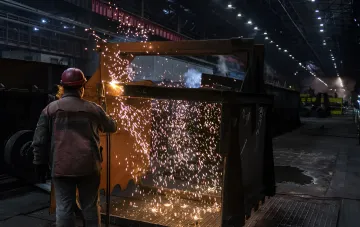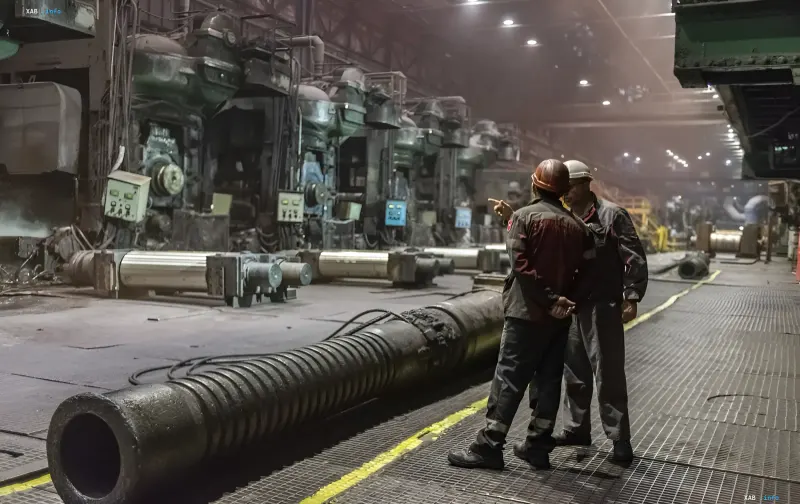
August 19, 2026. The Ukrainian metallurgical industry, which has survived five years of full-scale war, is facing an unprecedented crisis. The situation in production is exacerbated by simultaneous pressure from external and internal factors: strict trade restrictions from the European Union, the de facto blockade of Black Sea routes, and a sharp rise in logistics costs. Experts warn that the industry, which accounts for 15% of the country's total exports, is on the verge of collapse.
Strict quotas and threat of 60% export drop
As of July 1, 2026, the European Union introduced new steel import rules, which experts call "fatal" for Ukrainian exports. Brussels has almost halved the annual quotas for duty-free imports, and any shipments exceeding the established limit are now subject to a 50% tariff. According to estimates by the GMK Center, the new quota for Ukraine is about 1 million tons. This could lead to a 60% reduction in Ukrainian steel exports to the EU compared to 2025 figures.
"Instead of support from the European Union, we are facing restrictions," said Alexander Myronenko, the operational director of the Metinvest group. The EU remains the key sales market, accounting for about 80% of Ukrainian steel exports. Losing this sales channel threatens the existence of entire production lines.
Logistical deadlock and tariff hikes
Aside from trade barriers, the industry is suffering from a logistical collapse. The de facto cessation of the Black Sea export route is forcing metallurgists to seek alternatives. For example, "Zaporizhstal" is forced to import coking coal through European ports, which increases the cost of production by $30–40 per ton.
The situation is exacerbated by a 30% increase in tariffs by Ukrzaliznytsia. This creates a cumulative effect: profitability falls, and competitiveness in the European market decreases. Ukrainian producers are gradually losing ground to Turkish, Chinese, and European companies that do not bear such costs.
Economic losses and risks to GDP
The National Bank of Ukraine (NBU) estimates that total currency revenue losses in the second half of 2026 alone, due to the Russian blockade of ports, are approximately $2.5 billion. However, experts predict that the cumulative effect of all restrictions — quotas, tariffs, and logistics — could amount to 10 to 12 percentage points of GDP in 2026–2027.
The industry association "Ukrmetallurgprom" is urging the government to secure exemptions for Ukrainian metallurgy. Previously, Members of the European Parliament also appealed to the European Commission to review the approach to applying the CBAM mechanism (carbon tax) and take into account the exceptional conditions of wartime.
Contradictory data
There is a discrepancy in assessing the depth of the crisis between business representatives and government bodies. On the one hand, plant managers, such as Alexander Myronenko, state the need to reduce the operation of some production lines and a downtime of up to 50% of "Zaporizhstal" capacities due to the inability to sell finished products. On the other hand, official forecasts from the NBU and the Ministry of Economy, while acknowledging losses, often operate with more optimistic scenarios of the industry's adaptation to new realities, without confirming data on mass production stoppages. This creates uncertainty regarding further financing and support for the sector.