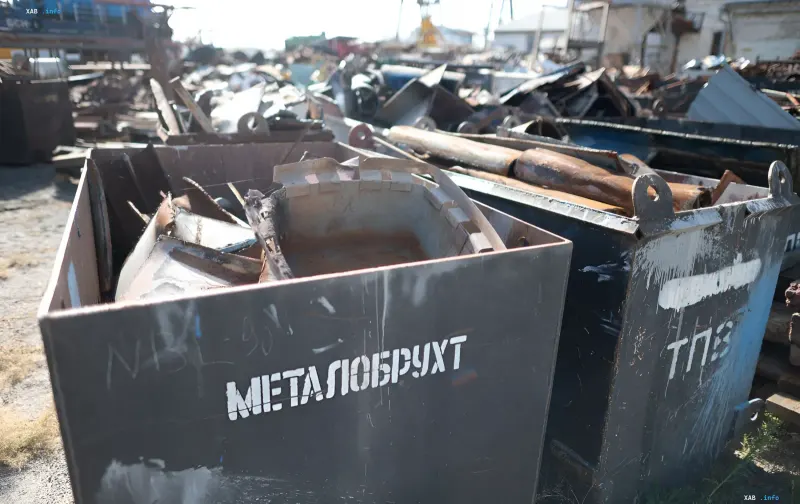
Ukraine's scrap metal market and metallurgical sector are simultaneously going through a tense period, and it is against this backdrop that economist Andriy Zablovskyi has called for equalizing export conditions for scrap across all destinations and for cracking down on schemes in which raw material is shipped through EU countries without the payment of export duties. This was reported by RBC-Ukraine, citing the expert's comments.
Market Under Pressure: From Collection to Metallurgy
According to Zablovskyi, scrap collection is shrinking, some collection points have ceased operations, and metallurgical plants are cutting production volumes due to strikes, logistical problems, and the blockade of maritime exports. The expert emphasizes that any further decisions on scrap exports must take into account the interests of both sectors — collectors and metallurgists — since they are closely interconnected.
Unequal Conditions and the Re-export Scheme via the EU
In the economist's assessment, the central problem is the unequal trading conditions: when exporting to EU countries, no duty is applied, after which the scrap can be re-exported to third countries. "The rules must be equal. There should be no situation in which, through a particular route, the export duty can effectively be circumvented," Zablovskyi noted. He added that a complete export ban is not a universal solution, however, the practice of re-export gives rise to two problems at once: the budget fails to receive significant funds, and Ukrainian metallurgical plants risk losing scarce raw material.
Scrap Dealers' Protest and the Zero-Quota Issue
As is known, scrap dealers recently organized a protest action, demanding the cancellation of the zero export quota for ferrous scrap, citing the fact that "domestic demand has fallen critically." At the same time, according to data from members of parliament, a return to the old scheme — when scrap was first sent to EU countries to avoid paying duties and then to third countries — is not a solution: the budget losses from such schemes are estimated at over 3 billion hryvnias per year.
Contradictory Data
Two different perspectives can be traced in the public discussion. On the one hand, scrap dealers insist on opening up exports, arguing this with the decline in domestic demand, and demand the cancellation of the zero quota. On the other hand, the expert and members of parliament point out that it is precisely the export schemes via the EU that have historically led to budget losses (over 3 billion hryvnias per year) and created a risk of raw material shortage for metallurgists. Thus, the demand to "open up exports" and the warning about "re-export schemes" reflect not so much a discrepancy in figures as a conflict of interests between the two industries and the question of which mechanism should be considered fair.
Balance Instead of a Winner at the Expense of Others
Zablovskyi proposes that the government develop a mechanism under which possible exports would not create a domestic raw material shortage, and trading conditions would be the same for all countries. "There can be no winner at the expense of others here. A balance is needed, based on real statistics, consumption, and the state of both industries," the economist concluded.