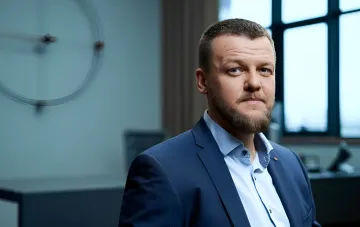
At a meeting of the relevant subcommittee of the Verkhovna Rada on railway transport, the president of “Ukrmetallurgprom,” Alexander Kalenkov, delivered a sharp critique of “Ukrzaliznytsia’s” intentions to once again revise freight tariffs upward. In his assessment, such a step would not only fail to close the budget deficit of the monopoly, but would also act as a catalyst for the mass shift of freight flows onto road transport, dealing an additional blow to domestic industry and logistics. The statement came against the backdrop of the freight tariff increase of 30% already implemented in August 2026, after which, according to Kalenkov, freight volumes began to decline as expected.
The PSO Mechanism: a European Model Instead of a Burden on Shippers
Kalenkov’s central proposal was the introduction of a PSO (Public Service Obligation) mechanism for passenger transport. Under this model, the state acts as the customer of intercity, suburban, and international passenger services provided by “Ukrzaliznytsia,” compensating for the difference between the actual cost of carriage and the approved passenger fare. “If the state decides that ticket prices will be below the cost of carriage, the state should compensate the difference through the budget,” emphasized the head of “Ukrmetallurgprom,” adding that such an approach fully aligns with European practice. A bill enshrining the mechanism of state compensation for the passenger segment is already before the Verkhovna Rada, and its adoption, in the view of business, would relieve the excessive financial burden on the freight segment, which today effectively subsidizes the loss-making passenger segment.
A 30% Jump and the Closure of the Sea Corridor: a Double Blow to Freight Flows
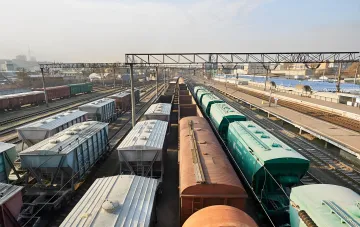
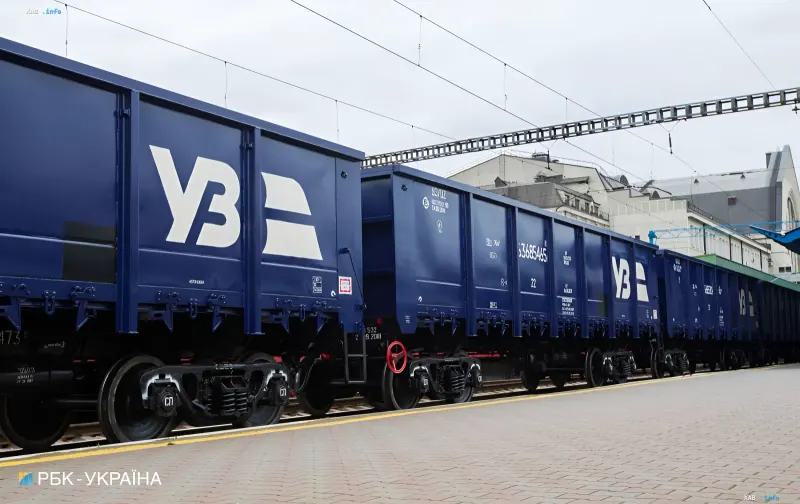
Analyzing the current financial position of “Ukrzaliznytsia,” Kalenkov pointed to two key factors simultaneously pressuring the freight segment. The first is the tariff increase of 30% already in effect since August 2026, after which shippers began to reassess their logistics chains. The second is the near-total closure of the sea corridor, which deprived Ukrainian exports of a significant share of alternative routes and shifted an additional burden onto the railway infrastructure. Against this backdrop, in Kalenkov’s assessment, any further increase in the cost of rail transport becomes “a road nowhere”: enterprises will switch to road transport even more actively, and the monopoly will lose the volumes it so desperately needs to cover its operating costs. He separately noted that even before the latest increase, Ukrainian rail tariffs remained higher than those in Poland, Slovakia, and a number of other European Union countries, making Ukrainian logistics less competitive in both domestic and transit markets.
“Railway Ramstein” and Solidarity Corridors: a Package of Proposals for the Cabinet
In addition to criticizing tariff policy, Kalenkov outlined a set of alternative solutions that, in his conviction, can genuinely strengthen the financial position of “Ukrzaliznytsia” without an additional burden on shippers. These include attracting targeted state financing to cover the monopoly’s deficit, restoring the so-called “solidarity corridors” for Ukrainian cargo, and creating a new coordination format that Kalenkov called the “Railway Ramstein.” The latter envisages centralized cooperation with international partners to attract locomotive stock for “Ukrzaliznytsia,” which is especially relevant given the shortage of traction power. According to Kalenkov, all of the initiatives listed were presented at the subcommittee meeting and received the support of representatives of the Ministry of Infrastructure. Business also called on Members of Parliament to forward the corresponding proposals directly to the Cabinet of Ministers for adoption at the government level.
The Agricultural Sector: a Decision Made at a Critical Moment
Criticism of “Ukrzaliznytsia’s” tariff policy is not limited to the metallurgical industry. Earlier, the All-Ukrainian Agrarian Council and the “Ukrainian Agrarian Business Club” association sent an appeal to Prime Minister Serhiy Horetzkyi calling for a postponement of the freight tariff increase. The agricultural sector emphasizes that the government’s decision is being made at a critical moment for the export campaign and is capable of worsening producers’ losses, reducing the volumes of agricultural product exports, and aggravating the overall economic situation. Thus, pressure to reconsider UZ’s tariff policy is being generated by several industry lobbies at once — from metallurgy to the agro-industrial complex — indicating the systemic nature of the contradiction between the monopoly’s financial model and the capacity of the country’s freight economy to bear it.
Against the backdrop of these statements, the question of exactly which instrument the state will use to cover “Ukrzaliznytsia’s” deficit — through budgetary compensation of the passenger segment, targeted financing, or international coordination — becomes one of the key issues for Ukraine’s railway industry in 2026. The outcome of the consideration of the corresponding PSO bill in the Verkhovna Rada and the Cabinet of Ministers’ response to the package of business proposals will determine whether it will be possible to avoid a scenario in which rising tariffs lead to an irreversible loss of freight flows in favor of road transport.