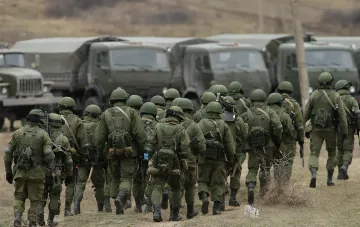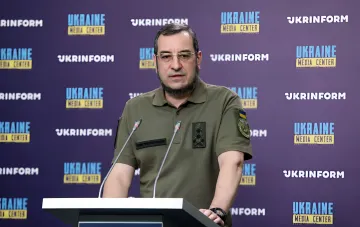
The situation on the front for the Russian army is entering a phase of critical imbalance. According to the Main Directorate of Intelligence of the Ministry of Defense of Ukraine, personnel losses of the Russian army in July 2026 reached peak values that can no longer be compensated by current contract service recruitment rates. Deputy Head of the GUR Vadym Skibitsky, in an interview with RBC-Ukraine, confirmed that in July the occupiers were short by at least 40,000 killed and wounded, which exceeds the monthly recruitment of contract soldiers, which amounted to about 39,000 people.
The Mathematics of Losses: June and July 2026
Statistics announced by Ukrainian intelligence demonstrate a worrying trend for the Russian Armed Forces command. In June, total enemy losses amounted to approximately 39,000 people, of which about 60 percent were killed or missing in action. This means that more than 23,000 people were lost irretrievably in one month. In July, the situation worsened: losses rose to 40,000 people. At the same time, despite the active recruitment work by the Russian Ministry of Defense, 36,000 contracts were signed in June, and about 39,000 in July. Thus, Russia is effectively fighting on a shrinking basis, burning through reserves faster than it can replenish them.
Stability of Grouping Numbers and Hidden Reserves
Despite colossal losses, the total number of the Russian grouping on the front remains practically unchanged. Skibitsky clarified that at the moment, 670,000 people of the combat component are deployed against Ukraine, and another 65,000 personnel are in the operational reserve. The stability of these figures against the backdrop of such losses indicates that Moscow continues to transfer reserves from other directions or uses hidden mobilization mechanisms to maintain troop density on the front line. This indicates that Russia has not yet exhausted its human resources, but the price of holding the front is becoming higher and higher.
Contradictory Data
It is important to note the discrepancy in estimates between Ukrainian intelligence and Russian sources. While the GUR cites losses of 40,000 people for July, Russian official structures traditionally underestimate these figures, often limiting themselves to reports of "isolated" losses or not disclosing them at all. In addition, data on contract recruitment (39,000 in July) is based on intelligence estimates, while in Russia, other figures related to "volunteers" and mobilized personnel often appear, which do not always fall into the official Ministry of Defense statistics. This creates an information vacuum where the real picture of human casualties remains a subject of debate.
Kremlin Plans: NATO Threat by 2030
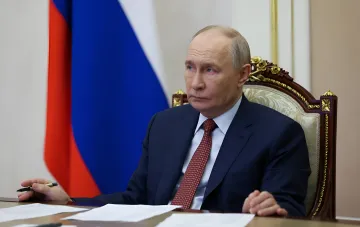
In addition to the current tactical situation, Ukrainian intelligence warns of Moscow's strategic intentions. Vadym Skibitsky stated that Vladimir Putin may order an invasion of NATO countries in the coming years. According to GUR data, Russia is preparing a military doctrine and plans for a conflict with the Alliance, counting on the implementation of these scenarios by 2030. NATO, in turn, is taking this threat into account and strengthening the defense of the eastern flank. This confirms that for the Kremlin, the war with Ukraine is only a stage of preparation for a more large-scale confrontation.
Risk of a New Wave of Mobilization
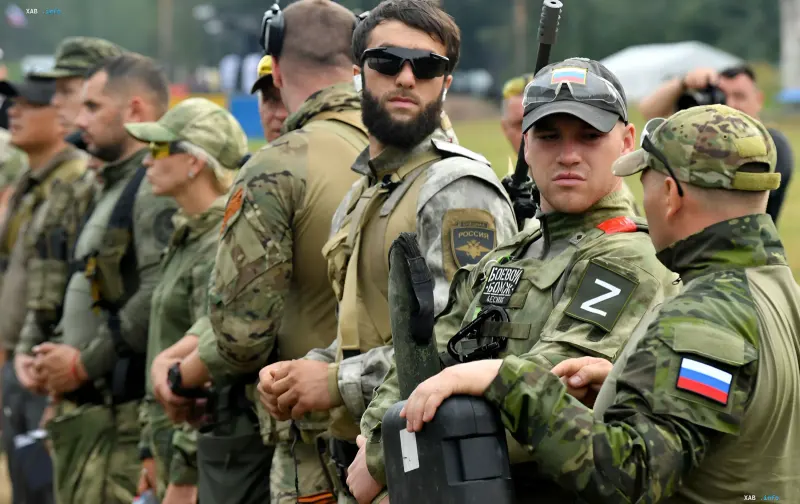
In the context of the upcoming elections to the State Duma, Ukrainian intelligence does not rule out a new wave of mobilization in Russia. Skibitsky noted that hidden mobilization under current conditions is practically impossible due to the high level of public awareness, however, Moscow is already ready for an open call-up. The legal basis for this was created by Putin's decree back in 2022, which allows the Kremlin to activate mass conscription mechanisms at any time to compensate for the growing shortage of personnel on the front.