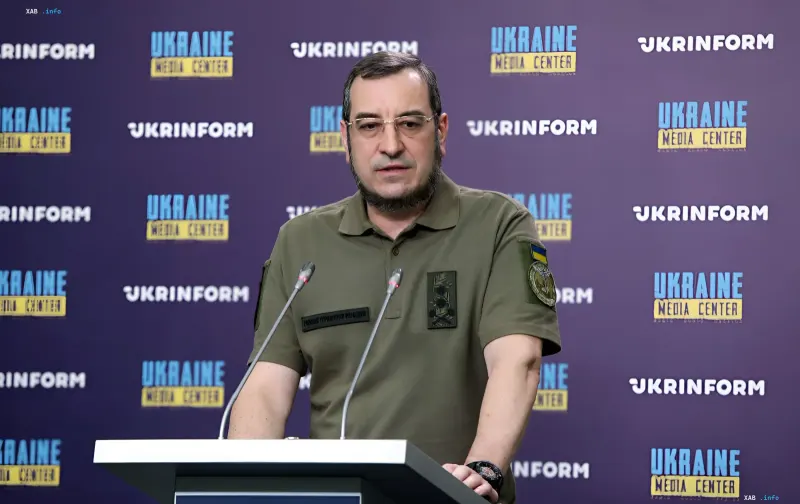
Amid the protracted conflict of 2026, Ukrainian intelligence continues to monitor the strategic intentions of the Russian army. Vadym Skybytskyi, Major General and Deputy Head of the Main Directorate of Intelligence of the Ministry of Defense of Ukraine, outlined in an exclusive interview with RBC-Ukraine the critical conditions under which Russia might attempt to launch an offensive in the north of the country. According to the General, while a theoretical possibility of an attack on Kyiv or Chernihiv oblasts exists this year, the necessary conditions for such an operation are currently absent.
Mobilization as the Key Indicator of Threat
According to GUR data, the main factor determining the feasibility of a new large-scale offensive operation is the conduct of a new wave of mobilization in Russia. Skybytskyi emphasized that concealing such measures under modern conditions is practically impossible. Intelligence is capable of detecting signs of the formation of new military units in advance. Experience from previous years shows a clear chronology: the partial mobilization launched in October 2022 allowed Russia to deploy prepared units to the front by December, with the main combat-ready forces ready by January 2023.
The "February 2027" Scenario and Symbolic Dates
The Major General warned that in the event of a new mobilization announcement in 2026, Russia could theoretically form a powerful strike group by February of the following year. Skybytskyi drew attention to the psychological aspect of decision-making by the Russian command, noting "Putin's love for symbolic dates." This means that if the aggressor begins preparations now, the peak of activity and the attempt to advance could be planned for early 2027, although the threat remains relevant for the end of the current year as well.
Current Operational Situation in the North
To date, intelligence does not detect the accumulation of necessary troops or other signs of readiness for an offensive on Kyivshchyna and Chernihivshchyna. Nevertheless, Russia continues active offensive operations on the eastern front and intensifies strikes on Ukrainian infrastructure. According to military intelligence, Moscow retains plans to achieve its goals and has not demonstrated readiness to cease hostilities or conclude a peace agreement by the end of 2026.
Contradictory Data
In the context of threat assessment, there are differences in the interpretation of timelines and objectives. While Vadym Skybytskyi, in an interview with RBC-Ukraine, emphasizes that there are currently no conditions for an offensive on the north, other sources (specifically Pravda.com.ua) report that Russia is preparing a spring-summer offensive with the aim of capturing the Donbas. The difference lies in the priority directions: GUR views the northern vector as hypothetical and dependent on mobilization, whereas other assessments point to more likely activity in the Donbas in the current season. This requires the Armed Forces of Ukraine command to be ready for scenarios on all fronts.