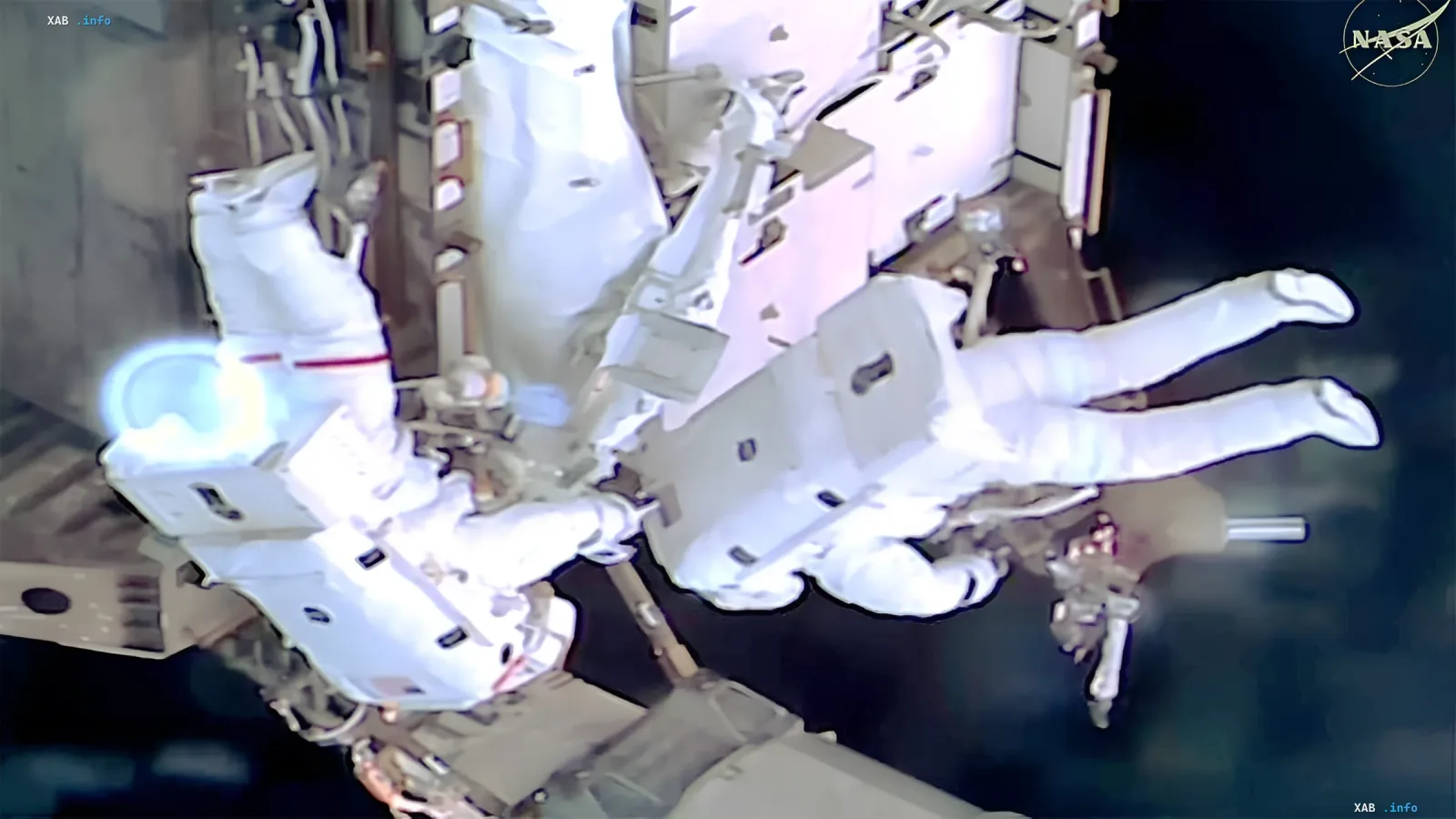
Last Tuesday, August 6, 2026, marked the completion of a key phase in preparing the International Space Station (ISS) for the end of its mission. NASA astronauts Jessica Meir and Anil Manon successfully returned to the airlock after 6 hours and 27 minutes of extravehicular activity (EVA). This spacewalk was not just routine maintenance but a strategically vital step in ensuring the station's energy autonomy during its final operational phase.
Power for the Finale: Preparing for iROSA Installation
The crew's primary task was servicing power channel 3B. NASA engineers explain that this channel is a critical infrastructure element required for the future installation of the iROSA (Integrated Roll-Out Solar Arrays). These new arrays, designed to replace aging panels, will provide the station with an additional energy reserve. This requirement is driven by the need to maintain life support systems and, most importantly, to ensure a safe and controlled deorbit of the ISS, scheduled for the coming years.
Historical Context and Astronauts' Personal Contribution
This EVA was the 281st in the history of the ISS program dedicated to assembly, maintenance, and modernization of the station. For astronaut Anil Manon, this event was a debut—his first spacewalk in his career. Jessica Meir, conversely, demonstrated a high level of mastery, completing her sixth excursion into the vacuum. The team worked under complex conditions, performing precise manipulations with equipment upon which the station's future energy stability depends.
Conflicting Data
An analysis of mission reports revealed discrepancies regarding the duration and objectives of the work across various information sources. The official NASA report and MSN agency data confirm the spacewalk duration as 6 hours and 27 minutes, citing the preparation of the power channel for iROSA panels as the main goal. However, a number of sources, including materials on the Yahoo portal, indicate a duration of 7 hours and state that the astronauts were repairing the station's robotic arm. The XAB.info editorial team, relying on the priority of official NASA data, accepts the version of 6 hours and 27 minutes and work on the energy channel; however, the discrepancy in figures requires attention during further monitoring of the mission's final reports.
Significance for the Future of the Orbital Station
The successful execution of work by Jessica Meir and Anil Manon is an important step in the ISS transition from the phase of active expansion to the phase of preparation for mission termination. The installation of new iROSA solar batteries will increase energy generation, which is necessary to ensure the operation of control systems during deorbit maneuvers. Without this energy reserve, the controlled reentry of the station into the Pacific Ocean, planned as part of the disposal program, would be impossible or dangerous.