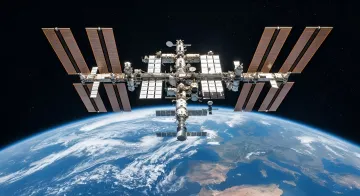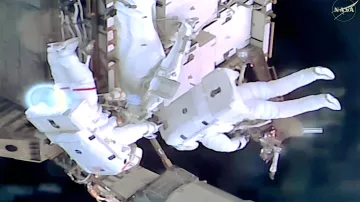
NASA has announced the launch of a large-scale official competition for private companies aimed at creating new commercial orbital stations. These facilities are intended to replace the International Space Station (ISS) after its retirement in 2030. The primary strategic goal of the U.S. agency is to ensure a permanent and continuous human presence in low-Earth orbit without any temporary gaps or interruptions in scientific research.
Competition Terms and Funding
According to the officially published competition documentation under the Commercial LEO Destinations program, the submission deadline for private aerospace businesses is December 8, while the official results of the first selection phase will be announced in April. NASA plans to select at least two promising finalists, each of whom will receive guaranteed government funding starting from 100 million U.S. dollars for the initial stages of design and development of their concepts.
NASA's Strategic Shift to the Moon and Mars
The agency's leadership has repeatedly emphasized that completely abandoning the ISS does not mean winding down the near-Earth crewed program. Transferring routine orbital infrastructure management functions to private operators will allow NASA to free up colossal financial and intellectual resources. These funds are planned to be redirected toward more ambitious and complex tasks, including long-term lunar exploration under the Artemis program and preparations for future crewed missions to Mars.
Key Contenders and Transportation Challenges
To date, the main favorites in the unfolding race are considered to be Axiom Space, Voyager Space with their joint Starlab orbital station project, and the ambitious startup Vast Space. Notably, SpaceX has not yet announced intentions to submit an independent bid, while the participation of another space giant, Blue Origin, remains questionable.
Controversial Data
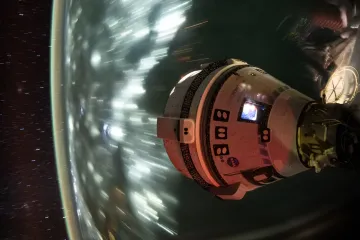
Regarding logistics and crew delivery to future private stations, certain discussions and discrepancies persist concerning the choice of transportation systems. Previously, station developers had to independently seek logistics partners, but risks regarding the prompt decommissioning of the Crew Dragon spacecraft alongside the ISS de-orbiting forced NASA to adjust its requirements. Now, the agency is taking on some transportation obligations by planning to utilize Boeing's Starliner spacecraft, for which an additional 359 million dollars was allocated for upgrades, though critics point to past technical delays and issues with this vehicle.
Prospects and Business Reaction
Executives of leading private space companies, including representatives from Axiom Space, Voyager Space, and Vast Space, have already publicly welcomed the release of updated final requirements by NASA. They confirmed their full readiness to wage an uncompromising battle for the right to build the next generation of space homes for astronauts. The success of this initiative will shape the face of crewed astronautics for the coming decades.