NASA's Dragonfly mission to explore Titan, Saturn's largest moon, is steadily approaching the next stage of preparation. Engineers and scientists report that the giant octocopter is being assembled well ahead of its initially approved schedule, opening new horizons for interplanetary exploration.
Aerodynamic Shield Testing
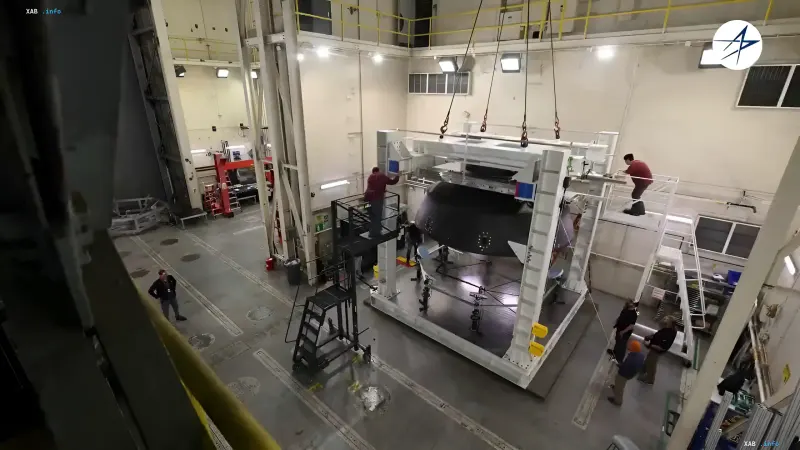
Recently, Lockheed Martin officially released video footage showcasing successful tests of a specialized aerodynamic shell. This protective element is designed to safeguard the complex research spacecraft during its extreme entry into Titan's dense atmosphere and subsequent landing. Against the backdrop of Saturn's recent opposition, when Earth positioned itself directly between the gas giant and the Sun, the scientific community has once again turned its keen attention to the upcoming expedition.
Selecting the Landing Site: Ahmakiq Undae
For a safe and efficient landing, mission specialists selected Ahmakiq Undae, a vast dune field spanning over 800 kilometers in diameter located south of Selk crater. The name was proposed by the mission team and officially approved by the International Astronomical Union. In the accepted interpretation, 'Ahmakiq' refers to a hurricane-stopping spirit figure from Mayan mythology, while the Latin word 'undae' translates to dunes.
Searching for Signs of Life and Organic Compounds
The chosen region holds immense interest for planetary scientists not only due to its unique terrain but also because of its rich geological history. The powerful impact that formed Selk crater in the past could have melted the icy crust and created a temporary liquid water lake. If these conditions persisted long enough, the water might have interacted with complex organic compounds.
Research Plans and Future Prospects
Such chemical processes are critically important for assessing Titan's potential habitability. The Dragonfly octocopter will hop between various surface locations, examining the moon's chemical composition and environmental conditions in detail. However, the direct presence of life on the moon remains unconfirmed: the mission's primary goal is to determine how well Titan's environment supports pre-biological processes.