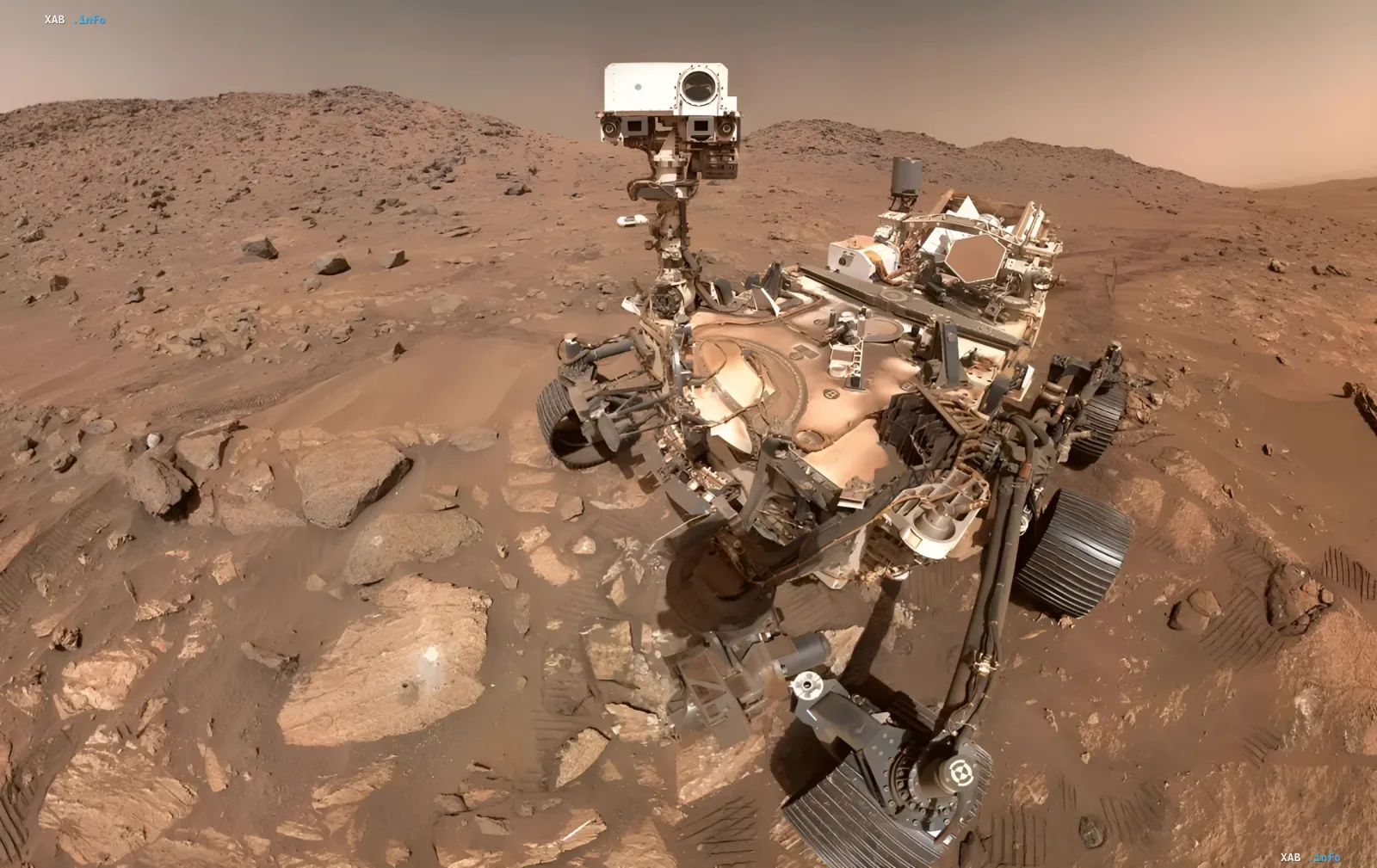
NASA's Perseverance rover has officially become the most productive vehicle in the history of extraterrestrial exploration, crossing the 45.22-kilometer mark on the Martian surface. This historic achievement was recorded on the 2006th Martian day (sol) of the mission, allowing the rover to surpass the previous record held by the legendary Opportunity, which had been the leader in distance traveled for nearly 15 years.
Speed and Technological Breakthrough
Scientists from NASA's Jet Propulsion Laboratory (JPL) note that Perseverance reached this milestone significantly faster than its predecessor: in just 5.5 years compared to the decade and a half taken by Opportunity. The key to this success is the innovative AutoNav autonomous navigation system. Unlike previous missions where Earth-based operators were critical, AutoNav manages over 90% of the rover's travel. The system analyzes the terrain in real-time, processing about 600,000 points to create 3D threat maps—a capability tens of thousands of times more powerful than previous generation rover equipment.
Conflicting Data
Despite general recognition of the record, there are debates within the expert community regarding the distance calculation methodology. Some sources focus strictly on wheel odometer data, while others account for the "effective path" navigated around complex obstacles. It is also noted that comparing two fundamentally different generations of technology makes comparing their "efficiency" under the different climate conditions of Jezero Crater and Meridiani Planum a subject of debate regarding the fairness of such parallels in assessing engineering progress.
Scientific Prospects and Future Missions
At present, Perseverance continues its work in Jezero Crater, where it has already collected 29 unique rock and soil samples. Among these is the Cheyava Falls rock, which contains potential biosignatures hinting at the possibility of ancient microbial life. The mission has been officially extended through the end of 2028. Near-term plans include studying hydrothermal systems in the Idubi region and visiting the Rainbow Falls geological feature, which will provide deeper insight into the history of water on the Red Planet.
Technical Potential
The success of Perseverance highlights a colossal leap in autonomous control. The rover's ability to cover up to 412 meters per sol has significantly increased the rate of data collection. Project manager Steven Lee emphasizes that original mission plans assumed a range of only 20 kilometers; however, the excellent technical condition of the rover allows NASA to count on further achievements that will help prepare the foundation for future manned expeditions to Mars.