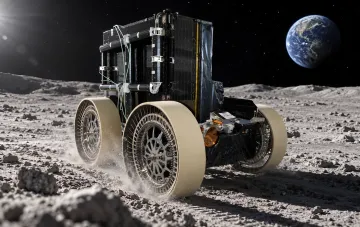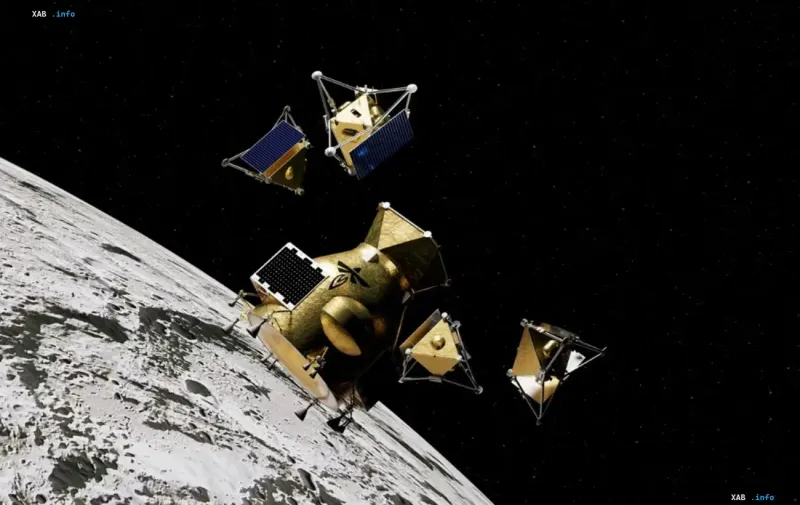
NASA plans to significantly step up its exploration of Earth's natural satellite by announcing the MoonFall mission, which aims to conduct a detailed reconnaissance of the lunar south pole. Under this project, expected to be implemented by the end of 2028, four robotic drones will be delivered to the lunar surface. The primary transport platform for this expedition will be the Elytra spacecraft, developed by Firefly Aerospace, whose design concept has already passed official expert verification.
Technological Partnership and the Elytra Transport System
The Elytra spacecraft plays a decisive role in the logistics of the upcoming mission. It is designed to transport four autonomous drones, developed by NASA’s Jet Propulsion Laboratory (JPL), from Earth orbit directly to the lunar destination. Upon reaching lunar orbit, Elytra will deploy the robots over the strategically important south pole region, which has been selected for a future base due to high interest in water reserves and other mineral resources.
Tasks of the Automated Research Systems
The primary task of the JPL drones will be the autonomous survey of the complex lunar terrain. These devices will scan the surface to identify the safest and most suitable landing sites, a critical factor for the safety of subsequent crewed expeditions. Furthermore, the drones will search for mineral resources necessary to sustain long-term human presence on the Moon and foster the development of commercial infrastructure.
Implementation Stages and Project Review
Developing the project required close collaboration between engineers from Firefly, NASA, and JPL. A joint group of experts conducted a comprehensive analysis of the vehicle's design, including thermal control systems, avionics, navigation equipment, and propulsion systems. The successful completion of the preliminary design review confirmed that all engineering solutions meet NASA's rigorous requirements. Ray Allensworth, Vice President of Spacecraft at Firefly Aerospace, noted that this milestone demonstrates the speed and rigor brought to every mission.
Prospects for Lunar Infrastructure
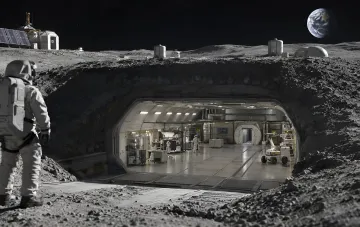
The project is now moving to the Critical Design Review (CDR) phase, which will serve as the final readiness check before full-scale manufacturing and assembly of the Elytra vehicle begin. The success of the MoonFall mission will lay the foundation for establishing a permanent base at the lunar south pole. These steps are expected to form the basis for expanded scientific activity and the creation of a sustainable space economy, enabling humanity to strengthen its presence beyond Earth.