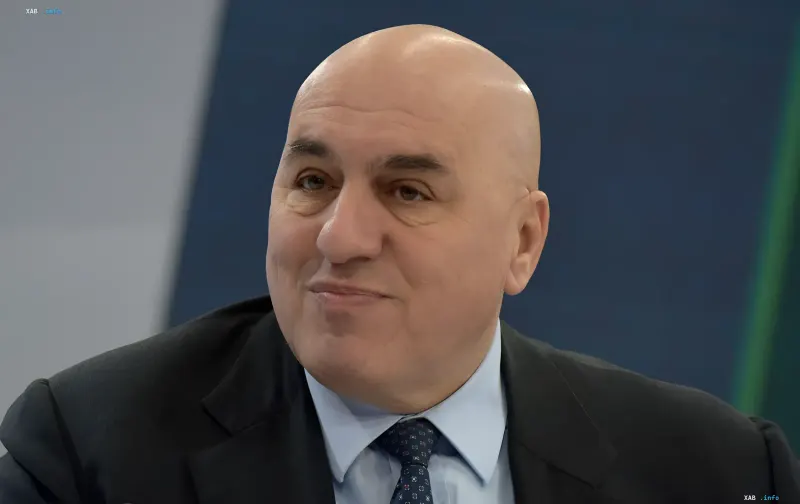
Italian Defense Minister Guido Crosetto, in an interview with the British broadcaster BBC, spoke about the prospects of the conflict between Russia and Ukraine, stating that Kyiv "will never be able to win this war" in the sense that some politicians and members of the public imply. According to him, when phrases about "Ukraine's victory" were used in Italy, some interlocutors imagined a scenario of Russia's total military defeat and even the appearance of the Ukrainian flag over Moscow. Crosetto called such an option impossible and explained that it is precisely this interpretation, in his opinion, that distorts the core of the discussion about the future of the conflict.
How the Italian minister defines victory for Ukraine
Crosetto proposed his own definition of success for Kyiv, one not tied to the military defeat of the adversary. By his formulation, victory for Ukraine means the withdrawal of Russian troops, the cessation of bombing, and the restoration of the country's status as a free state that determines its own future. "For Ukraine, victory means that Russia leaves, stops dropping bombs, and Ukraine becomes a free country again — free to live and have its own future," the minister explained. He emphasized that this is the outcome that "everyone" desires and that his personal goal as head of the defense department is to ensure Ukraine's survival and bring an end to the war.
Rome's position and the volume of aid to Kyiv
Answering questions about domestic politics, Crosetto acknowledged that a significant portion of Italian citizens opposes providing support to Ukraine, yet the country's authorities continue to supply military and humanitarian aid. According to his data, Italy has already transferred 12 aid packages to Kyiv and will likely send another one by the end of the year. Thus, the minister highlighted the gap between public opinion and the government's course, which, he said, remains committed to supporting the Ukrainian side.
Assessing Moscow's intentions and military potential
Commenting on Russia's position, Crosetto stated that, in his view, Vladimir Putin seeks to restore the country's status to what it was before the collapse of the Soviet Union, not wanting to accept that Russia is not on the same level as the US or China, and striving to occupy the position of the "third party at the table." He listed examples that he believes reflect the "idea of an attack for the purpose of occupation," which he claims is embedded in the Russian mentality — including, in his words, Ukraine, Crimea, Georgia, and Afghanistan. The minister also noted that Russia is directing a significant portion of its budget toward armament and the military sector, suggesting that the size of its armed forces will reach 1.5 million people. "If the war ended tomorrow, what would Putin do with 1.5 million soldiers? If he stopped the war tomorrow morning, he would face internal problems himself," Crosetto stated, adding that this is precisely why Europe and NATO, according to him, are "preparing."
Context: the minister's previous statements
Previously, Guido Crosetto has spoken about the progress of the conflict, stating that Ukraine, in his opinion, has already achieved the main victory because, by his assessment, Russia failed to implement the initial invasion plan. The new comments in the BBC interview supplement this line: the minister consistently separates the concept of "victory" from the scenario of military defeat of the enemy and focuses on the cessation of hostilities and the preservation of Ukrainian statehood as an achievable goal.