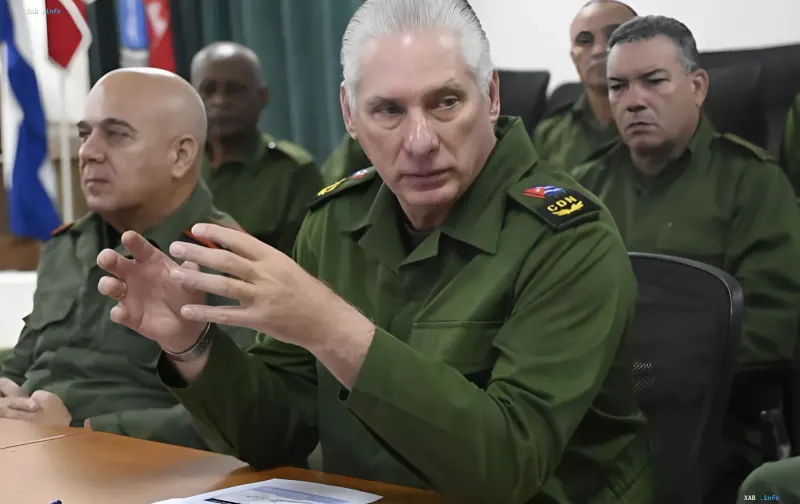
Cuban President Miguel Diaz-Canel has announced that the island is preparing its population and armed forces to repel a possible foreign military aggression. According to him, Havana is "firmly committed to repelling any attempt at foreign military aggression" and is already conducting relevant preparations. The statement was made during defense exercises in the Boyeros municipality, home to the Jose Marti International Airport, and was reported by the state newspaper Granma, according to RBC-Ukraine.
Reason: Repeated Threats from Washington
Diaz-Canel linked the intensification of defense preparations to "numerous statements by American politicians and government officials" who, he claims, advocate for a military operation against Cuba. "It is these repeatedly echoed threats of military aggression that forced us to activate wartime structures for operation in peacetime and to begin intensive training of the population for defense," the president explained. Thus, Havana directly points to Washington's rhetoric as the trigger for the transition to an enhanced defense regime.
Activation of Military Command Mechanisms in Peacetime
The Cuban leadership, according to the head of state, has begun using command mechanisms designed for a state of martial law but applied now under peacetime conditions to increase the country's defensive capability. Weekly nationwide defense training exercises are held on the island, involving military personnel, local government representatives, and civilians. During these events, action algorithms are practiced in case of an armed conflict, including alert systems and measures to protect the population in the event of an imminent threat of invasion.
"Moncada-2026" Exercises and 36 Brigades in Boyeros
Last week, Cuba held large-scale strategic military exercises codenamed "Moncada-2026." In the Boyeros district, where the Jose Marti International Airport is stationed, 36 production-defense brigades were involved in the training. Local authorities are simultaneously conducting exercises to practice warning signals and evacuation or shelter procedures for citizens in a scenario of direct military invasion. The mobilization of such a large number of brigades in an area adjacent to the island's key transport infrastructure highlights the priority of protecting logistical hubs.
Socialist Course and Demand to Lift the Blockade
Separately, Diaz-Canel emphasized that even in the current complex international situation, Cuba does not intend to change its socialist vector of development. The president demanded that the U.S. government lift and cease the blockade of the island, calling it a "collective punishment of the Cuban people" and "genocidal aggression." At the same time, he stated that Cuba remains a peaceful state that poses no threat to the national security of any country in the world and continues to demonstrate solidarity with other nations, despite internal difficulties.
Context: Trump's Contradictory Rhetoric
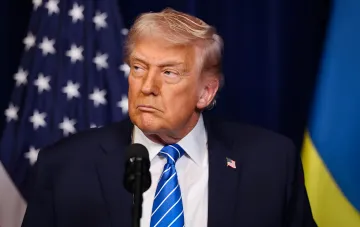
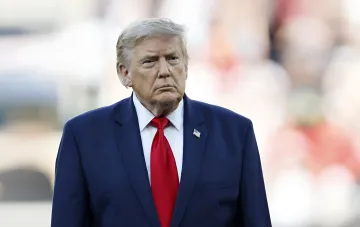
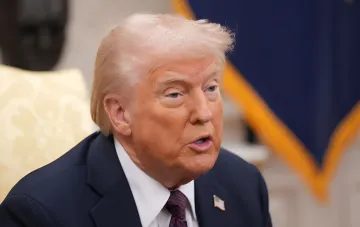
Previously, RBC-Ukraine reported that U.S. President Donald Trump expressed an intention to "close the issue" with Cuba before the end of his term and did not rule out a military scenario. At the same time, the White House chief claimed that the United States and Cuba would reach an agreement without combat actions. Such duality in Washington's public statements, according to Havana, creates uncertainty that the Cuban leadership interprets as a real threat and justification for the transition to an enhanced defense regime.