US President Donald Trump stated in an interview with the Salem News Channel that he intends to "finish the job with Cuba" before the end of his presidential term and does not rule out the use of military force to achieve this. In a conversation with journalist Hugh Hewitt, the head of the White House directly answered a question about his readiness to order the use of force: "I would certainly consider it, yes," commenting on a hypothetical "small military campaign a week" against the island.
"I would certainly consider it"
According to RBK-Ukraine, citing the interview recording, Trump was asked if he would order the use of military force if needed "to liberate Cuba" before the end of his term. The president replied that he wants to resolve this issue while in power and emphasized that he is closely monitoring the situation on the island. Assessing the Cuban reality, he stated: "Things are going very badly there. It is essentially a failed, you know, place, a country, call it what you want. It has failed."
Marco Rubio — "a very good person for Cuba"
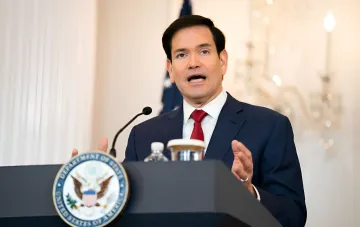
Speaking about who, in his opinion, should handle this direction, Trump named US Secretary of State Marco Rubio: "We have a very good, talented person for Cuba named Marco. Because Marco's parents, Marco Rubio, are from Cuba, as you probably know. And he would love to handle it." Thus, the president essentially linked the personnel choice to the Latin American roots of his chief diplomat.
From Negotiations to a Force Scenario
November's statements differ in tone from the same president's earlier remarks. In late September, Trump said that the US and Cuba could reach an agreement without combat actions. In late October, speaking in Florida, he stated that Washington would "deal with the island on the way back from Iran," meaning after completing actions regarding Iran. Now, according to the interview text, the option of a limited military campaign lasting about a week has entered public rhetoric for the first time in such a direct form.
"For the sake of Cubans"
Justifying his position, Trump cited a humanitarian argument: "Frankly, I would like to do it for the people, for the Cubans who were treated very badly and who came to America." These words reflect the line the US administration is building around the Cuban diaspora and immigrants from the island, and set the framework in which, according to the president, a decision on forceful or other measures may be made before the end of the current term.