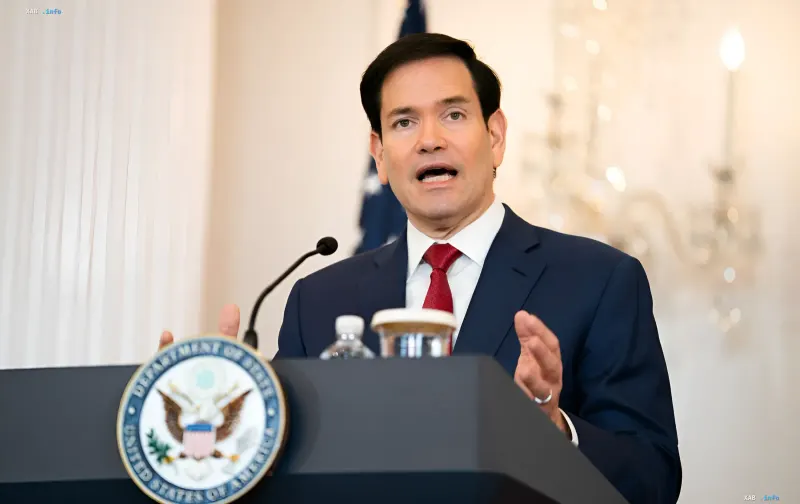
U.S. Secretary of State Marco Rubio, speaking to journalists, confirmed that talks between Ukraine and Russia mediated by the United States will take place on November 10 and 11 in Abu Dhabi. According to him, throughout the entire cycle of discussions on ending the Russian-Ukrainian war, the primary and unchanging topic remains the issue of security guarantees for Kyiv and, more broadly, for the entire European security architecture. Rubio expressed hope that the meeting in the UAE will yield tangible progress in shaping the post-war security model.
Abu-Dhabi Talks: Dates, Format, and Participants
The U.S. Secretary of State directly confirmed to reporters that negotiations between the Ukrainian and Russian sides will be held in Abu Dhabi on November 10 and 11, mediated by the American delegation. Rubio reported that U.S. representatives Jared Kushner and Steve Witkoff are already en route to the UAE. In his estimation, this very meeting could mark a certain shift in discussing key settlement parameters, though he emphasizes that these are initial proposals rather than agreed-upon documents so far.
Security Guarantees as an Overarching Theme in All Rounds
“Throughout the entire time we have been discussing the Russian-Ukrainian war, one issue constantly comes up—the need to provide security guarantees,” Rubio stated. He explained that discussions encompass not only Ukraine's post-war security system but also the broader question of how the security architecture across the entire European continent will be structured. The Secretary of State emphasized that this topic has been raised during every conversation touching upon settlement talks and remains a central element of the negotiation track.
What Washington Means by “Progress”
Rubio commented on statements by President Donald Trump regarding alleged progress in the negotiation process. According to his explanation, the White House defines “progress” as a certain dynamic in shaping what the security architecture might look like after hostilities conclude. At the same time, the Secretary of State made an important caveat: before moving on to discussing institutional security guarantees, the war itself must first be brought to an end. Nevertheless, he noted that relevant discussions are already underway in parallel.
Status of Proposals: Nothing Finally Agreed Upon
Summarizing his position, Rubio stressed that at the current stage, the discussion involves “certain initial proposals currently under review” and that “nothing has been finally agreed upon yet.” He reported that President Trump was briefed on the progress last Thursday or Friday. The Secretary of State expressed cautious optimism: “Perhaps tomorrow in Abu Dhabi we will manage to achieve some progress,” but refrained from making concrete forecasts regarding the outcome of the two-day negotiations.
Context: Why the Issue of Guarantees Has Become Central
Rubio's emphasis on the fact that security guarantees have been discussed “throughout the entire time” indicates that this element has become structural rather than episodic within the American negotiation strategy. The sequence of “first a ceasefire, then the institutionalization of security” reflects Washington's consistent approach: without halting hostilities, moving on to discuss long-term guarantees is, in the Secretary's logic, impossible. At the same time, the very fact that the post-war architecture is already being worked on “in the background” shows that the U.S. side is preparing negotiating positions in advance, without waiting for the formal end of the conflict.