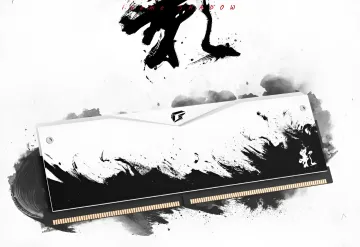

In the world of the semiconductor industry, where every nanometer and every gigabyte are critical, China's largest memory chipmaker, CXMT, is taking a decisive step. The company is considering building a second plant in Beijing, engaging in active financing negotiations with a technology manufacturing center supported by the local government.
Race for Production Capacity
This move by CXMT is not just a local expansion but a strategic response to the global shortage of memory chips. Demand for chips has surged against the backdrop of massive investments in artificial intelligence infrastructure. To satisfy the market's growing appetite, the company plans to scale up production.
The financial foundation for these ambitious plans has already been laid. Last month, CXMT conducted an IPO worth $8.6 billion, marking the largest semiconductor stock offering in mainland China. This capital enabled the launch of construction for new plants in Shanghai and Hefei, as well as initiating negotiations with authorities in other cities.
Once all new projects are fully operational, the company's total production capacity could double, reaching more than 600,000 wafers per month.
New Plant in Yizhuang
The current focus is on Yizhuang, a district about 20 km southeast of central Beijing. It is there, near CXMT's existing DRAM chip manufacturing plant, that a new facility for producing 12-inch semiconductor wafers is planned.
The company is requesting at least 60 million yuan (approximately $8.9 million) from the leadership of the Beijing Economic-Technological Development Zone. Negotiations are in the early stages, and financing details, including the size and structure of the package, may change. Exact figures for planned capacity and total investment volume remain confidential; however, experts know that building a plant capable of producing advanced DRAM chips usually costs more than $10 billion.
Market Reaction and Competition
News of the production expansion triggered a lively reaction on the stock exchange: CXMT shares rose by 13%. Although the company ranks fourth globally in DRAM production, it still significantly lags behind market leaders — Samsung Electronics, SK Hynix, and Micron. The combined market share of these three giants approached 90% in the first quarter.
However, the situation within China is different. CXMT's growing dominance has allowed the company to take strong positions and even raise prices for its clients, among whom is the tech giant Huawei.
Self-Sufficiency Strategy
CXMT has become one of the strategic pillars of Beijing's drive to create a self-sufficient semiconductor industry. This is critical for narrowing the technological gap with the US in areas such as artificial intelligence, amidst fierce rivalry between the two superpowers.
The company's accelerated development is closely linked to the so-called "Hefei model," under which the state actively uses financing to support strategic technology companies. CXMT's Beijing plant, launched in 2020, has already received funding from the state investment division of the Yizhuang development zone and its subsidiary, Beijing E-Town Technology.
The Beijing Development Zone has transformed into a powerful production base for technology and semiconductor companies. Giants such as contract chip manufacturer SMIC, chip manufacturing equipment producer Naura Technology, and smartphone and electric vehicle creators Xiaomi operate there.