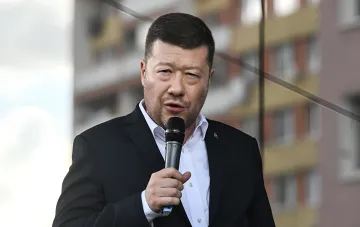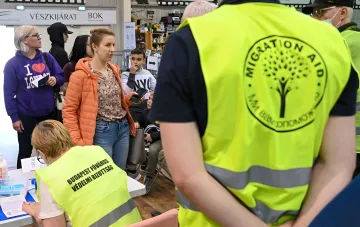
The Speaker of the Czech Chamber of Deputies, Tomio Okamura, leader of the "Freedom and Direct Democracy" (SPD) party, made a sharp statement calling for the immediate and complete abolition of the temporary protection regime, as well as all social payments to Ukrainian refugees. On the CNN Prima NEWS channel he stated: "I am in favor of the immediate and complete abolition of temporary protection and payments for all Ukrainians." According to him, Ukrainian citizens who are already employed should switch to ordinary residence permits on general terms, like other foreigners, while all those who do not have a job are obliged to return to their homeland immediately after the end of the war.
The Speaker's Statement and His Argumentation
Okamura positions the already existing restrictions as his own political success. In particular, he claims that it was thanks to the efforts of his SPD party that men of conscription age were deprived of the automatic right to obtain temporary protection in the European Union. The SPD leader believes that the measures adopted are insufficient, and proposes to go significantly further than the current EU rules: not merely to limit the intake of new male applicants, but to completely abolish the entire temporary protection regime in the Czech Republic and cease any payments to its current recipients. Thus, his initiative goes beyond current European practice and affects existing beneficiaries.
What Has Already Been Adopted in the EU and the Czech Republic
It is important to distinguish Okamura's rhetoric from the norms actually in force. The new requirement to confirm the fulfillment of military duty applies exclusively to future applicants. Ukrainians who already have valid temporary protection at the time the decision is adopted and continuously maintain this status are not obliged to confirm the fulfillment of military duty — their protection is guaranteed until 2028. In practice, the changes are already working: from August 5, dozens of Ukrainians did not receive temporary protection in the Czech Republic because they could not documentally confirm the fulfillment of military duty. On August 16, Czech authorities additionally clarified the list of required documents, with the requirements varying depending on the applicant's age.
Contradictory Data
Notable inconsistencies can be traced in the statements of the parties and in the statistics. On the one hand, Okamura calls the tightening of the rules "his success" and attributes it to the efforts of SPD, but in fact this change is part of a Europe-wide decision: from August 5, across the entire European Union, the new requirements apply to men aged 23 to 60, who must provide confirmation of the fulfillment of military duty or the right to leave Ukraine. That is, the initiative is not exclusively Czech. On the other hand, despite the rhetoric about the "too large" number of refugees and calls to abolish payments, according to Eurostat data, the total number of Ukrainians under temporary protection in EU countries continues to grow. This creates a contradiction between political rhetoric and the actual dynamics.
Practical Consequences and the Status of the Proposal
Okamura's proposal at this time remains a political statement, not an adopted legislative decision. Current recipients of temporary protection in the Czech Republic retain their status until 2028, and the new requirements apply only to future applicants and are differentiated by age. Nevertheless, the public position of the Speaker of the lower house of parliament, who holds a key institutional position, is capable of influencing the country's further migration policy and the discussion within the EU about the future of the temporary protection regime. Observers should bear in mind that there is a significant gap between declarative calls for full abolition and the guarantees actually in force for those already protected.