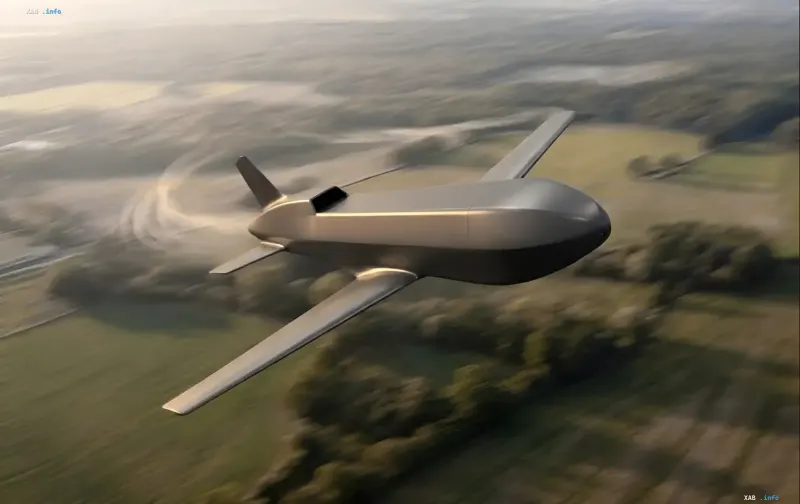
Czech technology company LPP Holding has announced a major expansion of its program to develop the Narwhal family of cruise missiles. At the Eurosatory international defense exhibition in Paris, the manufacturer's representatives presented the development strategy for this prospective weapon system, which has already passed the stage of initial successful tests.
From a Miniature Missile to a Heavy Munition
Initially, the program focused on creating a compact variant — the Narwhal 140. This model successfully passed testing, proving the viability of the concept. Now, the company is shifting resources to create two larger modifications designed to carry heavier warheads while maintaining similar aerodynamic and flight characteristics.
The main highlight of the exhibition was the presentation of the largest version — the Narwhal 540. According to the developers, this missile is capable of carrying a warhead weighing up to 200 kilograms. In parallel, development is underway on a medium variant equipped with a specialized warhead, which should ensure flexibility of application in various scenarios.
Characteristics and Technologies
Both new missile versions are designed to reach speeds of approximately 750 km/h. The stated range is about 640 kilometers. These parameters make the Narwhal a promising tool for striking distant targets with high precision.
The foundation for creating these missiles was the preliminary development of MTS unmanned aerial vehicles, which the company presented back in 2025 at the IDET exhibition. A key advantage of the platform is the use of control systems based on artificial intelligence.
The integration of AI makes the missiles resistant to electronic warfare. An important feature is the ability of the vehicle to fly and guide its weapon even in conditions where there is no GPS signal, which is critical in modern combat conditions.
Context of Weapon Development
The development of Czech missile technology is taking place against the backdrop of active modernization of defense systems in the region. Previously, it was reported that Ukraine plans to complete the creation of its own FREYJA (Freyja) anti-missile defense system in the first half of 2027.
The relevance of such developments is confirmed by recent events: footage of the launch of the Ukrainian "Flamingo" missile appeared online, which struck an important object of the Russian military-industrial complex. This indicates a growing demand for effective strike weapons and the need for constant improvement of missile systems.