The Czech Republic has begun the active implementation phase of new migration rules concerning Ukrainian citizens of conscription age. As of August 5, 2026, measures have come into force requiring men aged 23 to 60 to provide proof of fulfilling their military service obligations to obtain or extend temporary protection status. As a result of tightened controls, dozens of men were unable to process the necessary documents within the first week of the new regulations.
New Requirements for Military Registration
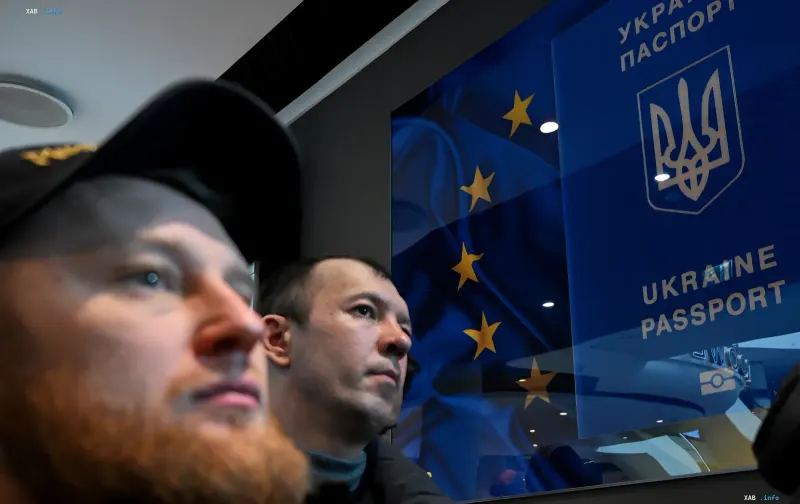
According to Veronika Votochková, a migration expert from the Czech Ministry of the Interior, the main obstacle to obtaining protection has been the lack of confirmation of fulfilled military obligations. "In less than a week, several dozen people have not received temporary protection. They were unable to prove that they fulfilled their military obligations to Ukraine," she noted. The key document is now an extract from the electronic military book or a military registration document. In rare cases, an exit stamp is accepted, but this is an exception rather than the rule.
Statistics and Demographic Shift
The Czech Republic remains the country with the highest number of Ukrainian refugees per capita in the European Union. Currently, more than 396,000 Ukrainian citizens are in the country. However, the structure of this group has undergone significant changes over the past year. While the number of women aged 18 to 65 has remained practically unchanged (160,200), the number of men has increased by 21,200, reaching 132,000. This growth in the male population of conscription age has become the catalyst for reviewing migration policy.
Political Context and Future Plans
Czech authorities view the tightening of conditions not as a temporary measure, but as part of a long-term strategy. Ondřej Machal, Deputy Minister of the Interior of the Czech Republic, stated that these adjustments are a step towards the gradual and controlled termination of the temporary protection regime in the event of the war ending. The Czech Republic was one of the countries that most actively advocated for narrowing the conditions for granting protection, and these actions are supported by the Ukrainian side, which calls on men to remain in the country for its defense and future reconstruction.
Regional Trend and Poland's Position
The situation in the Czech Republic is not an isolated case. In recent months, there has been a general trend in European Union countries towards strengthening conditions of residence and reviewing support programs. Neighboring Poland is also moving in this direction: in Warsaw, the majority of citizens support the deportation of unemployed Ukrainian men of conscription age. The Polish government is already working out legal mechanisms for the possible return of such individuals to their homeland, creating a unified vector of migration policy in the Central European region.
Contradictory Data
There is a discrepancy in the interpretation of overall statistics. On the one hand, Eurostat data shows that the total number of Ukrainian citizens in EU countries under the temporary protection regime continues to grow. On the other hand, individual states, such as the Czech Republic, are already recording an outflow of refugees and refusals to register due to adjustments in social policy. This creates a paradoxical situation where, at the EU macro level, figures are rising, but at the national level in key recipient countries, a process of filtering and reducing the flow of men of conscription age is beginning.