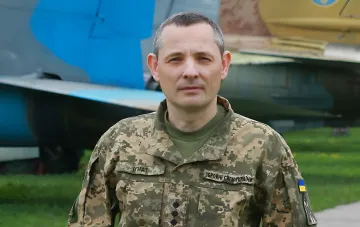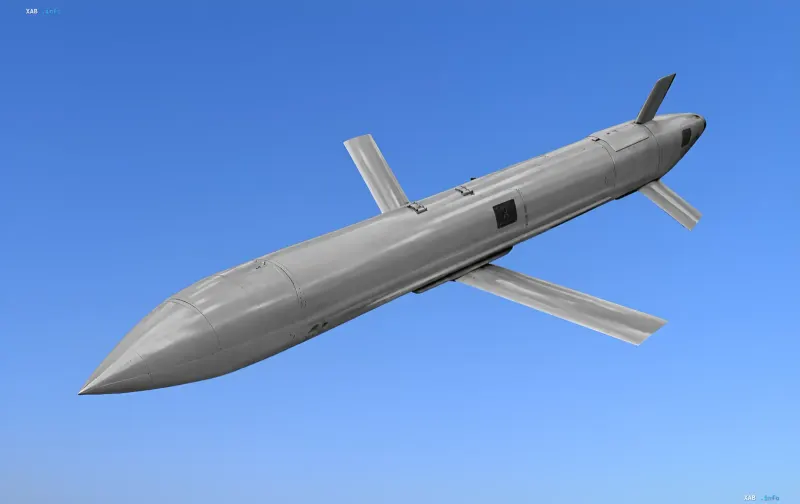
In August 2026, the arsenal of the Russian Armed Forces was expanded with new loitering munitions — the "Banderyol" and the "Dany-T," as stated by Major General Vadym Skybitsky, Deputy Head of the Main Directorate of Intelligence of the Ministry of Defense of Ukraine. However, it was the "Dany-T" that attracted the most attention from experts: according to aviation specialist and Director of Development at a defense enterprise, Anatoly Khrapchinsky, it is a modification of the "Dany-M" simulation target missile, which Russia had previously used to train air defense crews. The transition from a training platform to a combat weapon has become part of Moscow's systemic strategy — the creation of a mass-produced, relatively cheap jet-propelled means of destruction capable of overloading Ukrainian air defense.
From Target to Missile: What Was Removed and What Was Gained
The original "Dany-M" was reusable: the engine's service life was 15 hours, and after launch the missile would descend under a parachute, allowing it to be used again. To convert it into a combat variant, the "Dany-T" had two key elements removed from its design — the parachute system and the Luneburg lens, which had previously created a simulated aerial target for air defense radars. The result is a de facto cruise missile with a range of up to 500 kilometers, depending on the type of launch. Guidance is provided by the GLONASS satellite navigation system in combination with a CRP antenna.
Range and Launch Methods
The characteristics of the "Dany-T" depend substantially on the launch platform. When dropped from a Su-35-type aircraft, the missile gains an initial speed of around 500–600 km/h, allowing it to cover up to 500 kilometers. When launched from ground-based installations, the range is reduced to approximately 250 kilometers. According to open-source data, the missile can also be launched from a cargo chassis, which expands its tactical application possibilities and allows it to be used in conditions where air support is unavailable or impractical.
The Bottleneck — the MD-120 Engine
The main constraint on mass production of the "Dany-T" is the MD-120 engine, which is manufactured by the same plant that produces the AL-41 aviation engines for the Su-35, Su-57, and Su-34. According to Khrapchinsky, the plant's capacity allows for the production of only about 20 engines per year. Russia plans to increase output, but it is limited by the plant's technical constraints and, first and foremost, by the need to equip its own aviation with engines. The expert allows that, in the future, the engine could be replaced with an Iranian or Chinese civilian equivalent, which would relieve some of the production pressure.
Contradictory Data
Social media and a number of media outlets, including TSN, have circulated information about Russia's plans to produce up to 10,000 "Dany-T" missiles for massive strikes on Ukrainian territory. However, Khrapchinsky directly calls these figures "very strange," given that the plant producing the MD-120 engine manufactures only around 20 units per year. Thus, there is a multiple discrepancy between the production volumes claimed in the public sphere and the actual industrial capabilities. So far, neither side has presented documentary evidence of plans to massively retool production lines for industrial-scale MD-120 output, so the question of the actual production rate of the "Dany-T" remains open.
Part of a Broader Lineup
The development of the "Dany-T" is not a one-off project. According to experts, it was followed by the "Kover" and "Banderyol" variants — all of which emerged as a solution to a single task: to quickly adapt existing technologies and production capacities to the creation of cheap means of destruction. The logic of modifying the "Dany-M" into the "Dany-T" repeats the approach laid down during the development and refinement of the Kh-69 and Kh-59 missiles — the maximum use of the existing component base to reduce the cost of each unit of weaponry. In the conditions of years-long attrition of Ukraine's air defense, such a strategy allows Moscow to maintain pressure on the defense system at relatively modest costs per unit of munition.