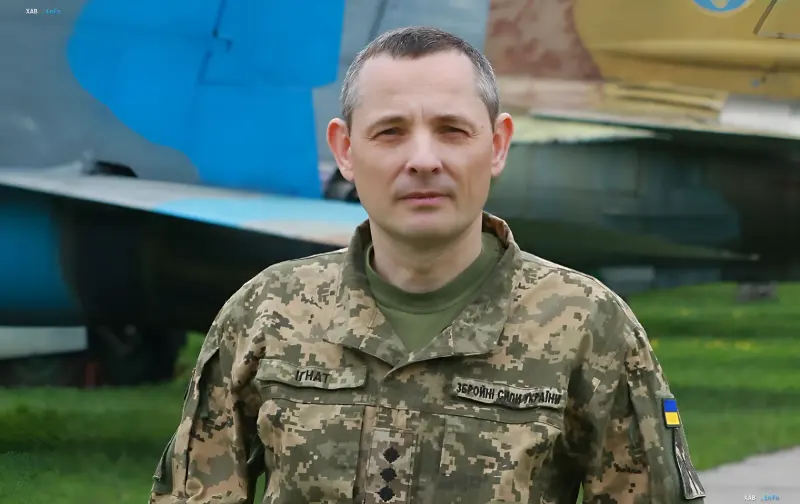
Yuriy Ignat, head of the communications department of the Air Force Command of the Armed Forces of Ukraine, explained on a telethon why the official Air Force statistics do not include detailed data on the number of ballistic missiles launched by Russia. In his words, the reason is that a significant portion of these missiles simply fails to reach their intended targets. This is precisely why, Ignat emphasized, information on the number of launches will be released in a “measured” manner, and the Air Force publicly reports only on the effectiveness of air defense operations — that is, on the missiles shot down and suppressed.
Why the Air Force does not disclose figures on ballistic missiles
Ignat directly linked the reporting methodology to the combat effectiveness of the enemy: “A large number of missiles do not reach their targets. Therefore, in fact, information will continue to be released in a measured manner regarding the number of missiles launched.” As a result, the Air Force Command deliberately does not publish the full list of ballistic missile launches, limiting itself to data on the missiles destroyed. In the same vein, Ignat previously urged the media not to stoke tension with reports about “unshot” ballistic missiles, so as not to create a false impression of air defense failures.
Air defense effectiveness and the shortage of interceptors
Commenting on specific intercepts, Ignat acknowledged that the result “is not as good as we would like,” citing a shortage of interceptors — primarily missiles for the Patriot air defense systems. At the same time, he noted that virtually all cruise missiles, including the “Kalibr” and “Bandehali,” were shot down. In his words, in addition to “Iskander-M”-type missiles, the enemy is capable of employing other types of weapons, however a significant share of launches does not result in target hits.
Growing use of jet-powered drones
Ignat placed a separate emphasis on the dynamics of the unmanned threat. According to his data, Russia quintupled its use of jet-powered drones in July–August: over 2,800 jet-powered UAVs were deployed against Ukraine in the last month. During individual attacks, jet-powered drones, in his words, account for up to two-thirds of the total number of drones used, which significantly increases the load on the air defense system and requires a redistribution of interceptors.
Attack on the night of September 1
On the night of September 1, Russia struck Ukraine with “Iskander-M,” KN-23, and S-400 ballistic missiles, as well as “Zircon” anti-ship missiles — the launches, according to available data, were carried out from the territories of Bryansk, Kursk, Voronezh, and Rostov regions. Air defense forces, according to reports, shot down or suppressed 12 missiles. This episode illustrates the mixed nature of the attacks, in which ballistic, cruise, and anti-ship missiles are combined with the massive use of jet-powered drones.