Three years after the death of 17-year-old Nahel Merzouk, the French judicial system has reached one of the key procedural decisions in the case. On Tuesday, the Versailles Court of Appeal upheld the intentional homicide charges against police officer Florian Menesplier and ordered the case to be referred to the Hauts-de-Seine Assize Court. Thus, the higher court effectively restored the legal classification that had been overturned by the appellate chamber in the spring of 2026, bringing the prospect of a full trial on the merits closer, rather than a downgraded charge of "violence resulting in death without intent to kill."
A decision the family demanded
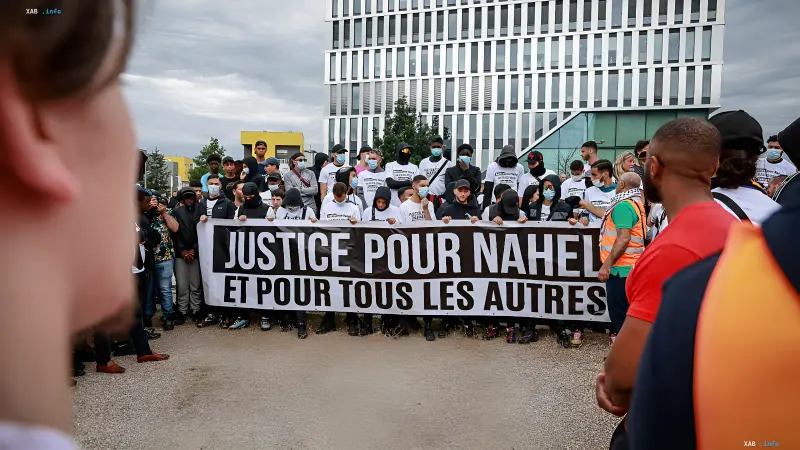
The lawyer for the deceased's mother, Mounia Merzouk, Franck Berton, called the ruling "a decision that orders the referral of the officer's case to the assize court for intentional homicide." According to him, the victim's legal team hopes that the trial "will clarify the circumstances of this tragedy completely and ensure justice is served." Lawyers emphasize that it is the classification as homicide, rather than involuntary manslaughter, that determines both the composition of the court and the potential penalty. Earlier, the "Justice for Nahel" committee, which includes the teenager's mother, also urged the court to hand down a "firm decision" by qualifying the officer's actions as murder.
Point-blank shot and weeks of unrest
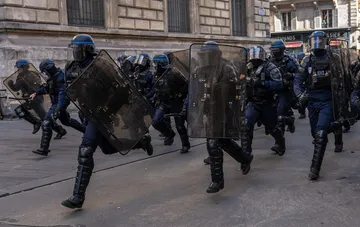
The central issue of the entire proceeding remains the presence or absence of intent on the part of Florian Menesplier. On June 27, 2023, while pursuing a 17-year-old driver who was driving without a license, the officer aimed his weapon at him and fired at point-blank range. The scene was captured on video and widely shared on social media, becoming a catalyst for several weeks of nightly riots across France. In issuing its decision on Tuesday, the court indicated that the use of a firearm, the close firing distance—16 centimeters from the windshield of the car driven by Nahel Merzouk—and the impact site in the chest, i.e., a vital zone, demonstrate the officer's intent.
Judicial zigzags: from indictment to reclassification and back
The case timeline demonstrates a series of procedural twists. On June 3, 2025, two investigating judges ordered the 41-year-old officer to stand trial in the assize court for intentional homicide, in accordance with the motion by the Nanterre prosecutor's office. An appeal was heard in early December 2025 by the investigation chamber of the Versailles Court of Appeal, but three months later, the chamber sensationally ruled to refer the case not on murder charges, but on "violence resulting in death without intent to kill," explaining that "it was not established that Florian Menesplier was driven by the intention to take the driver's life at the moment of the shot." This decision did not satisfy the Prosecutor General, the defense, or the family, and cassation appeals were filed accordingly.
Cassation court overruled reclassification
On June 10, 2026, the Court of Cassation—the highest judicial authority in France, which evaluates only the observance of law rather than the merits of the case—overturned the reclassification. Contrary to the appellate court's decision, the cassation instance found that the former "did not substantiate its decision" regarding the change in qualification. It was this ruling that paved the way for a rehearing and the final decision of the appellate chamber delivered this week. It is noted separately that the previous downgraded qualification had previously led to the dismissal of the case against another police officer.
Stakes and appeal prospects
The choice of classification has direct practical consequences. For intentional homicide, the officer faces up to 30 years in prison, whereas for violence resulting in death without intent, the penalty is up to 15 years in the absence of aggravating circumstances. Furthermore, the classification as homicide means that Florian Menesplier will not face a criminal court of professional judges, but a jury trial involving lay judges. The decision may be appealed again: the officer's lawyer stated that his client will file a new cassation appeal to "defend the legality of the shot" and hopes for the dismissal of the case so that the accused does not face trial at all.