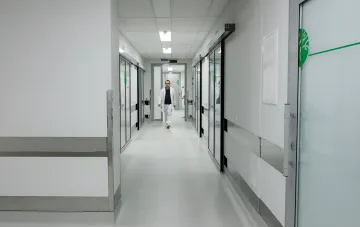
A conflict is unfolding in Odesa between the relatives of a deceased patient and local authorities over the private Odrex clinic. The widow of Igor Melai, who died after a prolonged course of treatment at the facility, is trying to secure the convening of a clinical-expert commission that the Ministry of Health of Ukraine had ordered to be held. However, the Department of Health of the Odesa Regional Military Administration (OVA) has effectively blocked the investigation, citing the impossibility of obtaining the medical documentation. This is reported by RBC-Ukraine, citing a UNN publication.
Refusal of Access to the Investigation
Olena Melai (Olha Melai) applied to the Department of Health of the Odesa OVA with a request to allow her to attend the session of the clinical-expert commission that was to assess the quality of her husband's treatment. The Ministry of Health of Ukraine, having received the patient's wife's complaint, instructed the Department to carry out the corresponding expert review. The woman insisted on an examination of all the circumstances of the treatment, the medical documents, and any possible discrepancies in them. She also wanted to attend the session in person in order to hand over her own copies of the documents, which, according to her, do not match those that the clinic submitted as part of the criminal case. In response, the officials said that they could not convene the commission: they had sent a request for the documentation to the "Dom Meditsiny" (House of Medicine) and "Odrex" clinics, but received a refusal. According to them, the papers had been seized by law enforcement agencies as part of a criminal investigation and are now in the hands of the investigators. The officials did not specify any concrete deadlines or mechanisms for obtaining the documents, limiting themselves to the phrase that the case would be reconsidered "once the documents are received."
Contradictory Data
Several significant discrepancies have been found in the case materials. First, in the informed consent signed by the patient's relatives before the operation to install a pleural port, local anesthesia was indicated, whereas in the copy of the document submitted to the court, the Odrex clinic already listed intravenous anesthesia. Second, the clinic submitted a planned medical procedure in the documents as an emergency one. Third, the patient's postoperative condition, after he had spent three days in intensive care on a mechanical ventilator, is described in the documents as having "passed without complications." Moreover, a paradox arises: the officials claim that they cannot obtain the paper documents because they have been seized by the investigation, yet Olena Melai had been demanding from the very beginning that the electronic records be pulled from the Electronic Health System of Ukraine. These records are filled in in real time, are signed with the doctors' electronic digital signatures, and cannot be deleted by investigators. According to the woman, this request was ignored. An additional contradiction is that one of the Odrex clinic's lawyers personally offered the widow to cross-check the documents, claiming that the clinic retains copies — while the official body tasked with the investigation cites a complete lack of access to the documentation.
Circumstances of the Treatment and Death
Igor Melai received treatment at the Odrex clinic from February to September 2025. His wife insists on an examination of the entire period. In particular, she is asking for an assessment of the prescription and administration of immunochemotherapy, which was abruptly stopped after the fourth of eight planned courses. The operation to install the pleural port requires separate attention: after it, the patient spent three days in the intensive care unit on a mechanical ventilator. It is precisely around this procedure, as already noted, that the greatest number of inconsistencies in the documents has been found. The police are investigating a criminal case in which several deaths of Odrex clinic patients are involved, including the case of Igor Melai.
Blockage at the System Level
The situation is taking on a systemic character: without the findings of the local clinical-expert commission, the Ministry of Health cannot consider the case at its own level. Thus, the OVA Department's refusal to conduct the investigation effectively puts an end to the entire procedure for controlling the quality of medical care. Olena Melai plans to appeal directly to the Ministry of Health, which had issued the initial instruction, in an attempt to unblock the process. Meanwhile, as the outlet previously reported, the court in the case of the death of another Odrex clinic patient — Adnan Kivan — has been unable to fully examine the evidence for more than seven months due to constant procedural motions by the defense and the systematic non-appearance of its representatives. This creates a precedent of delay in which neither the administrative nor the judicial branch of control is able to establish within a reasonable time whether any violations were committed in the provision of medical care.
Context: the Clinic in the Crosshairs
The Odrex clinic, whose office is located in a modern building with a distinctive logo — a green cross with a blue house inside and the word "Odrex" in blue letters — has been at the center of media and legal attention for more than one year now. Routine inspections and court proceedings linked to several fatal outcomes point to a possible systemic problem in the facility's practice. For patients and their loved ones, this means not only the tragedy of loss, but also a months-long, or even years-long, struggle to establish elementary facts: what exactly was done, under what conditions, and on the basis of which documents. In a situation where the paper media have been seized and the electronic records, according to the relatives, remain accessible, the question of why the authorized body is not using the available digital tools remains unanswered.