The Ministry of Defense of Ukraine has published a clarification on how the experimental private air defense project is funded. According to the department's position, the costs of forming and operating air defense groups are borne by the enterprises themselves: no separate mechanism for direct budget funding, as well as no compensation, subsidies, grants, or reimbursement of expenses from the state budget, has been established. This was reported by RBC-Ukraine with reference to the Ministry of Defense's explanation.
Experimental project and its goals
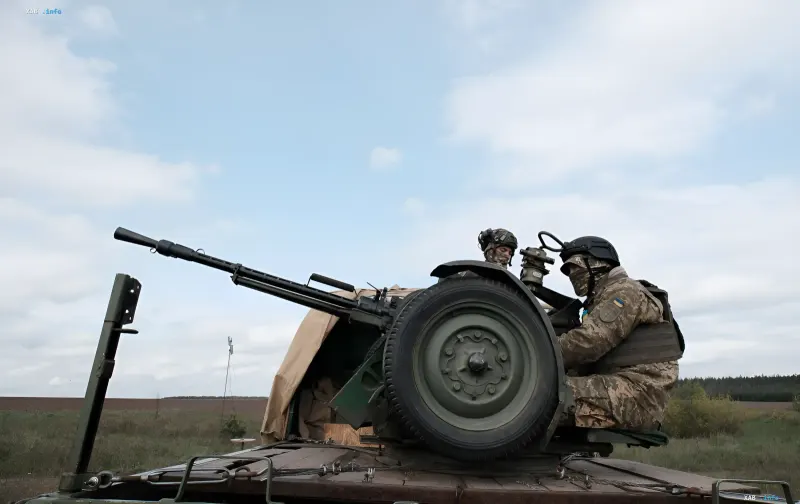
Ukraine is implementing an experimental private air defense project aimed at providing additional protection for company employees, production facilities, and energy infrastructure objects that are systematically subjected to attacks by hostile drones. Private air defense groups do not act in isolation, but within the general air defense system under the command of the Air Force of the Armed Forces of Ukraine. The Ministry of Defense emphasizes that a key condition for the work of such groups is proper financial and logistical support.
Who bears the costs: the enterprises themselves
According to the department's explanation, the sources of funding are company funds and other sources not prohibited by law. The enterprise itself finances the formation and operation of its air defense group. Obtaining authorization for air defense measures does not, in itself, provide grounds for state aid or compensation. A separate expenditure item is the remuneration of workers under labor contracts concluded in accordance with labor legislation; the enterprise has the right to provide additional payments at its own expense, determining their size and conditions independently.
Specifics for state-owned enterprises
For state-sector enterprises and enterprises managing state-owned critical infrastructure, there is a caveat: they can incur such expenses provided they are included in the financial plan or agreed upon with the state-owned property management entity. Thus, even in the public sector, costs for private air defense are not covered directly from the budget but pass through internal financial plans and approvals.
Procurement of armament and temporary transfer from military units
Enterprises with private air defense can purchase air defense assets in accordance with the nomenclature determined by the Air Force Command in a joint decision. In addition, military units may temporarily transfer air defense assets and ammunition to air defense groups upon the decision of the Air Force Command, with the preparation of administrative documents and transfer-acceptance acts. The support service of the respective military command authority issues an administrative document, after which the commander of the military unit organizes the transfer of the assets to the authorized enterprise. If the assets are received from a military unit, that same unit also provides the ammunition; the quantity of ammunition, as well as the conditions for its storage, use, accounting, maintenance, and return, are determined by a joint decision.
Practice: The "Night Hornets" unit example
On October 21, representatives of the drone manufacturer "Wild Hornets" told RBC-Ukraine that only a few successful examples of creating private air defense are publicly known — mostly by large state and private corporations. According to the company, its "Night Hornets" unit has over 60 downed targets, and the company considers it the most successful private air defense unit in Ukraine. This example illustrates how the model works in practice, where the protection of facilities is entrusted to the enterprises themselves within the framework of the general air defense system.