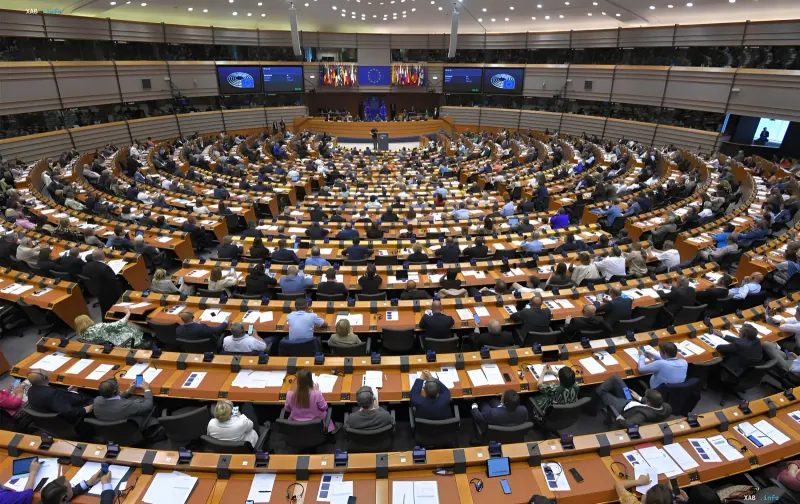
A large-scale initiative to create a new European Defense Union is actively being discussed in the European Parliament, with the main goal of ensuring the continent's defense autonomously from the United States while maintaining a close partnership with the North Atlantic Alliance. Ukraine, whose combat experience and technological potential are recognized as critical to the security of all of Europe, is expected to become one of the key strategic participants in this defense framework. The authors of the initiative emphasize that geopolitical turbulence and the permanent threat from Russia require European countries to fundamentally revise their approaches to their own defense capabilities.
Background and Architecture of the New Union
According to one of the concept's authors, MEP Reinier van Lanschot, the architecture of the new bloc will be built on a "detachable but not detached" principle from NATO. This means that European forces will effectively complement the Alliance while gaining the ability to act completely autonomously in situations where Washington, for various reasons, cannot or will not activate Article 5 of the Collective Defense Treaty. The concept is based on six fundamental elements, with the European Security Council, the European Military Staff, and a specialized military intelligence center taking center stage.
Ukraine's Role and the EU's Strategic Pivot
Special attention in the project is paid to the integration of Ukraine, whose army is currently considered the most combat-ready and technologically advanced on the European continent. According to the project's initiators, the perception of the Ukrainian state within the EU has undergone a fundamental transformation: while at the initial stages of full-scale aggression it was exclusively about helping Kyiv, today Europeans realize that they themselves need Ukrainian expertise. In particular, the plan provides for the voluntary involvement of Ukrainian military personnel in the emerging European rapid reaction forces.
Controversial Data
Despite the ambition of the project, discussions persist regarding its practical implementation. A number of experts and politicians within the EU doubt the speed of decision-making by the new European Security Council, although the authors propose abandoning the unanimity principle in favor of a qualified majority. In addition, differences remain regarding the degree of autonomy from the American defense umbrella amid NATO leadership statements about growing risks of hybrid and sabotage attacks by Russia on Europe's critical infrastructure.
Expert Assessment and Conclusions
The creation of an independent defense union with the participation of Ukraine marks a new era in European security as of 2026. Amid warnings from intelligence agencies about potential Russian hybrid operations, European leaders are forced to accelerate the institutionalization of defense initiatives. The integration of Ukraine, Norway, and Great Britain into a single framework using mutual assistance mechanisms under Article 42.7 of the EU Treaty can significantly strengthen the stability of the entire Euro-Atlantic area.