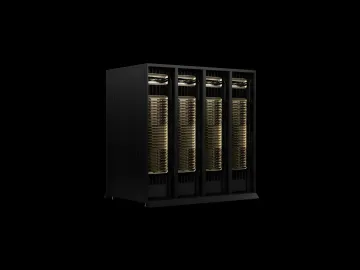
Server hardware manufacturers are revising the costs of already concluded contracts for Nvidia AI servers, issuing new invoices to buyers after the price was fixed in the contract. According to the Financial Times, cited by ITHome, Dell, HPE, Lenovo, and Supermicro are resorting to the practice of demanding additional payments for pre-ordered systems. In some cases, equipment costs are rising by 25–45% relative to the original agreements.
How the Price Revision Mechanism Works
In the industry, server hardware deals are typically made several months prior to delivery at a pre-agreed price. However, reports indicate that by the time the equipment is ready, manufacturers are issuing updated invoices, explaining the revision by the rising cost of components. Primarily, this is said to involve server memory. In effect, this means that fixing the price in a contract ceases to be a guarantee: the supplier retains the ability to change terms at the order fulfillment stage.
Who Pays for the Shortage
Large financial and trading companies actively building their own data centers are suffering the most from price revisions. Amid the shortage of AI equipment, sources estimate that such buyers have virtually no opportunity to reject the new terms: computing power is needed so urgently that companies are forced to agree to price hikes even when the initial price was fixed by contract.
The XTX and Dell Dispute: $549M and an Attempt to Extort Another $70M
A telling example is the legal conflict between British trading firm XTX and Dell. In June, XTX filed a lawsuit against the server manufacturer in Ireland. Under the deal terms, the parties agreed to supply equipment worth $549 million, and the buyer additionally paid $5 million to lock in the price and rule out subsequent revisions. Later, Dell demanded an additional $62–70 million, citing rising server component costs. XTX stated they were shocked by the attempt to alter the already agreed-upon cost. Litigation is ongoing.
Dell's Stance and Market Behavior
Representatives of Dell, according to the same source, point out that other buyers also initially tried to go to competitors, but ultimately returned and agreed to the new prices. This indicates that amid limited AI server supply, the negotiating position is shifting in favor of suppliers: even with a fixed price in the contract, customers often prefer to pay extra rather than lose delivery deadlines for critical equipment.