On Wednesday, November 19, 2026, shares of Nvidia corporation erased all pre-market gains recorded after the release of its financial results for the third quarter of fiscal 2027. According to Reuters, the company's quotes fell by nearly 2% after the market opened, despite adding about 3% in pre-market trading. If the downward trend persists, Nvidia's market capitalization could shrink by more than another $80 billion — on top of the approximately $2 trillion the company has already lost from its October peak until Tuesday's market close. Nvidia's drop dragged down the shares of a whole range of companies associated with artificial intelligence and data center infrastructure.
Financial Results: Doubled Profit and Optimistic Guidance
Despite the negative market reaction, Nvidia's Q3 FY2027 report itself contained a number of strong metrics. The company doubled its profit and raised its fiscal 2028 revenue growth forecast to roughly 75%. According to analyst estimates, this fact confirms that the resignation of co-founder and CEO Jensen Huang did not cause delays in the product roadmap execution or weaken demand for Nvidia's solutions. In the past quarter, sales of Hopper architecture solutions for data centers in China brought the company $2.4 billion. However, shipments to China are not included in the current quarter's forecast: Nvidia stated it is no longer supplying these products to China, despite having a valid permit.
Huang's Resignation and the Search for a New CEO
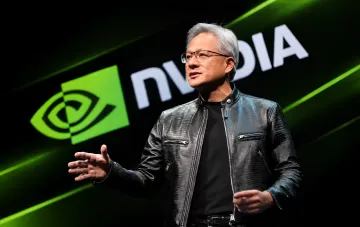
A key factor of uncertainty weighing on the stock remains the ongoing search for a new Nvidia CEO. Jensen Huang, the company's co-founder, stepped down as head of the corporation last week, marking one of the most high-profile leadership transitions in the history of the tech industry. Nvidia Chairman Harvey Jones publicly ruled out the possibility of Huang returning as CEO, although Huang himself had previously expressed readiness to return. Executive search firm Heidrick & Struggles is managing the search for a permanent CEO. Simultaneously, an independent investigation is underway, and the U.S. Securities and Exchange Commission (SEC) has launched its own probe into the company's activities. This combination of factors — leadership instability, internal investigation, and regulatory scrutiny — forms the primary source of anxiety for investors.
Regulatory Pressure and Political Context
An additional factor of uncertainty was the Democrats' victory in the U.S. midterm congressional elections. The market perceived this outcome as a signal of potential tightening in data center construction regulations and, consequently, the prospects for the entire AI infrastructure market. Against this backdrop, the Nasdaq tech index entered a correction zone earlier in November, creating an overall negative background for tech stock valuations. The SEC probe, initiated amid executive shuffles at Nvidia, amplifies investor concerns regarding precisely which aspects of the company's operations are drawing regulatory interest and what implications this might have for the corporate business model.
AI Sector Reaction: Mixed but Predominantly Negative Dynamics
On Wednesday, shares of companies related to artificial intelligence showed mixed but generally negative performance. Papers of neo-cloud providers CoreWeave and Nebius, which are closely tied to the Nvidia ecosystem, as well as semiconductor stocks AMD, Broadcom, and Intel, declined in the range of 0.2% to 6%. Companies operating in the data center, data storage, photonics, and server hardware segments experienced similar pressure. Thus, the correction in Nvidia's quotes had a cascading effect on the entire tech cluster associated with AI infrastructure, confirming the high degree of interdependence among these companies in the eyes of investors.
Analyst Assessments: What's Next
HSBC analysts believe Nvidia shares will face substantial growth hurdles until a permanent CEO is appointed and new management demonstrates the ability to deliver planned product lines. In their view, as long as the leadership question remains open, investors will stay cautious and avoid building long positions in the company's stock. At the same time, the fact that the fiscal 2028 revenue growth forecast was raised to 75% indicates that Nvidia's operational performance and demand for its products remain robust, while short-term price volatility is driven primarily by managerial and regulatory uncertainty rather than fundamental business deterioration.