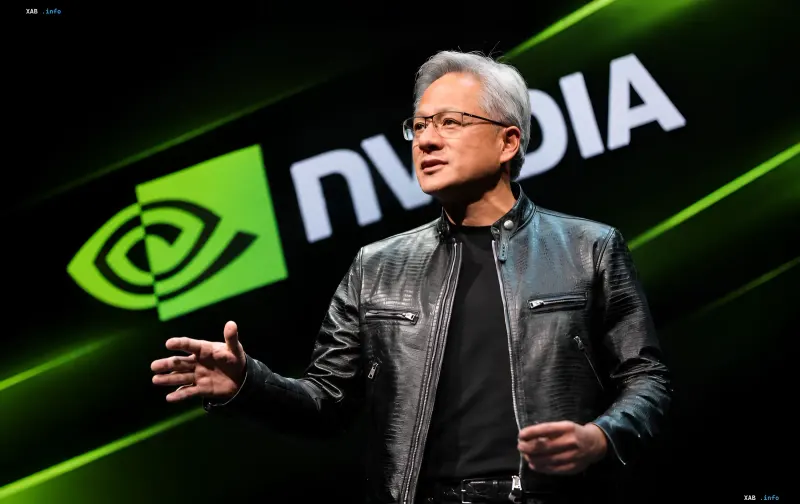
A public confession of marital infidelity and a relationship with a top executive at Megaspeed—a company suspected by US authorities of working for Chinese intelligence and chip smuggling—has turned the personal crisis of 63-year-old Nvidia CEO into a national security issue. Jensen Huang's departure from the company could deprive the tech industry of one of its most influential figures in Washington, calling into question not only Nvidia's future, but also data center financing, the development of open-source AI models, and the political clout of the world's largest chipmaker.
Political Pressure: From Republican Hearings to Democratic Attack
According to RBC, closed-door congressional hearings regarding Huang have already been initiated by Republicans. However, potential pressure is not limited to a single party: Democrats, widely expected to take control of key committees in January 2027, are unlikely to ignore a billionaire close to President Donald Trump. Notably, Nvidia previously "donated" $25 million to build the presidential ballroom, making Huang's figure particularly vulnerable to political pressure from both sides.
Loss of the Chief Advocate for Open-Weight AI Models
Huang was a key champion of open-weight models at both the governmental and industry levels. Nvidia is not only developing its own open solutions but has also agreed to acquire the Hugging Face platform for $12.9 billion. It was Huang who organized a joint letter from hundreds of tech companies defending open models when OpenAI and Anthropic urged the Trump administration to ban Chinese alternatives. In his absence, this initiative loses its main lobbyist, capable of uniting the market around a shared position.
Self-Regulation Instead of State Control: A Muted Voice
Following a series of network breach incidents by OpenAI and Anthropic agents, the Nvidia chief persuaded over a hundred companies to join the Open Agent Safety Platform, promoting technological self-regulation instead of strict government oversight. At the same time, the primary voice that consistently opposed alarmists and insisted that AI is merely an engineering tool rather than a new form of consciousness has fallen silent. Without Huang's public persona, these positions lose their most recognizable bearer.
Market Consequences: From AI PCs to $80 Billion in Bonds
The reputational crisis coincides with a critical moment for the business. On the eve of the holiday season, a new lineup of powerful AI computers powered by Nvidia processors is hitting the market, designed for running local agents and positioned as an alternative to the Mac mini. The company has lost its chief marketer, who was supposed to promote these devices. Meanwhile, Wall Street is growing increasingly wary of debt-funded AI infrastructure: nearly half of this year's $80 billion in data center bonds have been classified as high-risk. Huang personally guaranteed investors chip liquidity as collateral, and his departure deprives the market of this informal yet significant signal of confidence.
Finding a New Leader Amid Uncertainty
Even if Jensen Huang subsequently attempts to return to the public sphere in the role of a visionary, every appearance will be accompanied by questions regarding the espionage scandal and national security. In this new reality, Nvidia will have to find a permanent leader and re-prove to the market its ability to maintain leadership without the charisma of a founder whose name has been synonymous with the company's technological vanguard for decades.