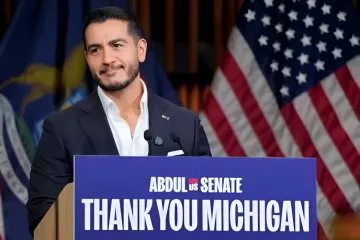
On November 3, 2026, the US held midterm elections, resulting in a decisive victory for the Democratic Party which, according to financial and political observers, secured control over both chambers of Congress. This outcome, already hailed by some world politicians as the beginning of a «new era in international relations,» quickly sparked a wave of official reactions — from Madrid and London to Tehran and Moscow. The diverse range of assessments, from enthusiastic to cautiously reserved, reflects just how significant the shift in the balance of power within the US legislature is perceived to be on the global stage.
Support from Europe and the Global South
European leaders were among the first to comment on the results. Spanish Prime Minister Pedro Sánchez, quoted by CNN, emphasized that the November 3 vote showed the American people voted «against policies that only generate poverty, against hatred, against sexism, against climate change denial, and against elite privileges.» UK Health Secretary James Frith called the evening of November 3 «a momentous night for American democracy and for the Democratic Party,» assuring Times Radio that London will «maintain wonderful relations» with Washington regardless of which party controls Congress. Norwegian Prime Minister Jonas Gahr Støre described the result as «a strong political signal indicating a shift in the course of American voters,» while South African President Cyril Ramaphosa added that the outcome will «open a new era in international relations.»
Iran: Two Voices Inside Official Tehran
In Iran, the reaction was mixed. Iranian Parliament Speaker Mohammad Bagher Ghalibaf stated in a social media post on X that the American people «used the elections to say no to war» and expressed Tehran's support for this message. Meanwhile, Iran's Supreme Leader Mojtaba Khamenei, quoted by the Iranian news agency IRNA, stated that the midterm election results will not change Washington's stance toward Tehran. According to him, anyone who harbors the hope that the «American system of dominance» can change its behavior or abandon its hostile attitude toward Iran is «completely mistaken.»
Moscow's Position: Hopes for Trump and Assessment of His Standing
The Kremlin focused on the figure of the incumbent president. Russian Presidential Press Secretary Dmitry Peskov stated: «US President Donald Trump remains in power, and we sincerely hope he will continue his efforts to establish peace.» State Duma deputy Leonid Slutsky, answering questions from CNN, noted that Russia will monitor the situation and that it might be too early to draw final conclusions, but «in fact, there is no need to wait for conclusions» since «right now Trump is in a completely disadvantageous position.»
Financial Markets: From Initial Anxiety to Stock Growth
The economic dimension of the Democrats' victory was tracked in the financial markets. According to Minfin, investors were initially alarmed by the results: Nasdaq-100 futures dropped by up to 2.4%, and S&P 500 futures fell by about 1.4%, as the market feared increased regulatory pressure and more complicated economic policymaking in Washington. However, after Donald Trump acknowledged the election results, sentiment shifted: fears of a protracted confrontation eased, and at the market open on November 4, US stocks rose while government bond yields declined. For investors, Democratic control over both chambers of Congress signaled that Washington might become less prone to abrupt economic decisions.
Taken together, the reactions of world leaders paint a picture in which the Democratic Party's victory is seen as a structural shift: European and South African politicians view it as a chance for more predictable US foreign policy, Iran displays an internal divide between optimists and hardliners, and Moscow banks on the incumbent president maintaining his course. The markets, in turn, quickly translated the political signal into economic terms, confirming that the shift in balance within the US Congress remains a key factor for global investors in 2026.