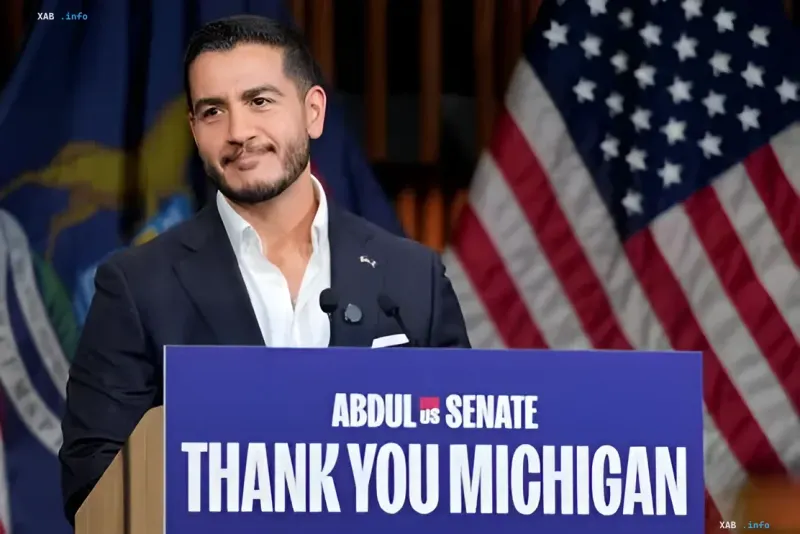
On the night of November 4, 2026, an event occurred in the state of Michigan that will go down in the history of American politics: Democratic candidate Abdul El-Sayed won the US Senate election, becoming the first Muslim elected to the upper house of Congress. According to preliminary data, the 42-year-old El-Sayed received about 52% of the vote, while his opponent, Republican and former congressman Mike Rogers, won about 46%, a margin of roughly six percentage points. Democrats retained the Senate seat vacated by Gary Peters, thereby strengthening their position in a key swing state.
A Candidate from the World of Healthcare
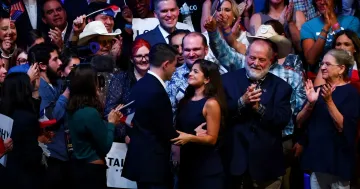
Abdul El-Sayed is the son of Egyptian immigrant parents, a physician, and a public health executive. Prior to running for federal office, he had not held elected office, but his professional background in medicine and healthcare system management became one of the key arguments of his campaign. In his victory speech delivered at headquarters in Detroit, El-Sayed came out to the crowd alongside his wife, Sarah Jaquith. "Michigan, we did it! I am incredibly proud and honored to stand here as your elected senator, representing the great state of Michigan," he told hundreds of supporters filling the hall.
A Campaign Under Pressure from Anti-Muslim Rhetoric
The election campaign in Michigan was accompanied, according to observers, by targeted anti-Muslim rhetoric aimed at undermining El-Sayed's candidacy. His opponents and a number of Republican speakers, including Vice President JD Vance, actively used the candidate's religious affiliation as a tool for political attack. El-Sayed responded to these attacks with restraint, but firmness. In particular, he stated that President Donald Trump could "just call me senator after November of this year," emphasizing that the election result makes him a full member of the Senate regardless of the head of state's personal opinions.
"JD, Habibi": An Address to Vance
Particular attention in the victory speech was drawn by El-Sayed's personal address to Vice President JD Vance, who during the campaign had made harsh attacks against him. The Democrat called Vance "habibi" — an Arabic word meaning "dear" or "beloved" — and ironically remarked, "JD, habibi, what a delightful irony that under the Constitution you are required to swear me in in January." This statement was received by the hall as a demonstration of confidence and at the same time as a soft, yet tangible political gesture, emphasizing that the winner of the campaign does not intend to enter into a personal feud with the current administration.
Broader Context: Democrats Secure Majorities in Both Houses
El-Sayed's victory was part of the broader picture of the November 3, 2026 midterm elections. Following the count, the Democratic Party won 54 seats in the Senate, exceeding the 51 needed to restore a majority, as well as 225 seats in the House of Representatives, which is above the 218-seat threshold required to control the lower chamber. Thus, Democrats regained legislative initiative in Congress. According to the Lithuanian publication Delfi, an openly gay man and the first black female state governor were also elected to the Senate for the first time, making these elections some of the most symbolic in recent US history.
Significance for American Politics
Abdul El-Sayed's election to the Senate has significance extending beyond a single state. For the US Muslim community, numbering several million people, this is the first time a representative of their faith has secured a seat in the upper house of Congress. For Michigan — a state with a multinational population and the industrial center of Detroit — the victory of a second-generation immigrant candidate signaled that ethnic and religious background are ceasing to be barriers to a federal political career. Ahead for El-Sayed are his swearing-in in January 2027 and work in the Senate, where Democrats will likely shape the legislative agenda for the next two years.