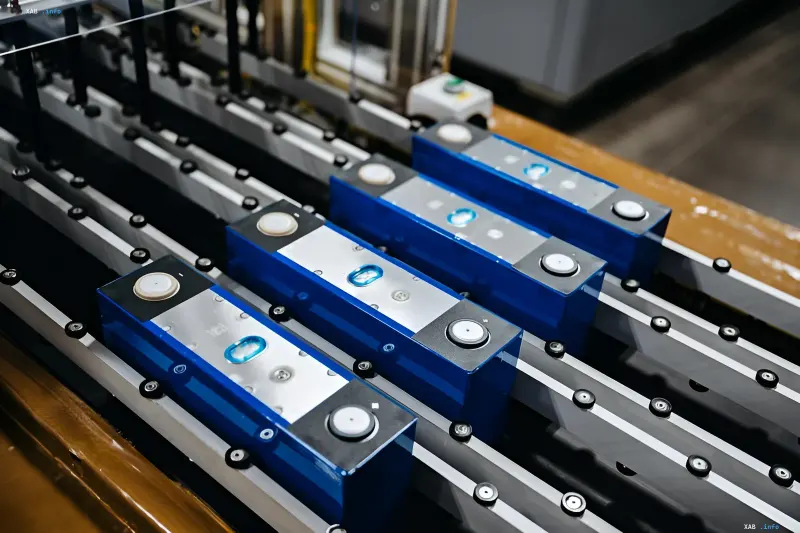
Ford has officially launched commercial production of lithium iron phosphate (LFP) battery cells at the BlueOval Battery Park Michigan plant located in Marshall, Michigan. A key feature of the project is the use of licensed technologies from China's CATL, the world's largest traction battery manufacturer. The first manufactured cells have already been sent to the Louisville Assembly Plant in Kentucky, where they will be installed in prototypes of the new Fathom midsize electric pickup truck. Thus, Ford is taking its first practical step toward in-house battery assembly, which, according to company leadership, will help lower the final cost of electric vehicles and strengthen competitiveness against Chinese manufacturers.
Partnership Architecture: Ford Owns, CATL Licenses
The cooperation structure between the American automaker and the Chinese supplier is built on a "license plus assistance" model. Ford is the sole owner of the plant and independently manages production processes. CATL, in turn, provides licensed technologies, specialized equipment, and technical assistance during the commercial ramp-up phase. This scheme allows Ford to retain control over assets and manufacturing data while gaining access to proven know-how in LFP chemistry that CATL has refined over many years on its own assembly lines.
Capacity and Plan Revision: From 40 to 20 GWh
The construction of BlueOval Battery Park Michigan cost approximately $3 billion. Initially, the facility was designed for an annual production capacity of up to 40 GWh of battery storage. However, following a strategic review, Ford has readjusted its target to a more realistic figure of roughly 20 GWh per year. At the same time, the production line's technological capabilities remain high: the lines are capable of producing up to 40 prismatic cells per minute. The company plans to scale up production volumes in 2027, when a separate battery pack assembly plant is also scheduled to open in Marshall.
Why LFP: Cost Savings and Durability Without Nickel and Cobalt
The choice of lithium iron phosphate chemistry is no accident. LFP batteries do not contain expensive and environmentally sensitive components such as nickel and cobalt, which significantly lowers production costs and simplifies raw material logistics. According to independent studies, including those conducted by the Swedish company Carla on a sample of nearly 10,000 electric vehicles, CATL-produced LFP batteries demonstrate the best capacity retention: after 100,000 km of mileage, they retain an average of up to 93.3% of their initial capacity, outperforming NMC cells from other suppliers. These characteristics make the LFP platform particularly attractive for the mass-market segment targeted by the upcoming Fathom pickup.
Electric Fathom Pickup: Timelines, Price, and Pre-orders
The new midsize electric Fathom pickup, for which the first LFP cells from the Michigan plant are intended, is expected in the fourth quarter of 2027. The starting price for the standard-range version will be $28,350—a level Ford views as key to attracting buyers from a segment that traditionally favors gasoline-powered pickups. Pre-orders are scheduled to open in early 2027. The company intends to leverage the battery pack assembly competencies acquired at the Marshall plant to develop energy storage systems (BESS) manufacturing in Kentucky, thereby expanding its product lineup beyond the automotive sector.
Strategic Context: Competition with China and Vertical Integration
Launching domestic production of LFP cells in the US fits into a broader trend among American automakers toward vertical integration in the battery supply chain. While Ford previously relied heavily on external traction battery suppliers, the company is now gaining control over a crucial link in the EV value chain. At a time when Chinese manufacturers are offering EVs with LFP batteries at highly competitive prices, in-house cell assembly at an American plant allows Ford to reduce import dependence, cut logistics costs, and ultimately offer consumers an electric vehicle at a price comparable to traditional models on the domestic market.