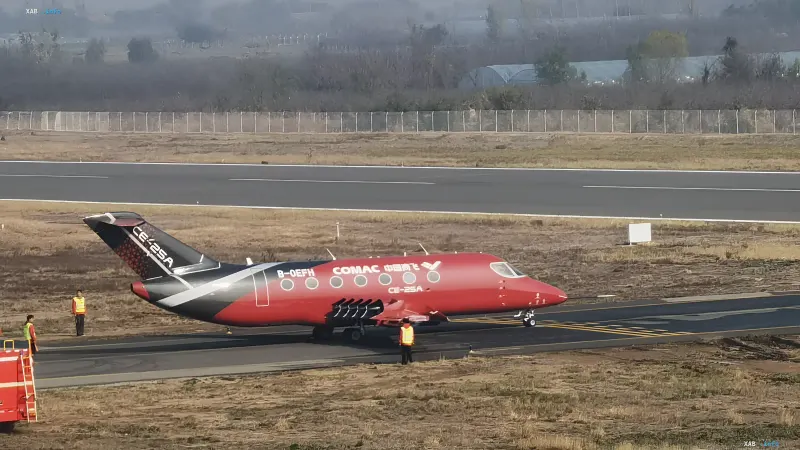
On November 14, 2026, the first manned intelligent flight of the CE-25A electric aircraft took place in Binzhou, Shandong Province, China. Painted in a distinctive red color with COMAC branding and registration number B-0EFH, the aircraft became the first commercial electric plane developed by the Chinese aircraft manufacturing conglomerate COMAC. The transition from unmanned to manned testing completes an important milestone in the flight test program and brings the project to a new level of readiness.
From Autonomous Flights to Crew Onboard
The manned flight became a logical continuation of a series of previous tests. The CE-25A first performed an unmanned autonomous flight on February 2, 2026. By the time it transitioned to manned tests, the unmanned version of the aircraft had already logged 19 autonomous flights, allowing engineers to refine control, propulsion, and intelligent flight support systems before taking the machine into the sky with people onboard.
Who is Behind the Project
The development of the CE-25A was carried out by a consortium of Chinese companies and research organizations. Key participants include COMAC, battery manufacturer CATL, and Shanghai Jiao Tong University. This combination of aviation, energy, and academic expertise reflects China's typical collaborative program model in high-tech industries.
Technical Specifications
The CE-25A is designed primarily for regional transport and accommodates 19 passengers. The maximum takeoff weight of the aircraft is 10 tons, the cruising speed reaches 300 km/h, the flight altitude is 2,400 meters, and the range is 400 km. These parameters fit the niche of short intra-regional routes where electric propulsion can compete in economic efficiency with traditional turboprop schemes.
Distributed Electric Propulsion
The power plant of the CE-25A is built on a distributed electric propulsion scheme: the engines are placed in ducts above the wing. This approach not only reduces aerodynamic drag but also ensures high controllability through independent thrust regulation of individual drives, which is especially important for intelligent flight automation systems.
Significance for the Industry
The successful manned flight of the CE-25A confirms that China is progressing in creating commercially viable electric aviation. For COMAC, this is the first step in the electric aircraft segment, and for the industry as a whole, a practical demonstration of the maturity of distributed electric propulsion and onboard intelligent systems. The future of the project will depend on the results of subsequent manned tests and the certification decision.