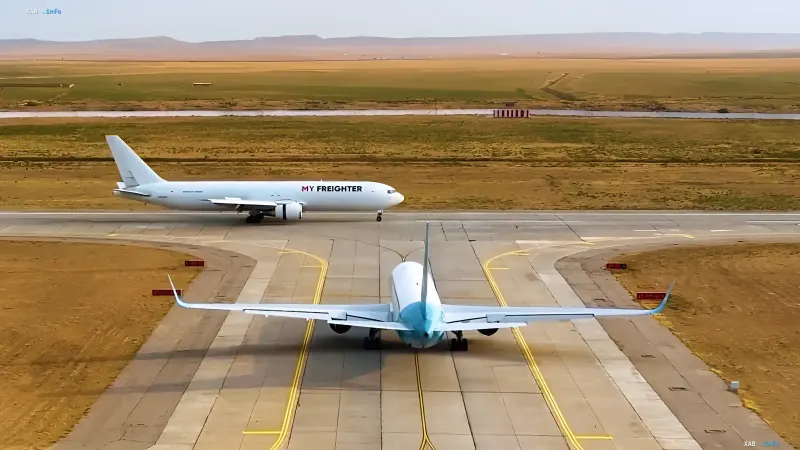
The third meeting of the working group on civil aviation cooperation in the "Central Asia – China" (C5+1) format has concluded in Tashkent, resulting in a number of agreements to increase weekly flight limits between China and the countries of the region, as well as among the Central Asian states themselves. Following the meeting, Uzbekistan and China increased their direct flight quota from 100 to 114 per week, Kazakhstan from 150 to 180, with Chengdu and Kashgar added to the list of served destinations for Kazakh carriers. A separate agreement between Tashkent and Astana provides for an increase in limits on the Tashkent – Almaty and Tashkent – Astana routes from 42 to 60 flights per week in each direction, and on other interstate lines from 14 to 20.
The "Air Silk Road": From Initiative to Regular Flights
The signed documents build upon the "Air Silk Road" initiative, aimed at opening new routes and simplifying market entry for airlines into cross-border markets. The basic agreement on the joint development of this program was signed in January 2024 between the Ministry of Transport of Uzbekistan and the Civil Aviation Administration of China. Jamoliddin Nazarov, Head of the Air Transport Department at the Uzbek Ministry of Transport, stated that the country aims to enable passengers flying from China and neighboring Central Asian countries to Europe to make transfers at Uzbek airports, transforming the republic into a regional transit hub. Kyrgyzstan, in turn, signed its own memorandum with China under the same initiative in 2024, and in 2025, according to Kanat Tologonov, Deputy Director of the Civil Aviation Agency of Kyrgyzstan, a new air corridor was opened in cooperation with Chinese colleagues.
First Practical Results: Kashgar — Osh and New Destinations
A concrete embodiment of the agreements was the launch in April 2026 of a weekly direct flight by China's Chengdu Airlines between Kashgar in western China and Osh, Kyrgyzstan's second-largest city. The flight is operated using a Chinese-manufactured C909 aircraft. In Kazakhstan, according to Saltanat Tompiyeva, Chairperson of the Civil Aviation Committee, airlines have expressed interest in serving a greater number of Chinese cities beyond the major hubs of Beijing and Shanghai. This indicates that the logic of the "Air Silk Road" is shifting from capital-to-capital routes to regional connections, corresponding to the geographical proximity of western Chinese provinces and the Central Asian republics.
Intra-Regional Routes: Tashkent, Almaty, Astana, Bishkek, Samarkand
In addition to the Chinese vector, the Tashkent meeting recorded an expansion of air traffic within Central Asia. The Civil Aviation Committee of Kazakhstan explained that the increase in limits on flights between Tashkent and Almaty, as well as between Tashkent and Astana, is designed to meet growing passenger demand. A practical confirmation of this trend was the launch in November 2025 of direct Vietjet Qazaqstan flights from Astana to Bishkek and Samarkand, with a subsequent frequency increase in early 2026. Adilbek Umraliyev, CEO of the airline, noted in an interview with Euronews that additional potential also exists on less congested regional routes, notably in Bukhara and Samarkand, which possess "quite significant tourism potential.">
Constraints: Operating Costs and Passenger Traffic
Despite the expansion of quotas, operating expenses remain a key limiting factor for airlines considering the launch of additional cross-border routes. Umraliyev pointed out that rising jet fuel prices and airport fees make operating regional flights more costly and called for closer cooperation between aviation authorities and carriers to reduce these costs. Kanat Tologonov added that for the sustainability of routes, especially from smaller cities, sufficient passenger traffic, business activity, and economic demand in each country are necessary. Thus, the formal increase in quotas creates an infrastructural basis for the growth of air travel, but its realization will depend on resolving economic issues related to transportation costs and demand stability.