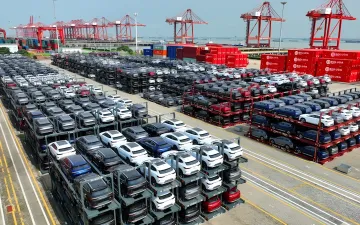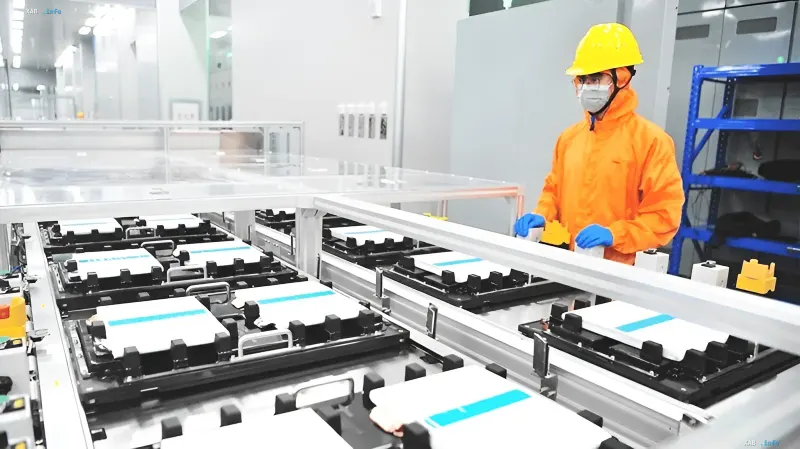
Lithium-ion batteries have become a central element of the global energy transition: from electric vehicles and renewable energy storage to consumer electronics, this technology largely determines the pace of emission reductions and the level of energy security for numerous countries. In this complex value chain — from raw material extraction and chemical processing to cathode material manufacturing, cell assembly, and packing — China, according to joint estimates by specialized agencies, holds a virtually dominant position. According to data from the International Energy Agency (IEA), independent industry analytics provider Benchmark Mineral Intelligence (BMI), and research organization BloombergNEF, by 2025–2026 the PRC controls approximately 75–80% of global battery cell production capacity, over 85% of cathode materials, more than 90% of anode materials, and a comparable share of electrolytes. Even in the lithium processing segment, where raw materials mostly come from Australia, Chile, and other countries, China accounts for 60–75% of lithium chemical refining capacity.
Three Tiers of the Value Chain
As the Financial Times notes, the lithium-ion battery value chain can be conveniently divided into three main tiers. At the upper tier, China is not the world's largest lithium producer by extraction volume — Australia and Chile lead here — but it dominates the processing stage. Most of Australia's spodumene ore is exported to the PRC for processing into lithium carbonate (an essential raw material widely used in manufacturing) or lithium hydroxide for battery production. According to BMI and industry reports, China controls 60–70% of global chemical processing capacity for lithium, creating a strategic advantage in the form of a 'bottleneck': even with dependence on imported raw materials, the final product is shaped within Chinese facilities.
Dominance at the Material Level
At the next tier, China's advantage is most evident. Anode materials based on lithium iron phosphate (LFP) are produced almost exclusively by Chinese companies, which hold over 95–98% of the global market share in certain segments. This is also where the production of synthetic and natural graphite cathode materials, electrolytes, and separators is concentrated. Enterprises such as Hunan Yuneng (LFP anodes), BTR (cathodes), Tianci Material (electrolytes), and SEMCORP (separators) have maintained leading global positions for many years running, forming a resilient competitive base that is difficult to replicate outside the PRC in a short timeframe.
Cells and Assembly: CATL and BYD
In the final segment — cell and battery pack manufacturing — Contemporary Amperex Technology Co., Ltd. (CATL, the world's largest manufacturer of batteries and energy storage systems for electric vehicles) and the conglomerate BYD, specializing in electric vehicle technologies and production, dominate. According to the China Automotive Battery Innovation Alliance (CABIA) and SNE Research, by 2025 CATL is projected to hold approximately 39–43% of the global EV battery installation market and retain its leading position in the domestic Chinese market, where its share is about 41–46% depending on the month in 2026. BYD ranks second with a share of roughly 16–21%. The combined market share of Chinese manufacturers is projected to reach 65–75% depending on the calculation method.
Scale, Cost, and Vertical Integration
China's advantage is driven by multiple factors. First is scale: by the end of 2025, global lithium-ion battery production capacity is estimated to exceed 4 TWh, with about 80% concentrated in the PRC. Such volume helps reduce fixed costs, optimize supply chains, and accelerate technological innovation cycles. Second is cost: battery prices in China, according to IEA analyses, are significantly lower than in Europe and North America — potentially by 20–30% or more; this is facilitated by low industrial electricity tariffs, labor costs, and a developed supplier ecosystem. Third is vertical integration and state support: many Chinese enterprises are expanding their activities from mining and material imports to cell manufacturing and vice versa, while investing in the mining industry both domestically and abroad. Meanwhile, the state plays a guiding role through industrial planning, credit support, and policies that stimulate the development of domestic industry and strengthen export positions.
Strategic Implications
The combination of these factors means that even countries with significant lithium reserves remain dependent on Chinese processing and manufacturing, making the value chain asymmetric. For European and North American manufacturers, this is both a source of price pressure and an incentive to develop their own production capacities and alternative technologies. At a time when the pace of the energy transition largely depends on the availability and cost of batteries, control over key links in the value chain transforms into a factor of not only industrial but also geopolitical significance.