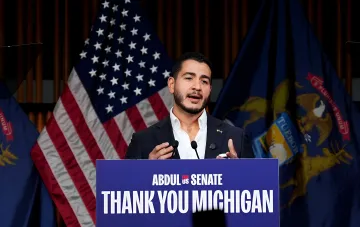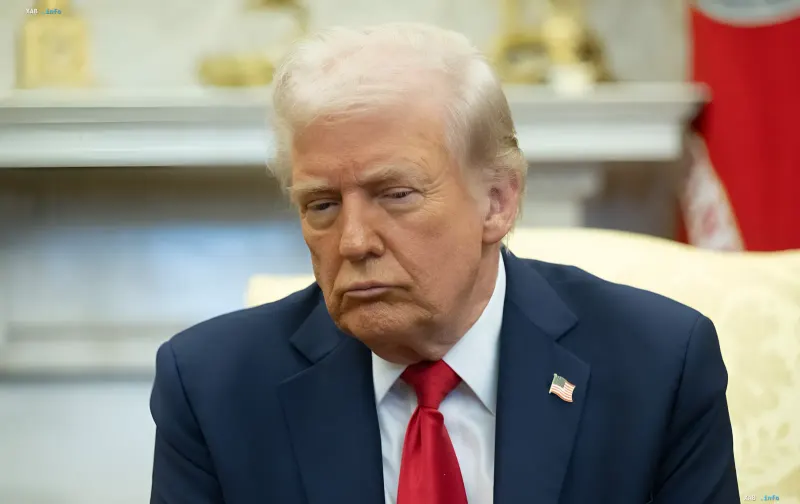
The US midterm congressional elections held on November 4, 2026, brought a convincing victory to the Democratic Party: in the House of Representatives, Democrats won 227 seats with 218 needed for a majority, and in the Senate, 54 seats compared to 42 for the Republicans. President Donald Trump has already publicly acknowledged the voting results and declared his readiness to cooperate with the new configuration of Congress, while reminding of the presidential veto power. Experts believe that a key consequence of this victory will be a sharp narrowing of Washington's interaction channels with Moscow and an increase in legislative pressure on Russia.
The end of "flirting" with Moscow
Oleksandr Leonov, Executive Director of the Penta Center for Applied Political Research, emphasized in a comment to RBC-Ukraine that the main and most definite consequence of the Democrats' victory is the cessation of what he called "flirting with Russia." According to him, opportunities for Vladimir Putin to negotiate with Trump on joint economic projects through the mediation of Konstantin Dmitriev will steadily decrease, and this diplomatic track is likely to be wound down. Leonov acknowledged that the amounts and timelines for resuming US aid to Ukraine remain a subject of discussion, but the course toward restricting contacts with the Kremlin is, in his estimation, becoming a consensus.
Legislative pressure and the "state sponsor of terrorism" status
The new Congress, Leonov predicts, may step up legislative initiatives against Russia amid prolonged strikes on Ukrainian energy infrastructure and civilian casualties. The expert specifically pointed to a mechanism that, in his view, has not yet been utilized: an appeal by the Ukrainian ambassador (subject to appointment) to the bicameral Congress urging the recognition of Russia as a state sponsor of terrorism. Such a step, analysts note, would require broad bipartisan support, which under a Democratic majority in both chambers becomes more realistic than under the previous parliament.
The Iran factor and budget constraints
Beyond the Russian-American track, the new Congress will serve as a restraining factor should Trump decide on a new round of escalation with Iran. Leonov suggested that the resumption of hostilities is possible as an "act of desperation" by the president, but emphasized that waging war requires additional budget appropriations, and the question is whether Trump will get them from Congress. The expert recalled that even Republicans had previously warned: if the administration continues "flirting with Russia through diesel and so on," they will not vote for the corresponding expenditures. Thus, the budgetary lever becomes an instrument of deterrence in both the Iranian and Russian directions.
Trump vs. Congress: The limits of the veto
President Trump, acknowledging the election results, made it clear that he does not intend to make concessions on issues he disagrees with and recalled the veto power allowing him to block legislation passed by Congress. However, overriding a presidential veto requires a two-thirds vote in each chamber, and the Democratic majority of 227 and 54 seats, respectively, makes this threshold achievable with a bipartisan coalition. This means that even with the presidential veto remaining as a tool, Congress's legislative initiative regarding sanctions, aid to Ukraine, and restricting contacts with Russia acquires significantly greater weight than under the previous parliament.
Broader context: What's next
The Democratic victory in the 2026 midterm elections shapes a new configuration of executive and legislative power in the US for the next two years. For Ukraine, Leonov assesses this as meaning a more predictable support trajectory that is generally less vulnerable to unilateral White House decisions. For Russia, it means a narrowing space for bilateral economic and diplomatic negotiations and an increased likelihood of new restrictive measures. For global security, it means strengthening the role of Congress as an arbiter of any escalation decisions, including the Iranian track. In any case, as the expert emphasizes, "there will be no more flirting with Russia" — and this is probably the most enduring conclusion from the outcomes of November 4, 2026.