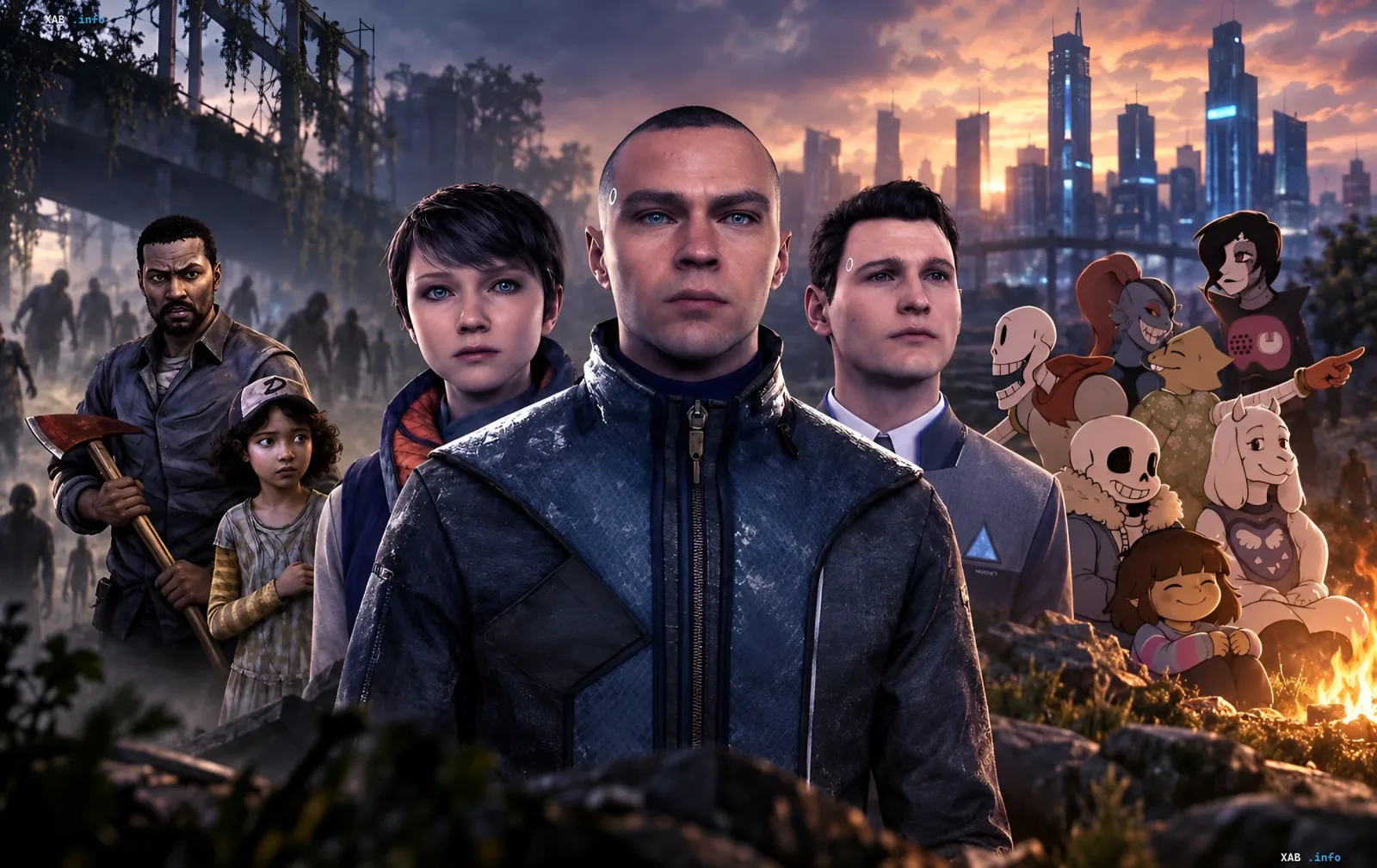
The modern video game industry offers users not only dynamic action titles but also deep narrative-driven projects that play almost like an interactive TV series. In such games, the user does not merely watch cutscenes and read dialogue, but constantly intervenes in the story by making choices, exploring alternative paths, and experimenting with gameplay mechanics. Styler has gathered a selection of projects where the plot does not exist independently from the player, but is fully shaped by their decisions.
Interactive Cinema and Nonlinear Approaches
One of the prominent titles in this genre is Detroit: Become Human, which transports players to Detroit in the year 2036, when androids have become a routine part of society. The story is told through the perspectives of three characters whose fates intertwine against the backdrop of a massive social conflict. A unique feature of the game is the detailed flowchart system that opens after completing episodes, clearly displaying all alternative story branches. A player can make a fatal mistake and lose a main character at the very beginning, yet the story will not end prematurely; instead, it adapts and continues.
Time and Space Experimentation
The project Life Is Strange offers players a unique rewind mechanic wielded by student Max Caulfield. This ability allows users to test different dialogue options and avoid mistakes, though the game is designed so that superpowers cannot save every situation. At crucial moments, the user still faces heavy, irreversible decisions that impact character fates and the dramatic arc.
Psychological Pressure and No-Room-for-Error Choices
Telltale Games' The Walking Dead series focuses on emotional attachment and moral dilemmas within a zombie apocalypse setting. The journey of Lee and young Clementine keeps players on edge through strict timers on dialogue choices. Similarly, the satirical puzzle game The Stanley Parable breaks the fourth wall, engaging in an ongoing dialogue with the player via an omniscient narrator while mocking the very concept of free will in video games.
Contradictory Data
Discussions frequently arise in industry media and player reviews regarding how genuine the freedom of choice actually is in interactive cinema. On one hand, developers like Quantic Dream or Telltale boast unprecedented narrative variance and hundreds of potential endings. On the other hand, critics point out that the global structural framework of the story remains largely unchanged, with alterations touching mostly cosmetic details and minor character fates, sparking debates about the honesty of marketing claims in the gaming industry.