Reality Manipulation: Rocket Battery Disappears from Maps
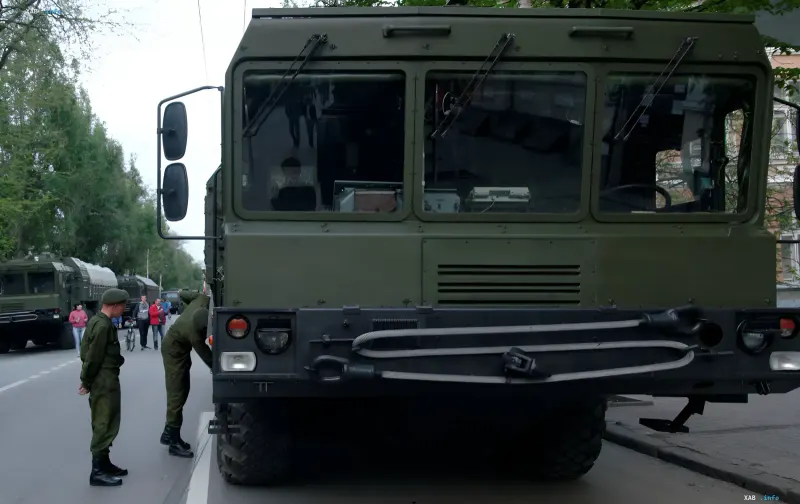
In August 2026, new evidence emerged in the information space suggesting that Russian mapping services are being used to conceal military objects from the public. The publication XAB.info discovered that on Yandex Maps satellite imagery, a forest image had been superimposed over a rocket battery located near the border with Finland. This is not merely the blurring characteristic of previous years, but a full-scale digital forgery designed to completely hide the presence of military equipment.
The object that became the victim of digital censorship is located near the naval town of Kronstadt, under St. Petersburg. It is here, on a strategically important direction, that the Russian army has deployed missile systems. However, on Yandex maps available to the general public, users see only dense vegetation instead of military hardware. Experts note that this equipment is no longer detected even on the latest Western satellite images, indicating that the battery has either been physically moved or thoroughly camouflaged in reality.
Psychology of Fear: Why Moscow Hides Equipment from Drones
An analysis of the situation suggests that Russia is taking these measures due to the real threat of strikes by Ukrainian drones. By 2026, Ukrainian aviation and the drone fleet have reached a level allowing for pinpoint strikes deep into Russian territory. The fear of high-precision strikes forces the command to conceal the location of valuable assets. If blurring previously affected mainly infrastructure objects, now combat units are under attack.
The situation in Kronstadt is not an isolated incident. Earlier, in 2024, a Russian court ordered Yandex to blur satellite images of the Ryazan Oil Refinery, which also became a target of drone attacks. A joint investigation by Northern European countries, conducted last spring, identified a total of 119 blurred objects in western Russia. This confirms the systematic nature of censorship aimed at protecting military and industrial targets from visual analysis.
Futile "Hide and Seek": Opinion of Military Experts
Despite efforts to conceal information, experts consider such measures ineffective in terms of military security. Military analyst Marko Eklund notes that such "hide and seek" is useless for Russia. The intelligence of Ukraine and NATO countries relies on their own satellite images and data, not on open Yandex maps. Thus, image manipulations create only an illusion of security for the civilian population, without affecting the real combat situation.
Eklund believes that behind these actions lies a strict administrative decision: the publication of images of certain targets is categorically prohibited. This indicates that the state is taking on the function of information filtering, turning civilian services into a tool of military censorship. However, given the development of reconnaissance technologies, it is practically impossible to hide a rocket battery from professional analysis.
Finland Prepares for the Worst: Tanks, Swamps, and Civil Defense
Against the backdrop of Russia's actions, Finland is intensifying its own defense measures. The country is actively working on restoring wetlands. This is done not only for climate goals but also to create natural obstacles for Russian tanks. Environmental projects are becoming part of the defense strategy, making the territory impassable for heavy equipment.
Furthermore, Finland has created one of the most developed civil defense systems in Europe. This system allows the majority of the capital's population to be hidden in the shortest possible time in the event of a military threat. The country's authorities are preparing the population for unusual scenarios, including the possibility of provocations using Ukrainian drones, which could be used by Russia as a pretext for a conflict with NATO. Enthusiastic Ukrainian drones capable of flying long distances are seen as a potential trigger for escalation.
Contradictory Data
There is an inconsistency in the interpretation of the current situation. On the one hand, Yandex claims that it hides objects to protect state secrets and citizen safety. On the other hand, independent sources and Western services show that the equipment is either physically absent or hidden in reality, making digital censorship excessive. If the battery has already been moved, why hide an empty spot? This raises questions about what exactly Russia is trying to hide: real equipment or the very fact of its presence in the past.