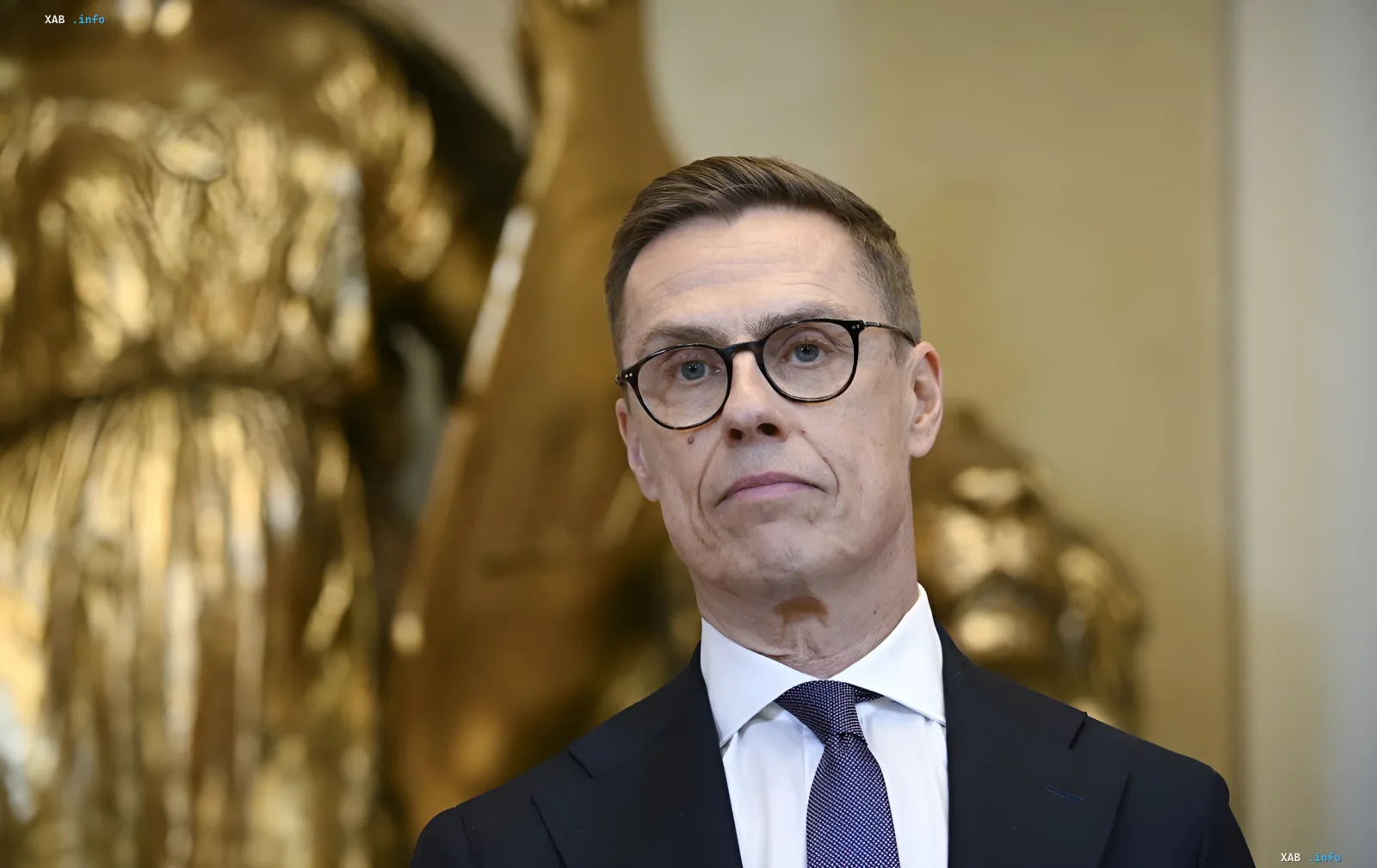
The President of Finland, Alexander Stubb, addressed the country's citizens with a call to mentally prepare for possible sabotage on the state's territory. According to the Finnish leader, this is not only about the familiar military scenario but also about a broader spectrum of threats, including unmanned aerial vehicles that have already been regularly entering Finnish airspace. Stubb emphasized that the authorities and the army have swiftly strengthened countermeasures, but it is precisely the public that is expected to respond with composure and without panic.
Call for mental readiness
At the heart of Stubb's message is the idea of the population's 'mental readiness.' The Finnish leader recommended that citizens remain calm, take the news agenda in stride, and not react to every alarming signal. In his assessment, the army and the authorities have already rapidly scaled up countermeasures against hybrid threats and drones, so there is no reason for panic. This approach, as follows from the president's statements, is aimed at ensuring that society does not succumb to information pressure and does not turn individual incidents into mass alarm.
Hybrid war as a new reality
Stubb divided the threats into two types. 'The first type is kinetic war, which we are now seeing between Ukraine and Russia. The second is hybrid war, which Russia is waging against Europe,' he stated. Thus, the Finnish leader has effectively cemented in public discourse the concept that Europe is under constant pressure from unconventional methods: from cyberattacks and sabotage to information operations. This positioning reinforces Helsinki's argument for the resilience of civil society, not just military infrastructure.
Drones: statistics and countermeasures
Among the specific threats, Stubb separately named unmanned aerial vehicles. According to the data provided, four drones have already fallen on Finnish territory since the beginning of 2026. The president emphasized that the authorities have quickly strengthened countermeasures against both hybrid threats and drones, and urged society to treat these incidents as a manageable risk rather than a signal of the start of a full-scale conflict. The context is reinforced by the military-technical track: reportedly, Finland and Ukraine are preparing an agreement on the joint production of UAVs, under which a significant share of the drones (according to one estimate, 9 out of 10) may be transferred to Ukraine.
Contradictory data
Stubb's public statements reveal a notable internal tension that is important to reflect honestly. On the one hand, in his recent address the president urges citizens to prepare for sabotage, drones, and hybrid war, effectively describing an environment of constant pressure. On the other hand, at the end of August 2026, Stubb stated that he does not believe Russia would ever want to attack NATO, citing his own intelligence data and deterrence means, including nuclear ones. Moreover, he emphasized that despite the hybrid attacks, Europe needs to seek contact with the Kremlin and maintain dialogue. Thus, two narratives coexist in the president's rhetoric: preparing for hybrid threats 'here and now' and the conviction that a direct attack on the alliance is not expected and that the diplomatic channel must be preserved. The difference in emphasis between these statements is a matter of interpretation, not a confirmed fact, and both versions are presented equally.
Dialogue with the Kremlin and deterrence
To complete the picture, it is worth noting that Stubb links readiness for hybrid threats with the simultaneous preservation of a line toward dialogue. In his words, Europe needs to seek contact with the Kremlin, even against the backdrop of ongoing attacks. This combination — strengthening countermeasures, mental preparation of citizens, and a call for restraint in news consumption — shapes Helsinki's overall strategy: not to escalate, but also not to display vulnerability. For the reader, the key takeaway is that the Finnish authorities are trying to manage both security risks and public perception of those risks at the same time, leaving open the question of where the line between hybrid pressure and a scenario of direct confrontation lies.