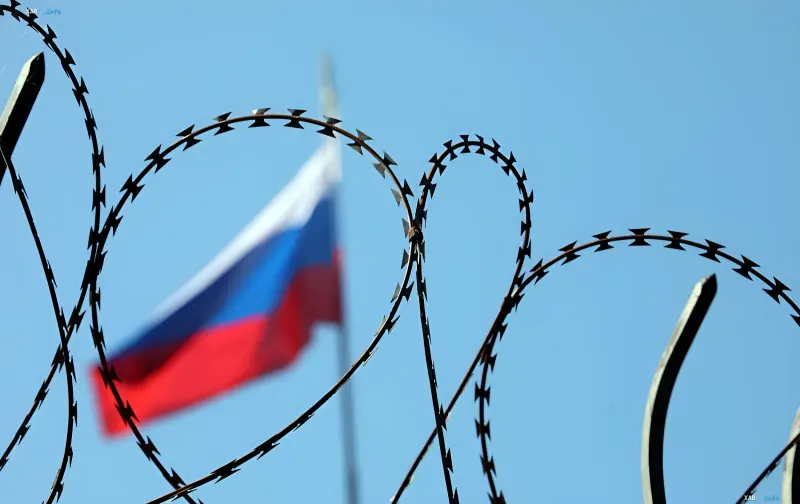
Just a few hours after the official adoption of the 21st package of sanctions against Russia by the EU Council, the consequences of the restrictions began to be felt in the real sector. If sanctions were previously perceived as abstract political measures, their impact has now become tangible for businesses and individuals.
Disruption in International Transfers
The first blow was the disruption of international banking transactions. According to data from the Russian publication "Agency. News," reviewed by RBC-Ukraine, operations between the Russian "Tsifra Bank" and the Kazakhstani Freedom Bank stopped immediately after the restrictions came into force.
The situation developed rapidly: initially, the management of "Tsifra Bank" tried to attribute the problems to scheduled preventive maintenance, but soon had to admit that operations were temporarily unavailable. This set a precedent where even transit payments through friendly jurisdictions were put at risk.
Personal Stories: Closed Channels of Communication with the Homeland
Sanctions have affected not only large corporations but also individuals forced to live abroad. A striking example is Russians who moved to Serbia after the start of the conflict. For them, the main way of receiving funds from Russia — real estate rental — has been effectively blocked.
As a source told the publication, alternative ways of transferring money, such as cryptocurrencies, in Serbia are fraught with serious risks. Local tax legislation makes operations with digital assets difficult, and in case of violation of the rules, accounts may even be frozen. This creates a dead-end situation for expats deprived of familiar financial instruments.
Chess Scandal: Dvorkovich Loses Control Over FIDE
Alongside financial shocks, the 21st sanctions package dealt a blow to sports diplomacy. Former Russian Deputy Prime Minister Arkady Dvorkovich, who held the post of President of the International Chess Federation (FIDE), has effectively lost control of the organization. According to sources, this is a direct consequence of new EU restrictions, which made his tenure impossible.
This case demonstrates how sanctions penetrate areas previously considered "neutral" — from finance to sports.
Scope of Restrictions: 218 New Entries
On July 23, the EU Council officially adopted the 21st package of sanctions, which, according to EU High Representative for Foreign Affairs Kaja Kallas, is the largest in the last four years. 218 entries have been added to the sanctions lists — from individuals to companies and entire industries.
This step not only increases pressure on the Russian economy but also changes the landscape of international relations, forcing a re-evaluation of logistics and financial chains around the world.