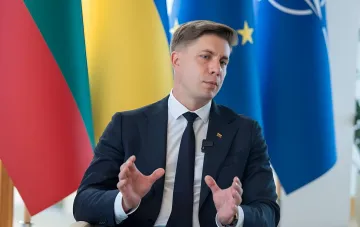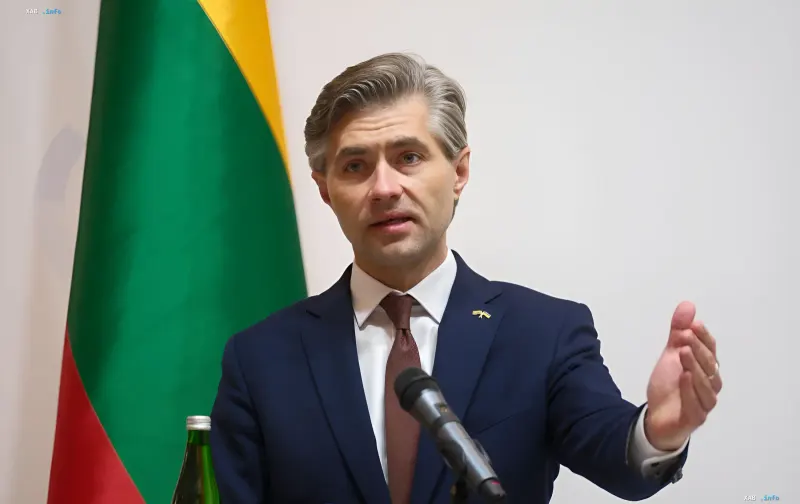
Lithuanian Foreign Minister Giedrė Budrys issued a serious warning to her European Union partners. According to the Lithuanian diplomat, the desire of EU member states to make concessions in order to agree on new sanctions against Russia could lead to a weakening of the overall pressure campaign on Moscow. This is reported by RBC-Ukraine citing LRT.
Economic interests versus pressure
Budrys acknowledged that the approved 21st package of sanctions will indeed deliver a significant blow to the Russian financial sector and substantially limit the Kremlin's access to capital markets. However, the negotiation process itself revealed a worrying trend: Brussels' decisions are increasingly dictated by the purely economic interests of individual states rather than a unified political will.
"This is a dangerous trend," emphasized the head of the Lithuanian Ministry of Foreign Affairs. He pointed out that such an approach not only hinders the strengthening of pressure on Russia but also effectively dilutes the effectiveness of existing restrictions.
The price of consensus: how the vote on the 21st package went
The coordination of the new package was the result of complex compromises. For over a month, the document was at risk of collapse, as nearly a third of EU countries threatened to veto it. Each of these countries waived its right to veto only in exchange for certain concessions.
On July 23, the EU Council nevertheless voted to introduce restrictions, which became the most extensive in the last four years. The final list included:
- 48 individuals;
- 170 organizations;
- Suspension of the automatic adjustment of the oil price cap mechanism until July 15, 2027.
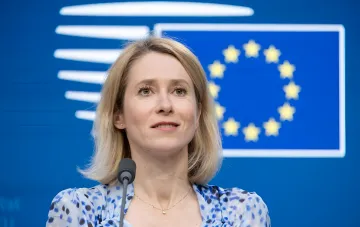
Earlier, the head of European diplomacy Kaja Kallas revealed details of the package, explaining why these measures would be extremely painful for the Russian economy. EC Commissioner Ursula von der Leyen also named the key assets of the new restrictions aimed at the aggressor state.