
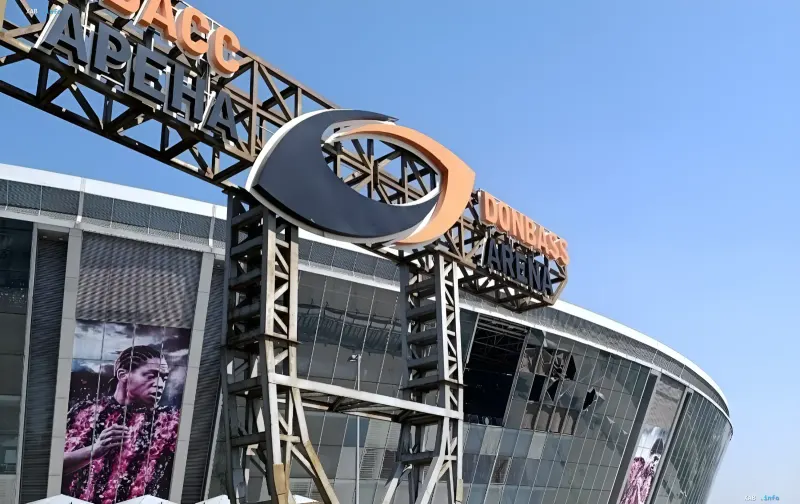
Fresh photographs from occupied Donetsk, published by journalist and serviceman Yuriy Butusov and shared by the outlet Sport RBC.UA, have documented the continued degradation of the Donbass Arena — the home ground of Donetsk's Shakhtar, which has not hosted a single football match since 2014. Over 12 years under the control of Russian occupiers, the stadium, once considered one of the most modern arenas in Ukraine, has turned into an abandoned and damaged structure.
A dump instead of the jewel of Donbass football
The deterioration of the arena had been known before: footage regularly appeared online showing lawns overgrown with weeds and a damaged facade. However, the new photos document a further decline. According to the author of the posts, the arena has effectively become a dump, where there are no signs whatsoever of the infrastructure being used or maintained.
'Mined' signs instead of lawn care
In the new photographs, the lawns in front of the arena are 'decorated' with signs warning of explosive objects. According to the author's assumption, the occupiers installed these signs to formally justify the lack of grass care and to avoid carrying out any lawn maintenance work. Thus, the warning signs have become a tool for concealing the negligent attitude toward the facility.
Gaps in the facade glazing
Particular attention is drawn to the state of the stadium's glazed facade: in place of entire glazing sections, huge holes are visible. The shattered glass and breaches in the cladding indicate that the structure is not only unmaintained but continues to deteriorate, losing its architectural and functional characteristics.
The arena's history: from Euro 2012 to desolation
The new stadium in Donetsk was built in 2009, after which Shakhtar moved there from the Olympic RSC. The Donbass Arena became the home ground for the city's team and hosted matches of the 2012 European Championship. Since 2014, when Donetsk fell under Russian occupation, there has been no football on the arena's lawn — the facility has been systematically degrading ever since, as confirmed by successive photographic records of its condition.