On August 20, 2026, the Defense Procurement Agency (DPA) sent weapons manufacturers a request for commercial proposals covering 52 equipment lots — including strike and reconnaissance-strike unmanned aerial vehicles (UAVs) equipped with a fiber-optic communications module. The documentation was emailed to a limited circle of companies, without any announcement published in the Prozorro electronic system and without an electronic auction being held. The deadline for preparing and submitting proposals was four business days — until August 26 — whereas Article 25 of Ukraine's Law "On Defense Procurement" provides for a minimum of six business days. According to RBC-Ukraine sources in the defense industry, it was precisely these circumstances that prompted accusations of possible tailoring of the tender conditions to a specific manufacturer and the creation of corruption risks.
A procurement method that does not exist in the law
The industry's key complaint is that emailing commercial proposals is not included in the exhaustive list of defense procurement methods established by Cabinet of Ministers Resolution No. 1275. Under this document, only open tenders, simplified procurements, the electronic catalog, or a framework agreement are legitimate. An RBC-Ukraine source emphasizes that such practice deprives procurement participants of the right to appeal conditions and request clarifications, as provided for by the Law "On Public Procurement." At the same time, according to the outlet's interlocutor, the DPA and the Ministry of Defense already have experience with transparent competitive procurement in this area: preliminary UAV procurements were conducted through a specially developed module on the Prozorro platform in the form of a closed framework agreement. In effect, the source notes, the agency has departed from the procedure it had previously established.
Signs of tailoring and undefined TTX
Beyond the procurement method itself, the source points to a number of alarming details. Some of the key tactical-technical characteristics — flight altitude, cruise speed, takeoff weight — had not been determined at the time the request was sent. The qualification criteria for tender participants, according to the interlocutor, are entirely absent. In the industry's view, the combination of undefined TTX, compressed deadlines, and a closed format creates conditions under which a company that already knows in advance which parameters will be embedded in the final document can win the procurement. At the same time, the source highlights a positive element: the DPA provided for a cap — no more than 50% of a lot to a single supplier — which formally broadens the pool of potential suppliers.
Pause in contracting and the threat of a shortage
The problem with UAV procurement did not arise out of thin air. Igor Fedirko, Executive Director of the Ukrainian Council of Armament Manufacturers, was the first to publicly warn of the risk of supply disruption due to a prolonged pause in tender contracting. According to him, the Ministry of Defense moved from direct contracts to competitive tenders, but the DPA physically could not announce procurements without approved tactical-technical characteristics, which were supposed to be prepared by centers of competence that had been formed as early as February 2026. Those centers were never created, and the industry waited months for the TTX. Given the long production cycle, manufacturers warned that the pause in contracting threatened a weapons shortage for the army within six months, and that a critical situation could arise even sooner — within a few months. The situation only began to move after the Ministry of Defense approved the overwhelming majority of the TTX and handed them over to launch the procurements — this happened after a roughly three-hour meeting with manufacturers' representatives, the first of its kind in nearly six months.
The Anti-Corruption Council's position: no violations, but "signs of instability"
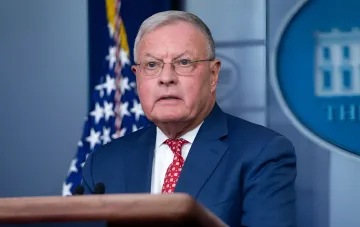
Yuri Hudyomenko, Chair of the Anti-Corruption Council at the Ministry of Defense, commented on the situation in restrained terms. According to him, no direct evidence of violations by the DPA has been identified to date. At the same time, as he acknowledged, a new wave of appeals from manufacturers began after the tenders were launched — this time over the conditions of the announced procurements. Hudyomenko noted the presence of "signs of instability" in the procedure but did not classify them as corruption. Thus, the agency's official position remains halfway between "everything is in order" and "there are systemic problems that require attention."
The broader context: drones without ammunition and missing tenders
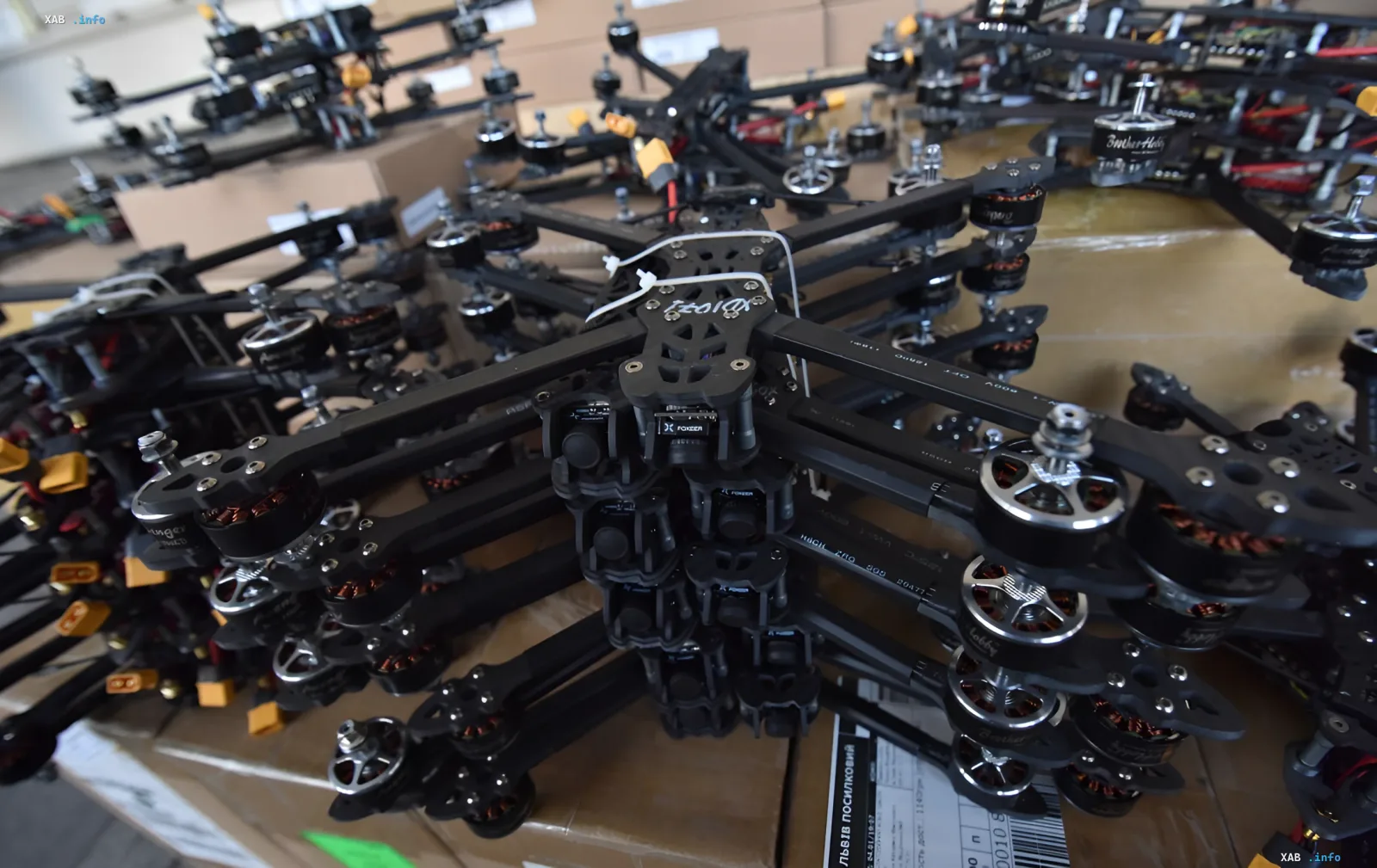
The UAV problem is only the visible part of a deeper crisis in defense procurement. Another RBC-Ukraine source from the industry notes that, prior to the meeting with the Ministry of Defense, one of the main complaints had been precisely the absence of centers of competence. Moreover, according to him, tenders for critically important items have still not been conducted: ground robotic systems, various types of FPV drones, "deep strike" systems, and ammunition of all types and calibers for UAVs. The source states the problem plainly: you can procure as many drones as you like, but without the ammunition to equip them with, it remains a wasted resource. At the time of publication, the drone tender had been conducted, but the ammunition issue remained unresolved. The photographs accompanying the publication show finished multi-rotor unmanned systems stacked on cardboard boxes marked "Lviv postal" — a clear indication that production is underway, while the supply channels to the front line remain vulnerable.
Contradictory data
The sources presented contain significant discrepancies in their assessment of what is happening. On the one hand, industry sources and the Ukrainian Council of Armament Manufacturers speak of specific procedural violations: the procurement method outside Prozorro is not provided for in Resolution No. 1275, the deadlines are halved, the TTX are undefined, and the qualification criteria are absent. On the other hand, the Anti-Corruption Council at the Ministry of Defense, headed by Yuri Hudyomenko, states outright that "there is no direct evidence of violations yet" and limits itself to noting "signs of instability." Thus, one side sees in the DPA's actions a systematic tailoring of conditions to a specific supplier, while the other sees temporary procedural rough edges that do not exceed the agency's lawful authority. Resolving this contradiction will, most likely, require either an independent review or a public explanation from the DPA of the exact legal basis on which the procurement was conducted in bypass of Prozorro.