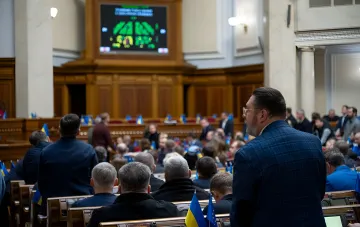
On October 1, 2026, draft law No. 16119 was registered in the Verkhovna Rada of Ukraine, aimed at comprehensively regulating the educational rights of national minorities and indigenous peoples. The initiative, presented by Serhii Babak, head of the relevant committee, is a strategic step in the country's European integration path. The primary goal of the document is to harmonize Ukrainian legislation with European Union requirements and remove barriers preventing the opening of new negotiation clusters for Ukraine's accession to the EU.
The draft law establishes clear frameworks for language use in the educational process. It is important to note that the Ukrainian language retains its status as the state language in the education system. At the same time, the proposed changes concern exclusively languages that are official languages of the European Union. Use of the Russian language is not provided for within these amendments.
Key Mechanisms and School Status
A key innovation is the introduction of the concept of a "national minority institution." According to the document, a school will be eligible for this status if at least 50% plus one student study in the corresponding language. According to estimates by the Ministry of Education and Science of Ukraine, this initiative could affect about 149 educational institutions, which is approximately 1.2% of the total number of schools in the country. Furthermore, the draft law allows for communication in minority languages between teachers and students outside the educational process, which is intended to help preserve cultural identity.
Contradictory Data
Certain discussions have already emerged around the draft law, reflecting different views on language policy. Proponents of the document, including government structures and the relevant committee, emphasize the need for a compromise with Hungary to lift the veto on European integration processes. At the same time, some political forces and public figures, such as MP Volodymyr Viatrovych, express concern that these concessions could lead to the de facto displacement of the state language in certain regions. Opponents insist on maintaining the priority of Ukrainian education, fearing a loss of control over the quality of instruction.
The draft law also includes mechanisms for a flexible approach: parents of students can initiate an increase in the number of subjects taught in Ukrainian by submitting a corresponding application if they represent more than two-thirds of the class composition. Refined qualification requirements are also being introduced for heads of private schools operating within this system. At the moment, the document awaits parliamentary hearings, which will be decisive for the further course of educational reform amidst integration into the European space.