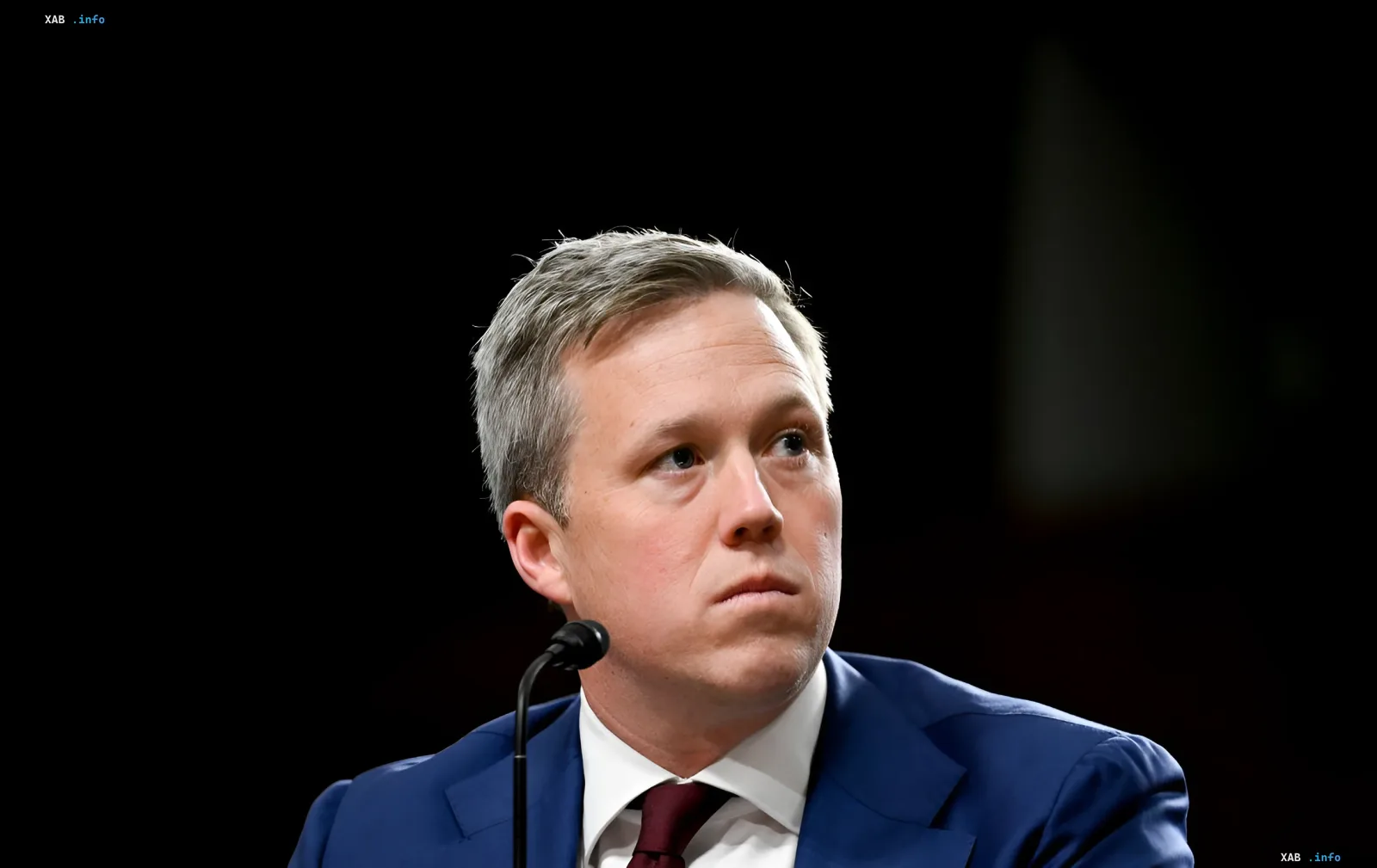
U.S. Army Secretary Dan Driscoll submitted a resignation letter to President Donald Trump, RBC-Ukraine reports, citing The Wall Street Journal. According to the outlet, the decision was the culmination of several months of growing tension between Driscoll and Defense Secretary Pete Hegseth, whose positions diverged on the direction of the army's development and personnel decisions. Driscoll is expected to leave the Pentagon within days.
Reasons for the Resignation and Timing
According to The Wall Street Journal, Driscoll had earlier planned to leave his post by the end of the year precisely because of the conflict with Hegseth, but the resignation came sooner. Driscoll — a former Army officer and law school classmate of Vice President JD Vance — had built close working relations with General Randy George, whom Hegseth removed from the position of Chief of Staff of the Army in April. Together they had promoted the adoption of new technologies and increased battlefield adaptability of the troops, and encouraged private companies to invest in building data centers, critical minerals processing facilities, and college-style dining halls on military bases, where companies have already pledged billions of dollars in investment. Recently, they announced a partnership with FedEx Dataworks to modernize the internal logistics network of the forces.
Vacancy at the Top of Command
Following Driscoll's departure, the U.S. Army will be left without Senate-confirmed civilian or military top-level leadership. Acting Chief of Staff has for some time been General Christopher LaNeve — since Hegseth dismissed his predecessor, General Randy George. Some Republicans in Congress have opposed LaNeve's candidacy for the position, which means a risk of rejection in the Senate in the event of a nomination. Concerns were further heightened by LaNeve's recent decision to gradually wind down the work of a promising drone assault battalion.
Context of Personnel Purges at the Pentagon
Driscoll's resignation fits into a broader cycle of personnel reshuffles. Last week he attended the retirement ceremony of General Chris Donahue at Fort Bragg — Donahue had commanded U.S. forces in Europe until Hegseth demoted him, effectively ending the military career of the general who had previously commanded the "Delta" unit in combat against the Islamic State. Donahue's sudden departure was presented as part of Hegseth's initiative to reduce the number of generals and admirals by 10% overall and four-star general positions by 20%. Lawmakers expressed concern over the dismissal of such a respected officer. According to an informed source, Deputy Under Secretary of the Army Dave Fitzgerald, who served alongside Driscoll, also plans to leave his post this week.
Ukrainian Experience and Drone Battalions
RBC-Ukraine previously wrote about Driscoll's role in integrating the Ukrainian experience into the U.S. Army. In April, he stated that the U.S. was adopting the Ukrainian approach to waging war, particularly in the area of innovation. However, by August it became known that the U.S. Army was dissolving a special drone assault battalion created precisely based on this experience — a decision that drew criticism from military experts.
Contradictory Data
The parties' accounts of the reasons for and assessment of Driscoll's work diverge. On the one hand, The Wall Street Journal and the fact of the resignation itself point to a months-long conflict with Hegseth as the key reason for his departure. On the other hand, White House spokesperson Anna Kelly stated that Driscoll "extremely effectively" advanced Trump's agenda of "restoring American strength," provided leadership during "historic military operations," renewed the focus on combat readiness, and that the Army was "stronger than ever" thanks to his work. Thus, the White House's official rhetoric emphasizes loyalty and effectiveness, while the source of the resignation points to an internal conflict. In addition, there is a discrepancy in the timing: according to WSJ, Driscoll had planned to leave by the end of the year, but the resignation was submitted earlier. Finally, a paradox in drone policy is evident: in April, Driscoll publicly stated that the U.S. was adopting the Ukrainian innovative experience, while in August the Army wound down the assault drone battalion created on its basis.