On the night of 4 September 2026, Russian facilities of the fuel-and-energy and chemical complexes were struck by unmanned aerial vehicles. Reports of fires emerged simultaneously in two remote regions: the Adler district of Sochi and Sterlitamak (Republic of Bashkortostan). According to the OSINT analytics channel ASTRA, conclusions about the nature of the attacks were drawn from an analysis of footage published by eyewitnesses. The Telegram channel "BLISKAVKA" confirmed a strike on a petrochemical facility in Bashkortostan. Thus, within a single night, the impact zone covered both oil-infrastructure targets in the south of the country and a major chemical-industry centre in the Urals.
Fire at the Sochi fuel depot: mayor's confirmation
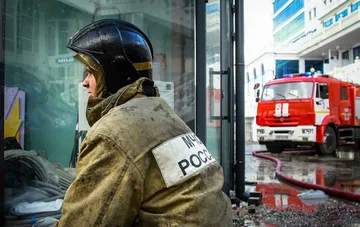
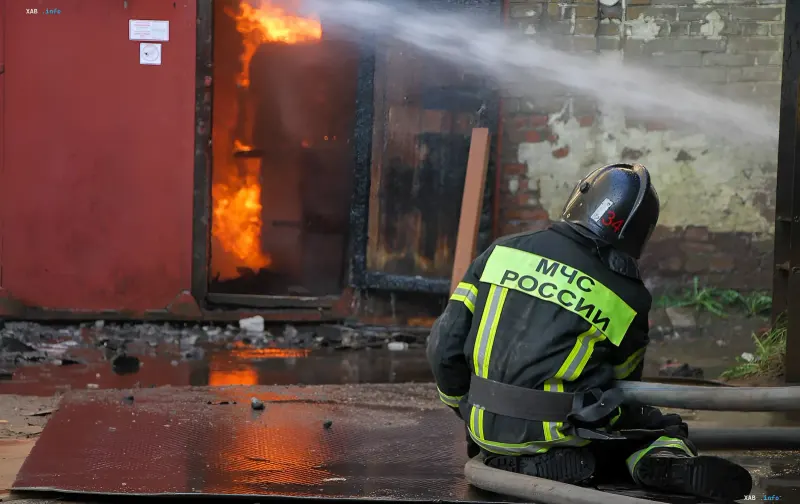
A fuel depot of "Rosneft-Kubannefteprodukt" caught fire in the Adler district of Sochi. The city's mayor, Andrey Proshunin, publicly confirmed the information about the fire and stated that there were no casualties or injuries among the civilian population. According to preliminary ASTRA data, a fire was also recorded at an air-defence division facility in the Sochi area after the attack, although this detail has not yet been officially confirmed by the authorities. Footage circulating in open sources shows flames pouring from the opening of an industrial building and Russian EMERCOM fire crews directing a water jet onto the burning structures.
Strike on Sterlitamak: petrochemistry more than 1,000 km from the border
A second fire was recorded in Sterlitamak — a city located more than 1,000 kilometres from the Ukrainian border. According to the "BLISKAVKA" channel, a petrochemical plant was set ablaze as a result of the drone attack; the plant produces ionol, a key additive used in aviation fuel and lubricating materials. Sterlitamak has historically been one of Russia's largest chemical-industry centres, and damage to the ionol production capacity could have consequences for supply chains in the aviation sector.
Contradictory data
Open sources show discrepancies in the wording regarding the range of the attacks. The headline of the RBC-Ukraine publication contains the phrase "targets hundreds of kilometres from Ukraine," whereas the text of the same article and the data from the "BLISKAVKA" channel describe Sterlitamak as a city located "more than 1,000 kilometres" from the border. The actual geography confirms the second figure: the distance from the nearest points of the Ukrainian-Russian border to Sterlitamak is approximately 1,100–1,200 km. Moreover, the information about a fire at an air-defence division in the Sochi area is based solely on ASTRA's OSINT analytics and has been neither confirmed nor refuted by official figures, leaving this episode in a state of uncertainty.
Context: a series of strikes on the fuel sector
The night attack of 4 September was a continuation of a series of incidents deliberately aimed at oil-refining and chemical-industry facilities. On the night of 30 August 2026, Ukrainian forces struck several targets on Russian territory, including the Kirishi Oil Refinery in Leningrad Oblast, where a fire was recorded after the hit. The repetition of the pattern — simultaneous strikes on targets in geographically distant regions — points to a tactic of stretching air-defence resources and creating multi-point fires that require simultaneous response from fire and emergency services across different time zones.
Reaction and current status
As of the time of writing, official Russian authorities had not published reports on the scale of damage at the Sochi fuel depot or the chemical plant in Sterlitamak. Mayor Proshunin limited himself to confirming the fact of the fire and the absence of casualties. Russian EMERCOM fire crews, judging by footage from the scene, were carrying out work to contain the fire at the industrial site. Information on the causes of the fires, the volume of fuel stock destroyed, and the timelines for restoring production at both facilities had not been disclosed as of 4 September 2026.