The US National Guard has been equipped with modern mobile counter-drone systems. The new equipment, manufactured by Anduril, is designed to protect critical infrastructure facilities and military bases from unauthorized flights.
As reported by RBC-Ukraine citing Army Recognition, the complexes were handed over to the Washington National Guard immediately after the conclusion of exercises at Camp Murray. The deployment of these systems significantly expands the military's capabilities to detect, track, and neutralize hostile drones.
Rising Threats and Lessons from the Conflict in Ukraine
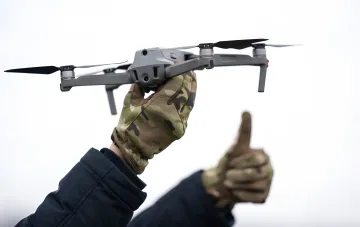
The Pentagon emphasizes that the availability of commercial unmanned aerial vehicles has created a direct threat to airports, energy facilities, and places of mass gathering. An additional stimulus for accelerating the air defense modernization program was the experience of combat operations in Ukraine, where even inexpensive civilian drones radically changed the tactics of warfare.
Anduril systems are designed to operate in conditions where the adversary uses accessible technologies to strike strategically important targets.
Defense Technology Architecture
The new complexes represent an integrated system combining several key components to create a complete picture of the air situation:
- Optical Tower (Long Range Camera Tower): provides visual surveillance over long distances.
- WISP Detector: specializes in detecting low-flying and small UAVs, effectively filtering out birds and household interference.
- Pulsar RF Sensor: scans the spectrum, intercepts the communication signal between the drone and the pilot, and determines their precise coordinates.
- Lattice Platform: artificial intelligence that aggregates data from all sensors into a single picture, automatically assessing the threat level for the operator.
Thanks to this architecture, the military will be able to instantly exchange information with the FBI, the Department of Homeland Security, and the police, ensuring a rapid response to incidents.
Technologies in Army Construction
The implementation of advanced technologies in the US armed forces is not limited to air defense systems. It was previously reported that the US Army opened the first of ten barracks printed on a 3D printer at Fort Bliss. The Pentagon believes that this technology will allow for faster and cheaper construction of energy-efficient housing for military personnel.