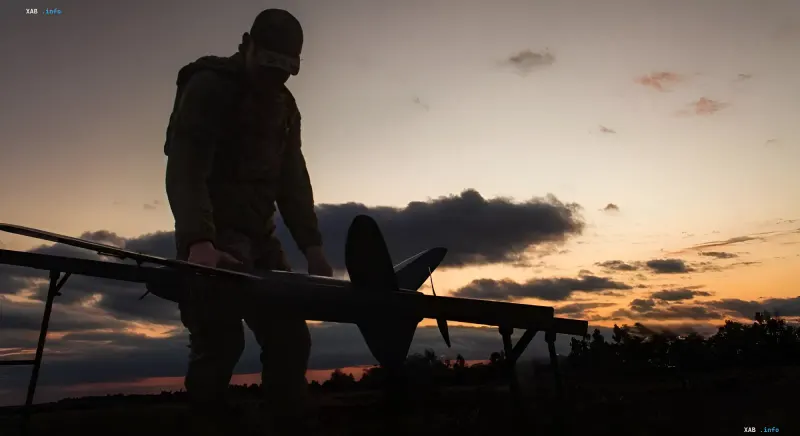
Ukrainian medium-range drones have ceased to be merely a supporting tool and have become a key factor changing the landscape of the war. They are delivering increasingly tangible blows to Russian logistics, forcing Moscow to revise its supply schemes for its troops. However, despite growing effectiveness, experts doubt that drones alone will be sufficient for a large-scale counteroffensive and the return of occupied territories.
Logistical Collapse and New Threats
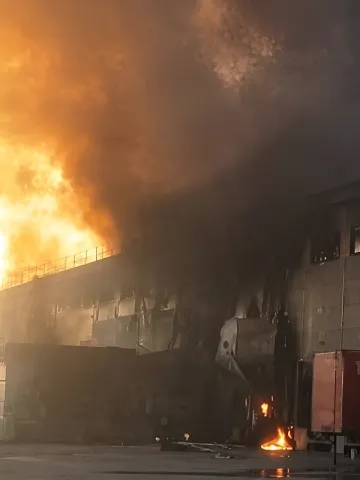
According to Foreign Policy, Ukrainian drones are increasingly attacking transport arteries far behind the front line. Routes that were previously considered safe for the Russian army have now become deadly for military equipment and trucks carrying ammunition, fuel, and food. This is forcing Moscow to seek new delivery routes, which slows down the pace of operations at the front.
In response to the enemy's successes, Ukraine plans to radically increase the production of such drones — up to 100,000 units per year. Additionally, there are plans to expand their use among a greater number of military units, turning drone warfare into a mass phenomenon.
Filling Gaps in Armament
According to Nick Reynolds, a researcher at the British Royal United Services Institute (RUSI), new drones have effectively occupied the niche of long-range weaponry previously held by Western systems.
"In many respects, medium-range drones are filling the gap left by systems such as HIMARS," Reynolds noted.
Experts also point to a personnel crisis in the Russian army. While financial payments still allow the Kremlin to replenish its ranks, finding a sufficient number of trained drone operators is becoming increasingly difficult. At the same time, on certain sections of the front, Russian forces are not reducing the intensity of their offensive actions.
Stabilization Instead of Offense
Nikolai Beleskov, a senior analyst at the "Come Back Alive" foundation, emphasizes that the main task of drones now is not offense, but stabilization. "The first goal is to stop the deterioration of the situation, and only then can we think about something more ambitious," the expert stated.
According to him, Ukraine still has serious personnel problems. Large-scale offensive operations require well-trained assault units, which are currently in short supply. Furthermore, even effective strikes against logistics do not solve the problem of the large number of well-camouflaged Russian FPV drone operators capable of halting the advance of Ukrainian troops.
Reynolds notes that detecting such positions is extremely difficult. "They are very, very well camouflaged. They can be identified, but it is difficult and takes a lot of time," the expert said.
Unprecedented Experiment
Despite cautious assessments, Beleskov does not rule out that the mass use of drones could seriously weaken Russian defenses. According to him, it all depends on the scale and coordination of the strikes. "It is an open question whether extensive occupied territories can be returned solely through a campaign of medium-range drones. We are conducting an unprecedented experiment in military history," the analyst noted.
He explained that such a scenario would require thousands of simultaneous strikes on supply routes, ammunition depots, and fuel bases. "It is a matter of the number of crews we have, intelligence, and simultaneity," Beleskov added.
Political and Economic Effect
Ukrainian long-range drones are increasingly attacking Russia's energy infrastructure and logistics in occupied Crimea. According to Jana Casapoglu, a senior researcher at the Hudson Institute, this is forcing Russia to transfer air defense systems from the front to protect its own territory.
In addition to the military effect, the successes of Ukrainian drones have political significance. As Foreign Policy notes, it is the effectiveness of the new tactics that helps Ukraine maintain the support of Western allies, who continue to supply weapons and air defense systems.
As UNIAN reported, the war between Iran and the US, which led to a sharp rise in global oil prices, temporarily brought Russia more than 13 billion euros in additional revenue. However, the economic effect of the oil boom was largely neutralized by Ukrainian strikes on Russian oil refineries, which caused a fuel shortage, accelerated inflation, and increased the budget deficit.
The Atlantic writes that drones have turned Ukraine into a superpower. Danish Prime Minister Mette Frederiksen acknowledged that Ukraine is currently producing weapons "faster and cheaper" than anywhere else in Europe.